
Электрический вэн, который бросает вызов SUV
Mercedes VLE
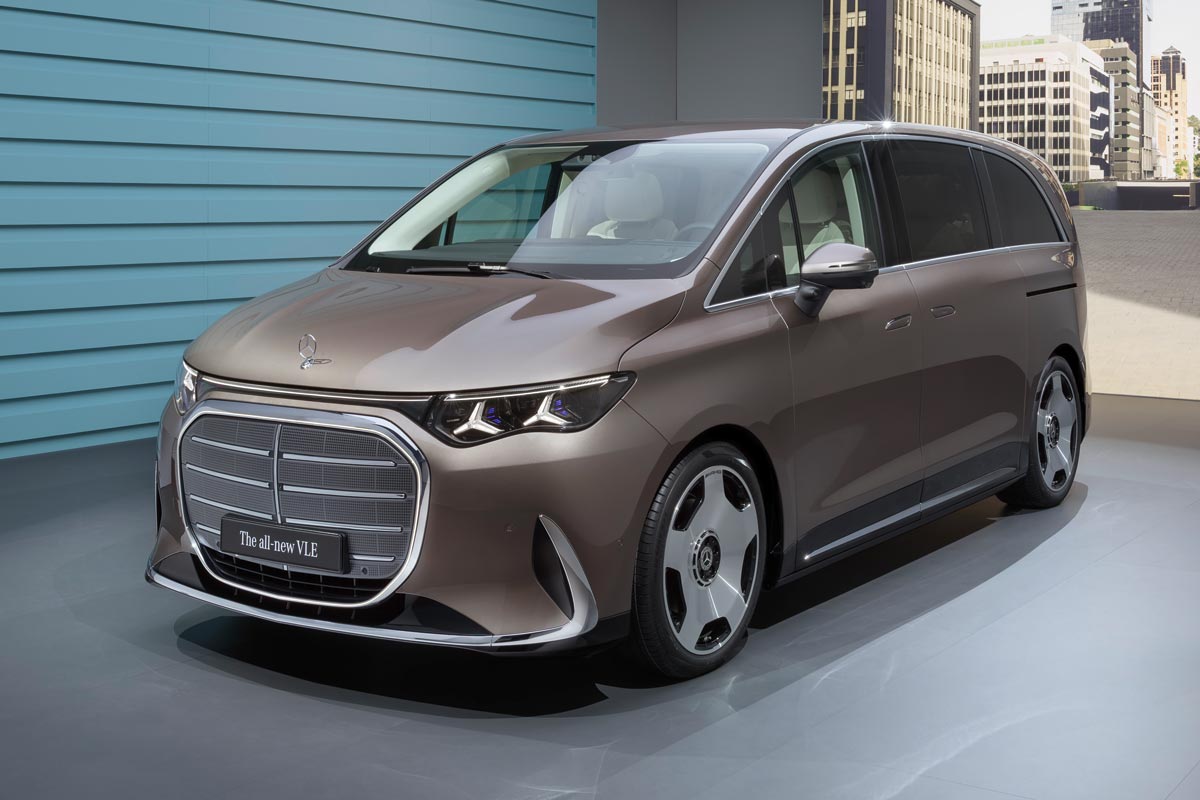
In an era when the North American market is almost entirely dominated by large SUVs, the idea of a luxury minivan feels almost provocative. Yet this is precisely the bet Mercedes-Benz is making with the new Mercedes-Benz VLE — a fully electric van that does more than transport passengers. It reimagines the very experience of travel.
The ambition is clear: not simply to create another electric vehicle, but to define a new segment of premium electric shuttles, where the true value is not concentrated in the driver’s seat, but in the second and third rows. And importantly, this is not just a European story. The VLE is officially coming to the U.S. and Canadian markets, where it will compete not so much with minivans as with full-size SUVs.
Technically, the new model looks more than convincing. It is built on the new 800-volt VAN.EA architecture, which enables ultra-fast charging at up to 315 kW. In 10 minutes, it can add around 250 km of range; in 15 minutes, up to 355 km; and charging from 10 to 80 percent takes approximately 25 minutes. Even by strict North American standards, that means more than 480 km of real-world driving range on a single charge.
Under the WLTP cycle, the claimed range exceeds 700 km thanks to a 115 kWh battery. Aerodynamics also play an important role: a drag coefficient of just 0.25 is an outstanding figure for a vehicle this tall and spacious.
The dimensions match the vehicle’s status: almost two metres wide and about 1.93 metres tall. For North America, only the long-wheelbase version is planned — a logical decision, given local preferences for space.
The powertrain lineup begins with the front-wheel-drive VLE 300, producing 268 hp and accelerating to 100 km/h in 9.5 seconds. The all-wheel-drive VLE 400 4Matic adds a second motor, increasing output to 409 hp and reducing acceleration to roughly 6.5 seconds. At the same time, the rear electric motor can disconnect to save energy.
The range of the all-wheel-drive version is slightly lower — up to 630 km under WLTP — although these are preliminary figures and may change closer to launch. It is also known that a version with a more compact battery will appear in 2027.
But the key feature of the VLE is not the numbers. It is the feeling.
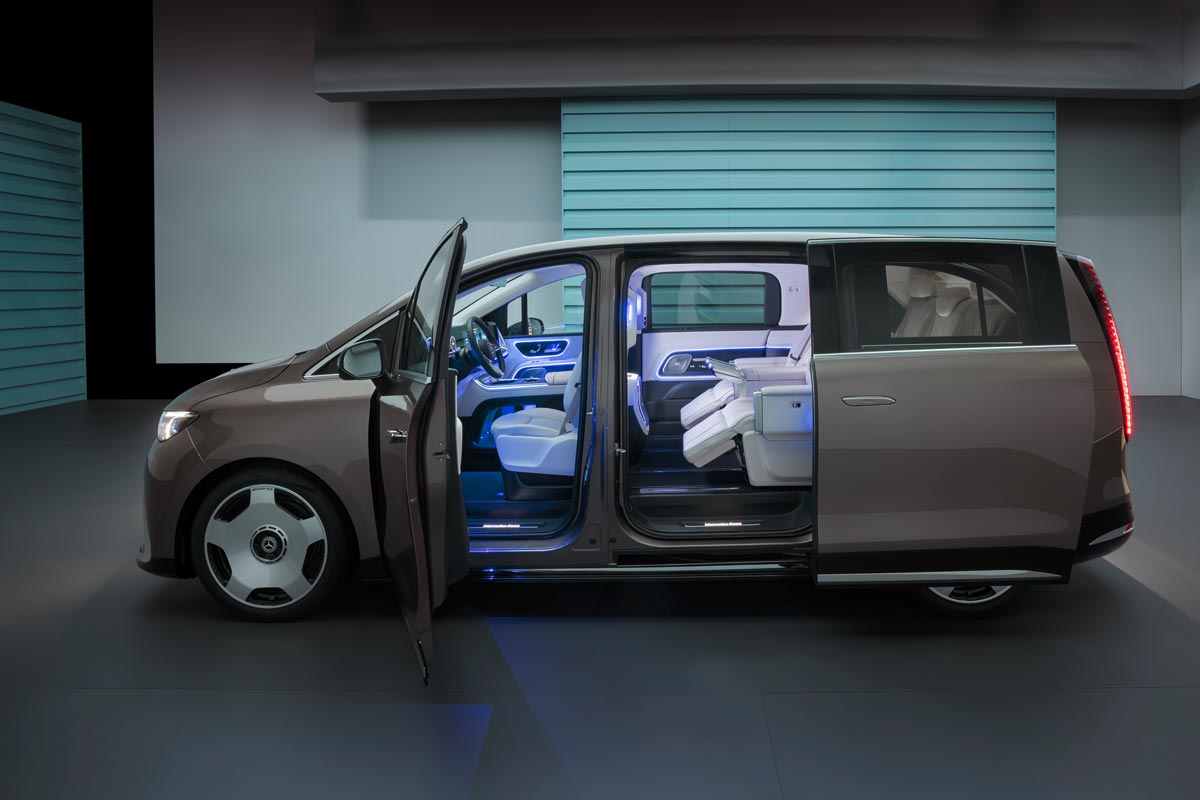
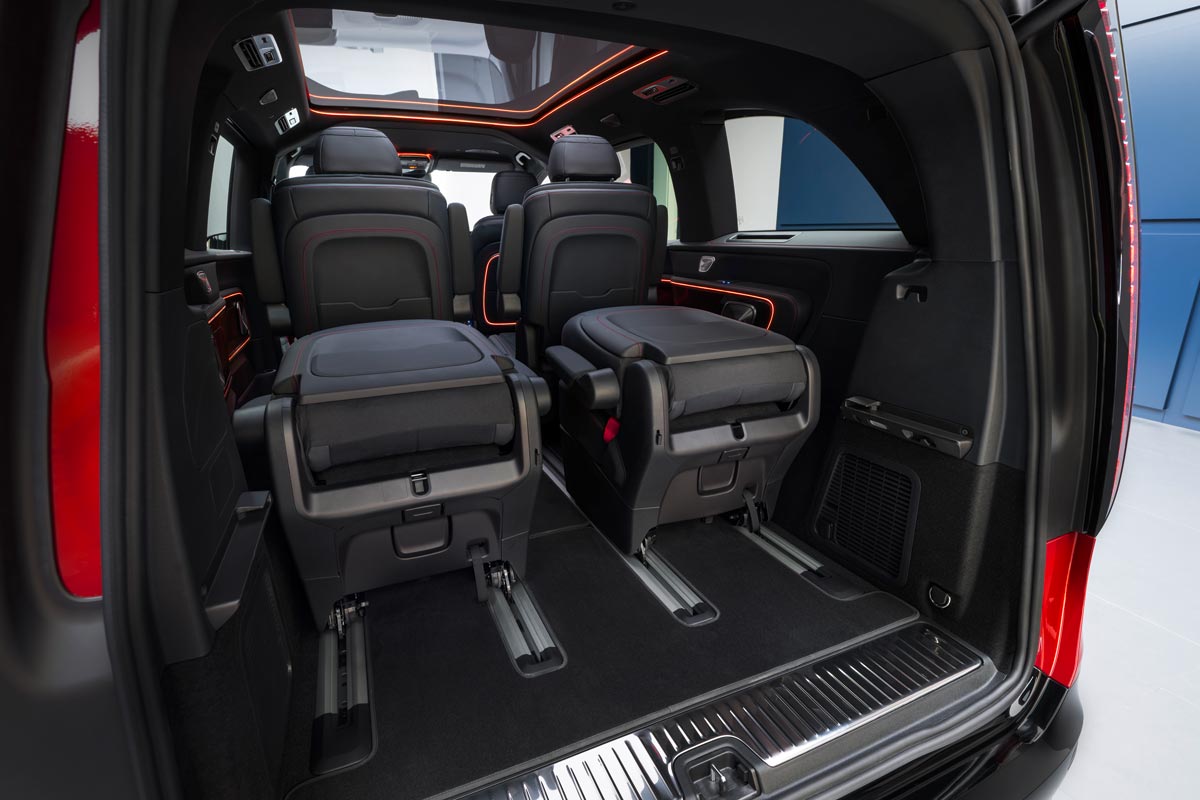
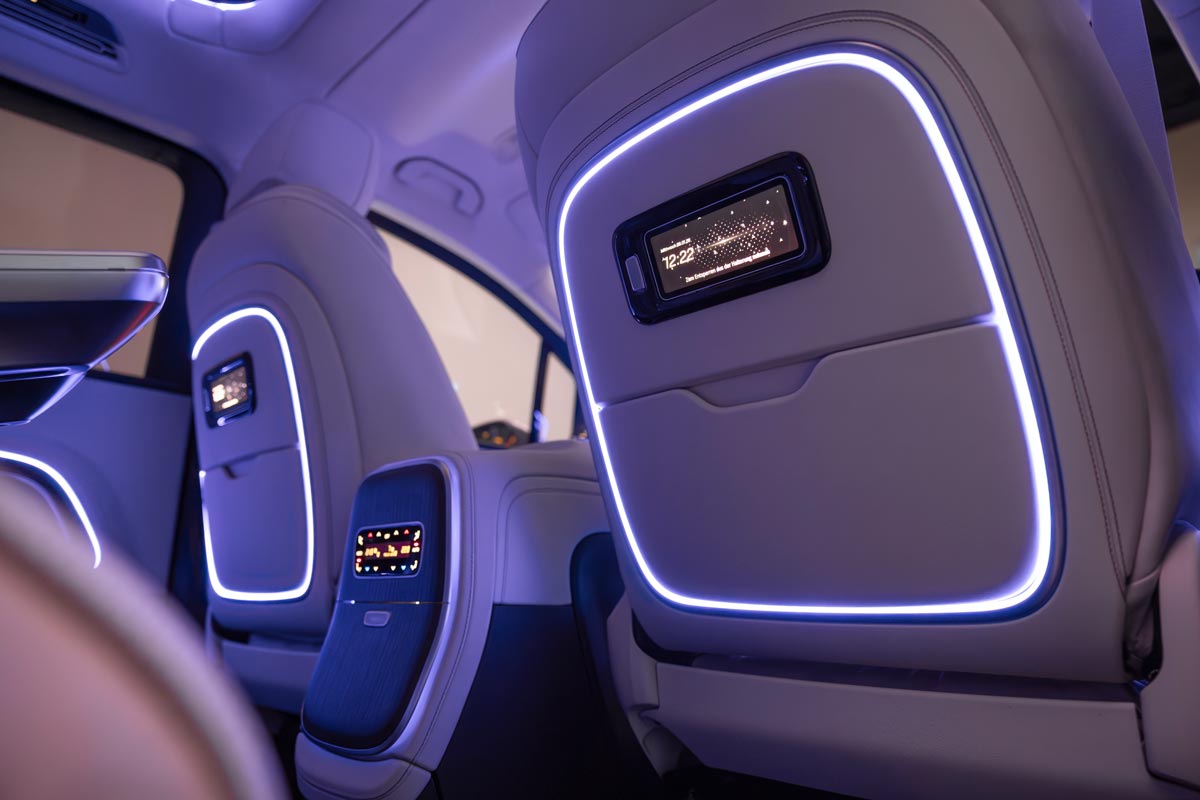
Mercedes positions this vehicle as a long-distance luxury shuttle for 5 to 8 passengers, and everything inside is designed around that purpose. Three rear-seat options culminate in the Grand Comfort Seat, which offers massage, lumbar support, an additional cushion, and an extendable leg rest. This is no longer just a seat; it is a true lounge space.
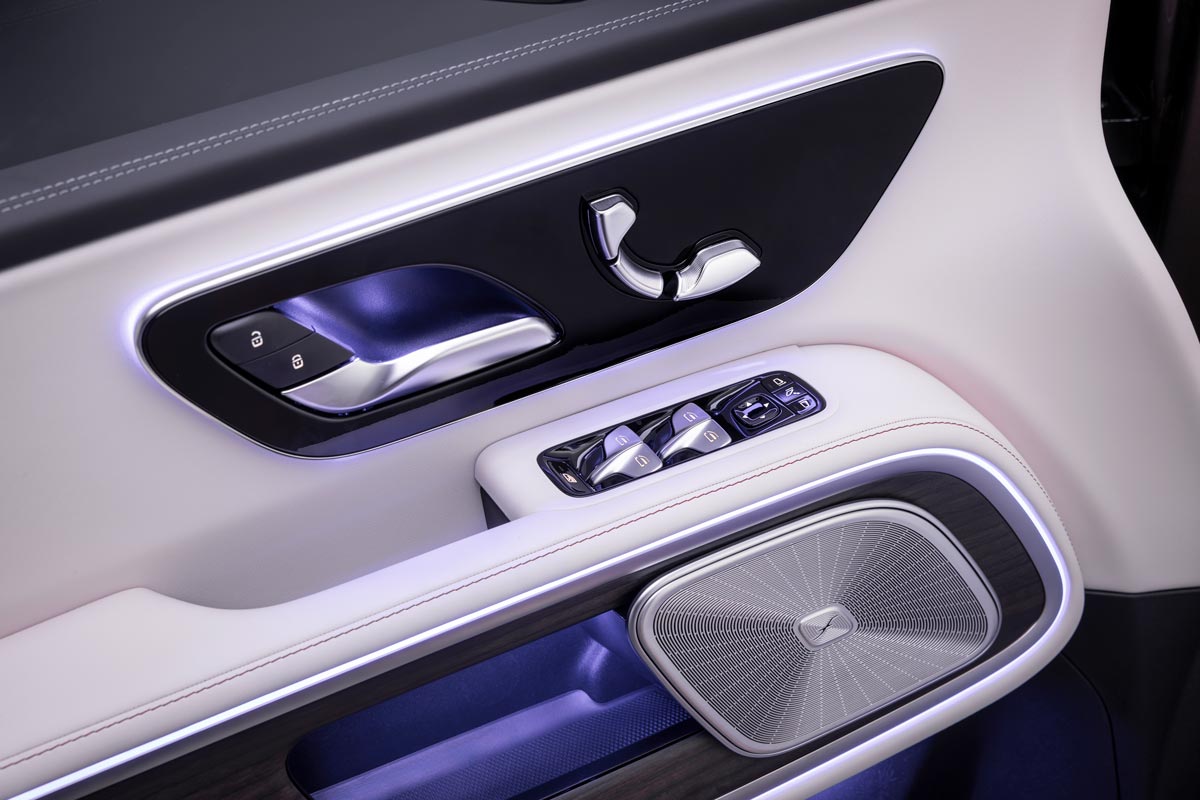
The electric seats can be adjusted through the multimedia system or via an app — a process the manufacturer compares to staging a ballet. And this is not just marketing exaggeration: the entire interior is built around the idea of smoothness, ease, and comfort.
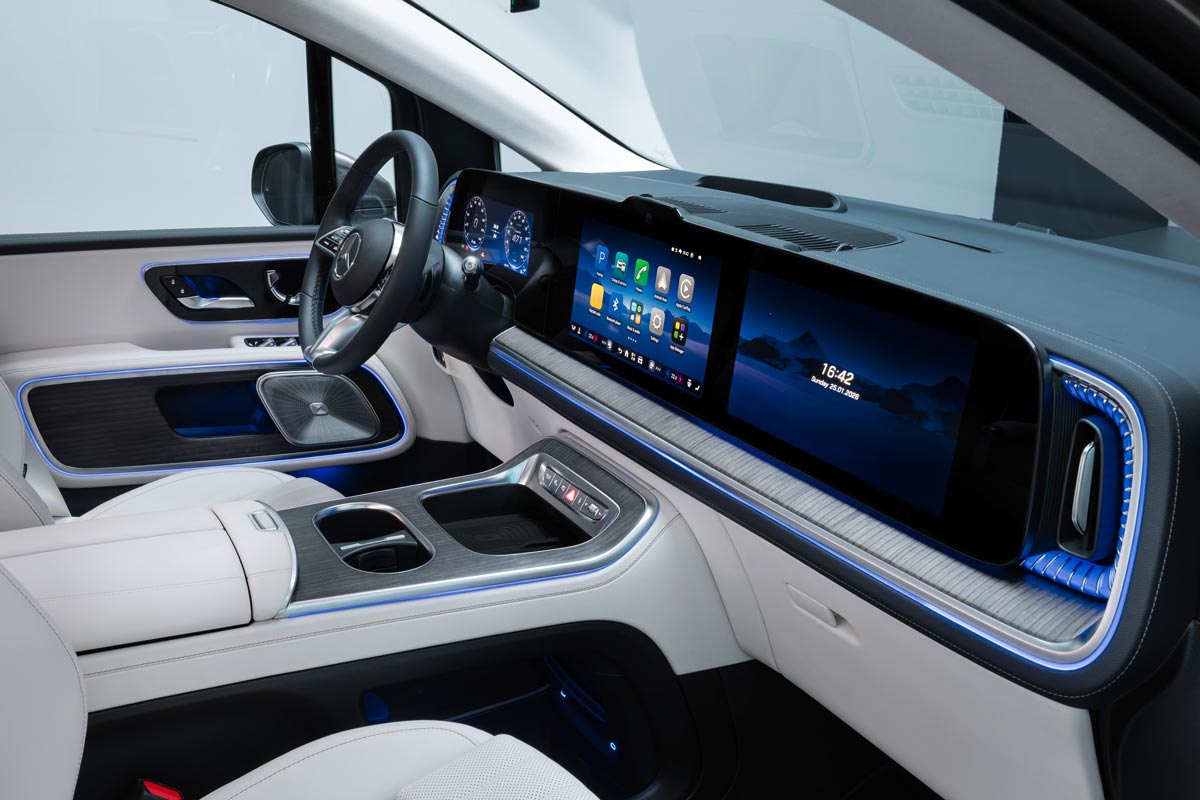
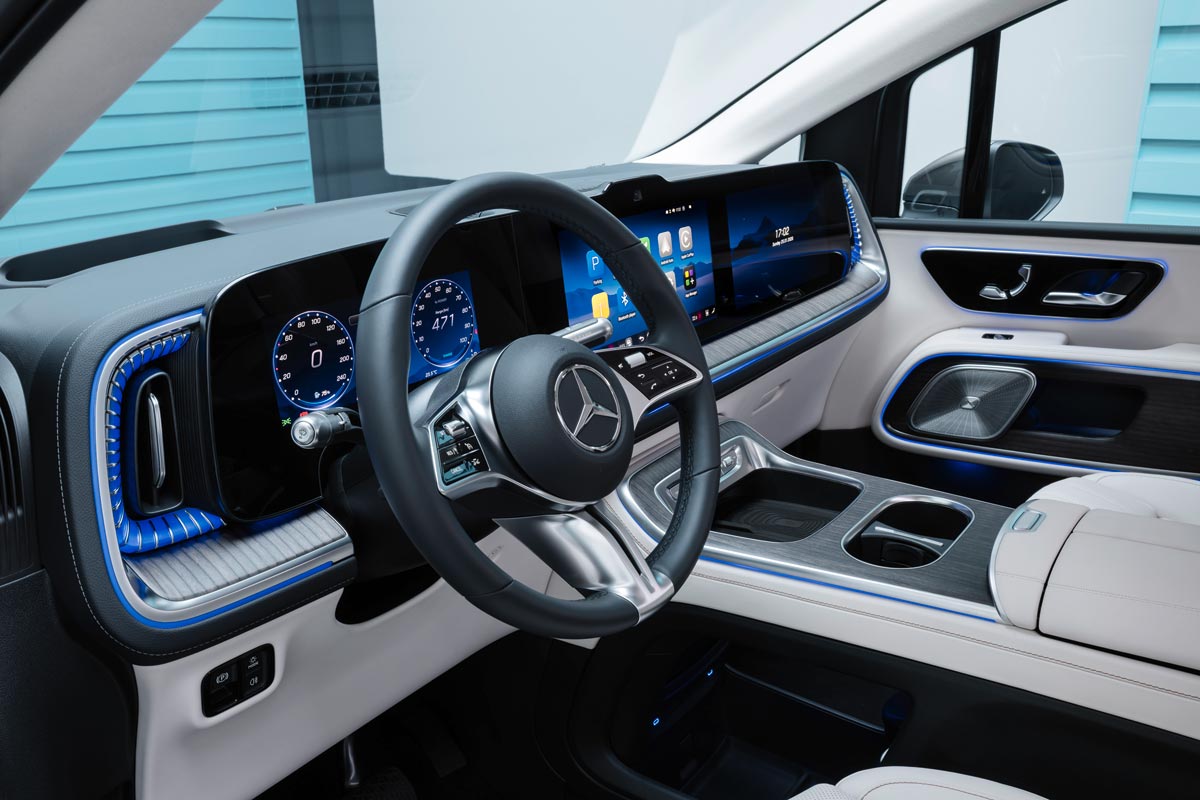
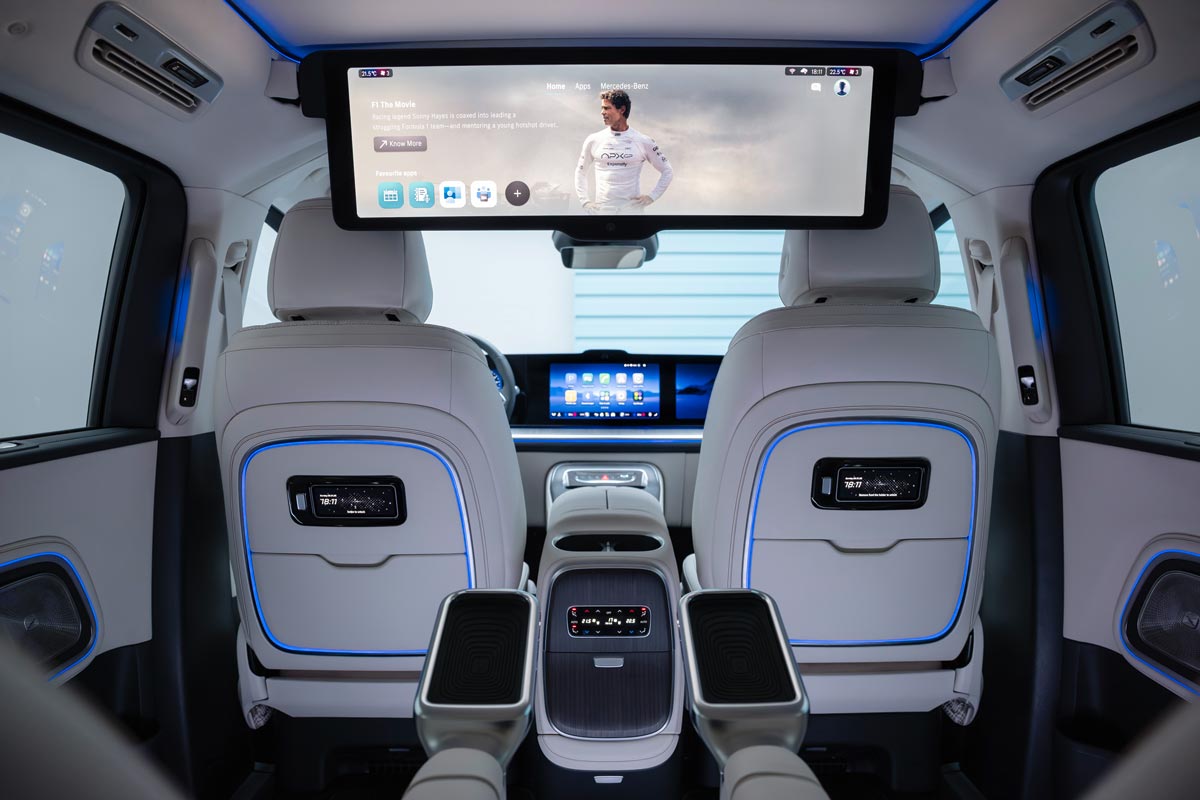
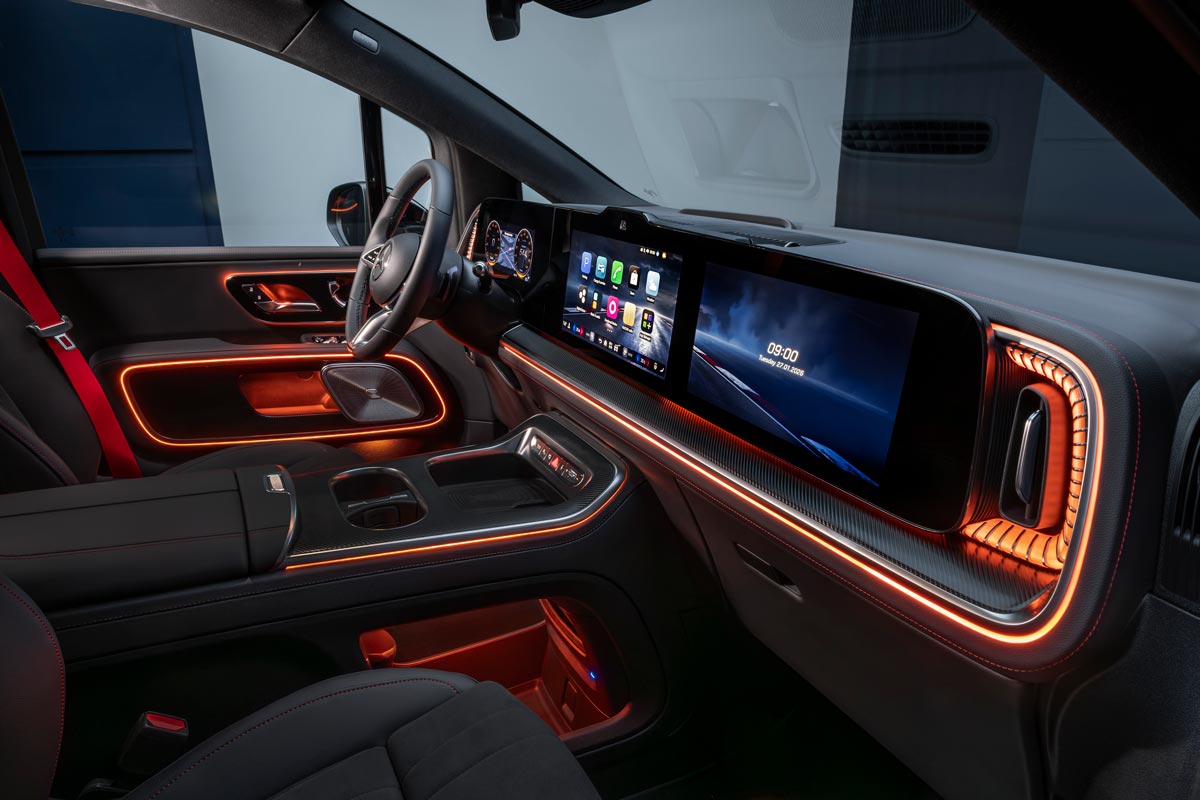
The technology level is no lower than in the brand’s flagship sedans. Up front, there can be up to three screens: a 10.25-inch instrument cluster and two 14-inch displays. But the real highlight is in the rear: an optional 31.3-inch 8K screen with split-screen support turns the cabin into a mobile cinema. Combined with a 22-speaker Burmester audio system with Dolby Atmos, it becomes a full-scale entertainment centre on wheels.
Everything runs on the new MB.OS operating system, with Google Maps integration and an AI assistant capable of handling complex conversations. Over-the-air updates are supported, along with more than 40 apps.
At the same time, Mercedes is trying to erase the line between a van and a passenger car. Power windows, flowing interior lines, automatic sliding doors — everything is aimed at ensuring that passengers never feel as though they are riding in a commercial vehicle.
Even the handling has been carefully considered. Optional air suspension allows the ride height to be adjusted, while rear-wheel steering of up to 7 degrees makes this large vehicle unexpectedly manoeuvrable. The turning radius of the short-wheelbase version is only about 11 metres — comparable to a compact car.
And yet the main question remains open: can such a vehicle convince North American buyers to step away from the SUV?
History suggests that this will not be easy. Even models such as the Mercedes-Benz Metris failed to gain a lasting foothold in the market, while traditional minivans such as the Chrysler Pacifica remain a niche choice.
But the VLE is not simply a minivan. It is an attempt to redefine the category itself.
If SUVs once won buyers over through versatility, Mercedes is now betting on a different argument: a level of comfort most SUVs cannot match. And if buyers are ready to rethink their habits, the VLE could become the beginning of a new trend.
Because in the world of electric vehicles, the formula for success is changing. And sometimes the most logical next step is not an SUV at all.