




EXPERTS FOR ALL OCCASIONS
NEW ARTICLES
Unmarked Trucks, 900-Page Catalogs
The Billionaires You Have Never Heard Of
There is a good chance a particular catalog has sat on your desk, in your break room, or on a warehouse shelf at some point in your life - nearly 900 pages thick, printed twice a year, selling everything from cardboard boxes to industrial shelving. Almost nobody who has flipped through it could name the family that owns the company behind it. That's not an accident. Some of the largest private fortunes in North America were built entirely on the least glamorous businesses imaginable - packaging, wholesale distribution, industrial supply - by people who treated invisibility not as a side effect of success, but as the actual strategy.
More detailsDesigned for Astronauts, Sold to Sleepers
How a Space-Age Material Ended Up in Bedrooms
The material inside most memory foam mattresses was not designed with sleep in mind at all. It was designed in 1966 to keep astronauts alive. NASA needed a cushion that could absorb the violent impact of a spacecrafts return to Earth without transmitting that force to the human body inside it - and the foam engineers built to solve that problem eventually made its way, decades later, into ordinary bedrooms, largely by accident. The stranger twist is what happened next: for decades, doctors recommended the firmest mattress you could find for a bad back, and it turns out the actual clinical research says almost exactly the opposite.
More detailsOne Home, Three Languages
Making Sense of Matter, Thread, and Zigbee
Somewhere in the last decade, smart home quietly became one of the most confusing purchases a person can make. You buy a lock that promises to work with everything, a sensor that needs its own separate hub, a light bulb that speaks a language your existing hub does not understand - and somehow the more devices you add, the less any of it feels smart. The industrys answer to this mess is a new standard called Matter, and the most important thing to understand about it is also the most commonly misunderstood: Matter is not a wireless technology at all. It's something stranger and, once you see how it actually works, considerably more useful.
More detailsThe Bar Myth
The Physics of a Perfect Espresso Shot
Every home espresso machine sold today boasts about its bars of pressure - 15, sometimes 19 - as though pressure alone were the secret to a great shot. It isn't, and the real history of that number is stranger than the marketing suggests: the industry standard everyone chases, 9 bars, wasn't derived from careful scientific calculation at all. It was an accident, born from the mechanical limits of a spring in 1940s Turin, that happened to work so well nobody's ever seriously replaced it. And the dial that actually decides whether your morning shot tastes sour, balanced, or bitter isn't pressure at all - it's something so small you can barely see it.
More detailsLight, Lies, and Local Dimming
How to Actually Choose a Television
Buying a television has never required more vocabulary. OLED, QD-OLED, Mini-LED, QLED, HDR10, HDR10+, Dolby Vision, nits, zones, refresh rate - the spec sheet reads like a chemistry exam crossed with a marketing brochure, and somehow the picture quality has never been better while the shopping experience has never been more confusing. Here is the good news: almost none of it requires an engineering degree to understand, and once you know what each term is actually protecting you from - or selling you - the whole decision collapses into something much simpler than the box implies. There is also a twist near the end that has nothing to do with panels or pixels, and it changes how you should think about that suspiciously good price tag.
More detailsThe Quiet Thirty-Year War Behind Your Sunscreen Bottle
Here's an odd fact about sun protection in North America: for years, a meaningful number of skincare-conscious Americans have been quietly importing sunscreen from South Korea, Japan, and Europe - not because domestic sunscreen doesn't work, but because it's been genuinely behind, technologically, for decades. The reason has almost nothing to do with cosmetic science and almost everything to do with a piece of American law written in 1938, long before anyone had invented the ingredients now sitting on shelves in Seoul and Paris. That finally started to change this year, after one company spent roughly $18 million and more than two decades trying to get a single ingredient approved. This is the story of why your sunscreen has been stuck in the past - and why 2026 is the year that quietly started changing.
More detailsMore Than Fabric: The Secret History of the Swimsuit
How to Choose One That is Actually Yours
Here is something worth knowing before your next trip to the beach: nearly every swimsuit style you've ever worn exists because a woman, at some point, broke a law to wear less fabric than the previous generation thought was decent. The swimsuit is one of the only garments in fashion history that evolved almost entirely through confrontation - arrests, court rulings, Vatican condemnations, and one designer who named a piece of fabric after an atomic bomb test. Understanding that history changes how you shop for one. A swimsuit was never meant to be a costume you apologize for. It was built, generation after generation, by women who refused to apologize for their bodies at all.
More detailsHow to Choose Sunglasses That Actually Suit You
More Than Just An Accessory
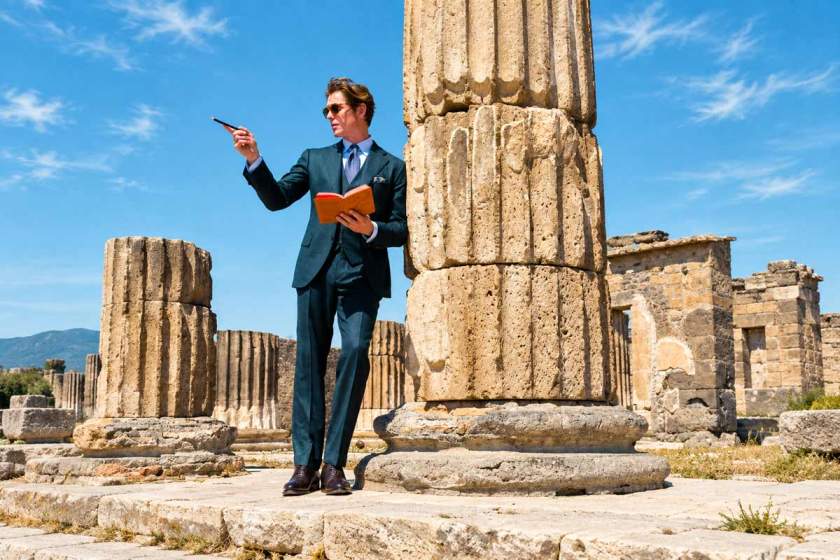
Here's a fact that tends to stop people mid-sentence: the first true sunglasses on record weren't designed to block the sun at all. They were designed to hide emotion. In 12th-century China, magistrates wore lenses ground from smoky quartz during court proceedings - not because the light bothered them, but so that no one in the room could read their face while they decided someones fate. Fourteen centuries later, this is still, in a strange way, exactly what a good pair of sunglasses does. It gives you a face the world can not fully read. Understanding that history changes how you think about buying a pair - because the right glasses aren't a costume you borrow from a celebrity. They're an instrument, built out of centuries of very practical human problems, that happens to also make you look extraordinary when it fits correctly.
More detailsThe Polo Shirt: A History of Elegant Rebellion
Here is a strange little fact almost nobody knows: the shirt called a "polo" has almost nothing to do with polo. The two most famous polo shirts in history - the one with the crocodile and the one with the horseman - were designed by two men who barely played the sport at all. One was a tennis obsessive who hated his uniform. The other was a tie salesman from the Bronx who understood something rare about the American imagination. Between them, they took a piece of clothing born out of irritation and turned it into one of the only garments on earth that means something different depending on who is wearing it, and says nothing at all when worn correctly.
More detailsNot All Nuts Are Created Equal
10 Varieties and Which Ones Are Best For You
Nuts stopped being just a quick snack a long time ago. Today they're one of the most versatile and nutrient-dense foods available: they satisfy hunger, add rich flavor and texture to almost any dish, and help round out a diet in ways few other foods can. Each variety brings something different to the table - some are exceptionally rich in omega-3s, others stand out for their magnesium, protein, or antioxidant content. Here's what makes the 10 most popular nuts worth knowing, who benefits most from each, and how to work them deliciously into your everyday meals.
More detailsBuilding a Name Between Two Dynasties
Patrick Schwarzenegger
Few people on earth have grown up straddling two more incompatible American dynasties. His father was an Austrian bodybuilder who became the biggest action star on the planet and then a Republican governor. His mother came from the Kennedys - American political royalty, Democratic to its bones, defined by public service rather than spectacle. Patrick Schwarzenegger spent his childhood at the exact point where Hollywood muscle met Camelot idealism, and spent most of his twenties trying to figure out whether that inheritance was a launchpad or a life sentence. The most interesting part of his story isn't that he finally broke through. It's everything that had to happen first - and what happened right after, which turned out to be far less simple than a single hit television season.
More detailsThe Superfood Hiding in Plain Sight
What North America Never Learned About Buckwheat
Somewhere in North America right now, a box of cereal is being poured into a bowl, and roughly a third of that box, by weight, is sugar. Meanwhile, in millions of kitchens across the former Soviet Union, breakfast looks entirely different: a small brown seed, boiled in water, sometimes finished with butter or warm milk, eaten by children and grandparents alike for generations. That seed has a complete protein profile rivaling meat, a glycemic index low enough to keep blood sugar calm for hours, and a plant compound so rare that virtually nothing else in the pseudocereal world contains it. It is sold in nearly every North American grocery store, usually in a small, dusty bag near the rice. Almost nobody here knows what to do with it. This is the story of buckwheat - and why it might be the most undervalued food on the continent.
More detailsSkin Versus Sun
The New Rules of Summer Protection
Ask anyone who grew up in North America in the 1970s or 80s what summer smelled like, and many will say baby oil and iodine. That was the recipe: a few drops of iodine stirred into baby oil, slathered on skin, sometimes paired with a sheet of foil propped under the chin to bounce extra sun onto the face. A tan wasn't just tolerated - it was the entire point of summer, a visible badge of vitality sold to an entire generation by suntan lotion ads and a culture that had not yet learned to be afraid of the sun. Today, the same ritual would strike most people as faintly reckless. Something changed - not just the sun, but our understanding of what it does to us. This is the story of that shift, and of what protecting your skin actually requires now.
More detailsThe Secret Science of a Perfect Watermelon
How to Choose the Sweetest One Every Time
There is a particular kind of summer disappointment that only a watermelon can deliver: you haul home something the size of a toddler, slice it open with real anticipation, and find pale, watery flesh with barely a whisper of sweetness. The good news is that this is almost entirely avoidable. Watermelon ripeness leaves visible, physical evidence - you just need to know where to look. Here is what food science, commercial growers, and decades of market experience actually say about picking the sweetest melon in the pile, plus a guide to the surprising range of varieties now sold across North America.
More detailsHow to teach children to think if AI already writes for them
The central question in education is no longer whether students should be allowed to use artificial intelligence. That stage has, in practice, already passed. The question is now far more serious: how do we preserve the human habit of thinking independently when a machine increasingly offers fast, polished and convincing answers? The real danger of AI is not that it can help someone write a text. The danger is that it can quietly replace the very process through which thought is formed.
More detailsWhy more and more people are choosing Dominican Republic
Recently, the well-known American publication Money Talks News highlighted twelve reasons why the Dominican Republic has become one of the most attractive places to live and invest. It is hard to disagree with many of their conclusions.
More detailsHow to become a billionaire on other peoples technologies
In the technology world, we tend to celebrate inventors: the new chip, the new platform, the new device that supposedly makes tomorrow unimaginable without it. But the real maturity of an industry begins not where brilliant products are created, but where someone figures out how to build a great business on top of everyone elses complexity. That is precisely what World Wide Technology has done. A private company from St. Louis, Missouri, it manufactures no phones, no servers, no microchips - and has grown into a global technology solutions provider with annual revenue exceeding 20 billion.
More detailsFrench interior code
How textiles bring elements together
There are interiors that live and die by their furniture. Others that owe everything to art on the walls. But some spaces - the most memorable ones - are held together by fabric. Not as an afterthought once the renovation dust settles, but as a structural element of atmosphere itself. The French understand this better than almost anyone. In their interiors, textile is rarely accidental. It softens architecture, bridges centuries, adds depth and touch, and often becomes the very layer that transforms a beautiful apartment into a space with genuine character.
More detailsThe new language of the era
Why memes have become the art of fast meanings
Memes stopped being just funny pictures a long time ago. Today they are the language through which society speaks about anxiety, politics, work, war, inflation, relationships, burnout, the absurdity of daily life, and the helplessness we feel scrolling through the news. Sometimes a single meme conveys what a paragraph of ordinary prose cannot. Sometimes it lands more precisely than a column, more gently than a therapist's formula, faster than any editorial cartoon. In an era of information overload and emotional exhaustion, the meme has become the defining artistic form of our time.
More detailsBMW i3: electric sedan that returns brand DNA
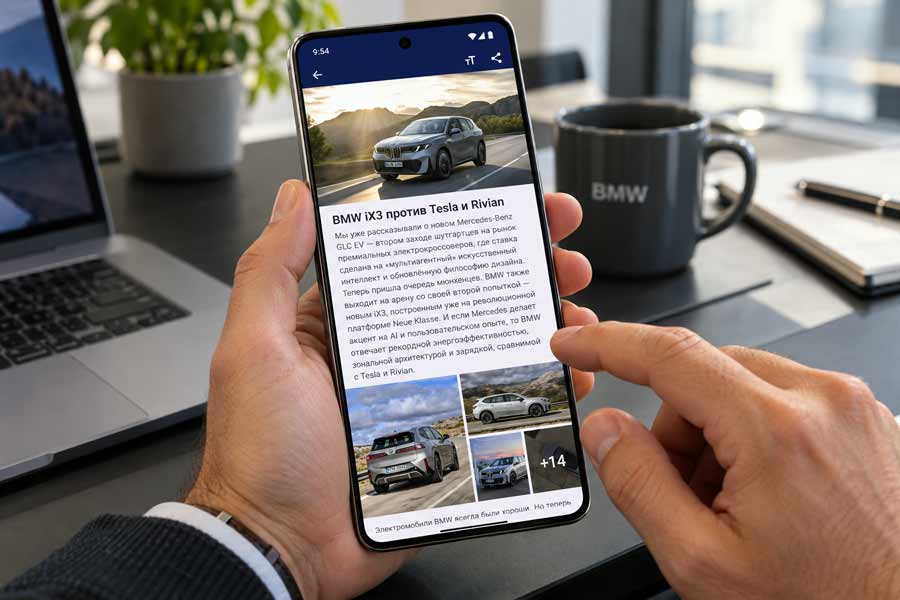
BMW has unveiled the new i3 - and it may be the most consequential electric vehicle in the company's history. Despite the familiar name, this is an entirely different machine from the quirky urban hatchback of the past. This is the first fully electric 3 Series: a ground-up Neue Klasse sedan that inherits the most emotionally charged nameplate in BMW's lineup. The 3 Series has defined what "the ultimate driving machine" means for fifty years. Now that role belongs, for the first time, to an electric car - and BMW appears to have built it without compromise.
More detailsINTERACTIVE RUSSIAN FLYERS
Send us a message
CONTACT INFO
416-907-6718
Russian Flyers
Suite 353, 6-1500 Upper Middle Road West
Oakville, ON L6M 0C2
Canada