
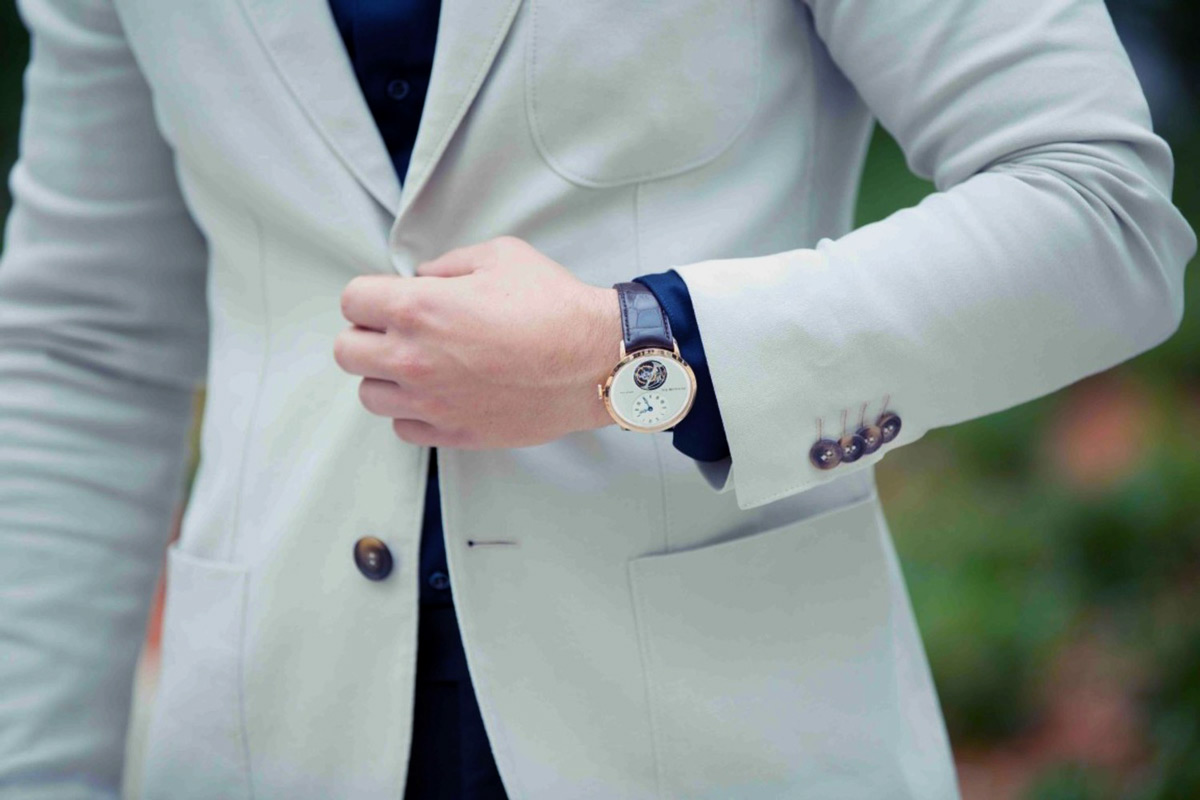
Why you should not fasten the bottom button of your blazer
The basic rule for wearing a mens three-button jacket is almost a formula: sometimes, always, never. The top button may be fastened sometimes, the middle button should be fastened always, and the bottom button should never be fastened. If the jacket has two buttons, only the top one is buttoned. A similar rule applies to a classic single-breasted waistcoat: the bottom button is usually left undone. This is one of the enduring standards of mens style, although womens tailoring is generally less restricted by such rigid conventions. In fact, many modern mens jackets and waistcoats are cut with the expectation that the bottom button will remain open. The garment sits better, the fabric does not pull, and the silhouette looks more natural.
At first glance, the rule seems odd. Why sew on a button that no one is supposed to fasten? But in classic menswear, such details are rarely accidental. They usually carry a mixture of habit, history, practicality, and a little social theatre.
Where did this tradition come from?
The best-known explanation is connected with King Edward VII. When he was still Prince of Wales, the modern suit was only beginning to take shape, while the future monarch was already famous for his impressive figure and equally impressive appetite. According to the popular version, he found it uncomfortable to fasten the bottom button of his waistcoat. Courtiers, not wishing to draw attention to this and eager to follow the prince’s style, began doing the same. What may have started as a gesture of comfort and royal tact gradually became a rule of good dress.
Still, this story should not be treated too simplistically. In the case of the waistcoat, the Edward VII explanation has certainly become part of menswear tradition, although historians and style experts also point to other possible origins. Some connect the open bottom button with the habits of horsemen: leaving it undone helped the waistcoat sit more comfortably and prevented it from riding up when a man was in the saddle or simply seated. Others see it as a trace of old dandy style — a way of making formal clothing look slightly more relaxed.
The history of the jacket is even more interesting. The bottom button of a suit jacket is not left undone solely because of Edward VII. Here, the evolution of the male suit itself played a major role. The modern single-breasted suit developed from looser everyday clothing of the early twentieth century and gradually replaced traditional frock coats and riding coats, garments closely associated with life on horseback. A jacket had to look good in motion, allow the body to move, and preserve its line when a man sat down or held the reins. Leaving the bottom button open allowed the fabric to fall more naturally and avoided unnecessary pulling and creasing.
This explains why the rule became so firmly embedded in men’s tailoring. A jacket is not meant to hug the lower torso like a shirt or a casual zip-up jacket. Its purpose is to shape the line of the shoulders, chest, and waist, creating a clean and elegant silhouette. When the bottom button is fastened, especially on a modern jacket, the fabric often starts to pull, the fronts flare awkwardly, and the whole construction looks strained. That is why many jackets are designed so that the bottom button remains part of the visual balance, but not a functional closure.
Sir Hardy Amies, the English designer and longtime dressmaker to Queen Elizabeth II, emphasized in his reflections on the history of men’s clothing that the modern lounge suit took shape gradually. The three-button jacket of the early twentieth century was looser and more casual than earlier formal dress, and its cut reflected the life of the man who wore it: movement, travel, riding, clubs, business meetings, and urban daily life.
So the tradition of leaving the bottom button undone is not merely a royal whim or a meaningless convention. It combines practical tailoring, court fashion, the influence of British style, and a habit later reinforced by generations of tailors. Edward VII undoubtedly played an important role in popularizing the practice, especially with waistcoats. But the logic of the jacket also belongs to the broader transformation of men’s clothing from riding and formal dress into the modern business suit.
Today, most jackets have two buttons, although three-button models remain part of the classic wardrobe. The rule, however, has not changed: the bottom button stays undone. On a three-button jacket, the top button may be fastened, the middle one should be fastened, and the bottom one should not. On a two-button jacket, only the top button is fastened. On a waistcoat, the bottom button is also usually left open, provided we are speaking about the classic single-breasted style.
It is a small detail, but details like this are precisely what separate someone who has simply put on a suit from someone who understands the language of classic menswear.