
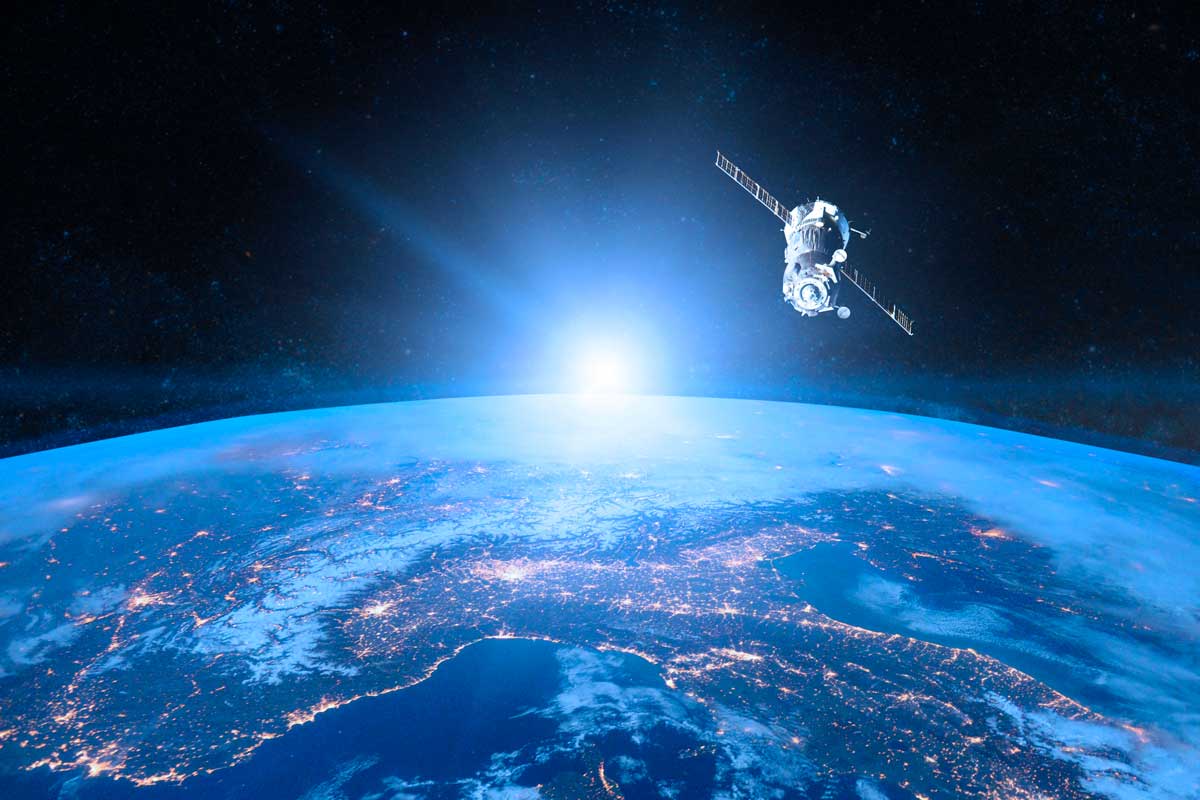
The place where humanity leaves for space
The Kennedy Space Center is not a museum and not a theme park. It is a place that permanently changed the way humanity thinks about itself. There are places on Earth that feel personally significant even to people who have never visited them. The beaches of Normandy. The Berlin Wall. Hiroshima. Places where history shifted irreversibly. Cape Canaveral occupies a unique place in human history. This is where the missions that transformed space exploration began: the Apollo flights, the journeys to the Moon, and the moment humanity first stepped onto the surface of another world. Most visitors believe they are coming to see a spaceport. In reality, they arrive at a place where giant rockets, alligators, bald eagles, engineering genius, and astronauts who have seen Earth from orbit coexist in the same landscape.
A Rocket the Size of a Skyscraper
The first thing no one is prepared for is the scale.
The Saturn V rocket - the legendary launch vehicle of the Apollo program that carried astronauts to the Moon - is displayed horizontally inside the Apollo/Saturn V Center. It is one of only three fully preserved Saturn V rockets remaining in the world. The others are located in Houston,Texas and Huntsville, Alabama.
The rocket is 110 meters long - roughly the height of a 36-story building. Standing upright, Saturn V was taller than the Statue of Liberty.
Fully fueled, it weighed nearly 2.8 million kilograms. Walking alongside it - and it takes time because the structure seems endless - several realizations arrive at once. First: this machine actually flew. Second: it was not an experiment. Between 1967 and 1973, thirteen Saturn V rockets launched successfully without a single vehicle loss. And perhaps most astonishing of all: this was achieved using computing power vastly inferior to today’s smartphones.
Nearby sits a modest transport van. In July 1969, Neil Armstrong, Michael Collins, and Buzz Aldrin rode in a vehicle just like it on their way to the launch pad before the Apollo 11 mission to the Moon.
Inside the pavilion, visitors can also touch a real Moon rock - not through glass, but with their own hands.
The Building That Creates Its Own Clouds
Several kilometers away stands the Vehicle Assembly Building, better known as the VAB.
It remains one of the largest buildings in the world by interior volume. At approximately 160 meters tall, it rivals a 45-story skyscraper, with an interior volume exceeding 3.6 million cubic meters.
Its enormous doors are among the tallest ever constructed. Through them, assembled rockets slowly emerge atop crawler-transporters moving at little more than walking speed.
An enormous American flag covers one side of the building. At 63 meters high, each stripe is wider than a standard city bus.
Inside, clouds sometimes form beneath the ceiling. Florida humidity drifts through the gigantic openings while temperature differences create real fog within the structure itself.
Construction of the VAB began in 1963 for one reason only: the Saturn V rocket was too large for any building that existed at the time. The structure was not built oversized for the future. It was engineered precisely around the demands of the Moon program.
A Wildlife Refuge Inside a Spaceport
Many visitors are surprised to discover that the Kennedy Space Center exists within one of Florida’s largest protected wildlife areas.
In the early 1960s, NASA acquired approximately 140,000 acres around the launch facilities to create mandatory safety buffer zones. Most of the land remained untouched and later became the Merritt Island National Wildlife Refuge.
Today, more than 330 bird species live within the area. Bald eagles nest here alongside alligators, manatees, dolphins, river otters, and bobcats. Protected loggerhead sea turtles lay eggs on nearby beaches.
When rockets launch, thousands of birds rise into the sky above the lagoons before eventually settling back into silence. This cycle has repeated here for decades.
The visitor bus route passes directly through the refuge. It is entirely possible to see an alligator beside the road while a launch pad and rocket stand on the horizon.
A Conversation With Someone Who Has Seen Earth From Space
One of the most remarkable experiences at Kennedy Space Center is Astronaut Encounter.
Every day, veteran NASA astronauts meet visitors inside the complex. It is not a staged performance or a brief appearance. Astronauts speak openly about their experiences and answer questions from the audience.
Some questions are practical: how people sleep in zero gravity, what food tastes like in orbit. Others are more profound: how seeing Earth from space changes a person forever.
Among the astronauts participating in the program have been Kathy Thornton, who performed multiple spacewalks; Norm Thagard, the first American astronaut to fly aboard a Russian spacecraft; Julie Payette, the first Canadian woman to visit the International Space Station; and Bob Thirsk, who holds the Canadian record for time spent in space.
The Shuttle Atlantis Up Close
In 2013, the Visitor Complex opened the Space Shuttle Atlantis pavilion.
Atlantis was one of NASA’s five operational space shuttles and completed 33 missions during its 26 years of service. Its final flight took place in July 2011.
The orbiter is displayed exactly as astronauts saw it in orbit: angled in flight position with its payload bay doors open.
Visitors stand only a few meters away from the spacecraft itself - closer than most museums allow anyone near objects of this historical significance.
Why the Area Code Is 321
Even the local telephone area code reflects the region’s connection to space exploration.
Area code 321 was officially introduced in 1999 as a tribute to the famous launch countdown: three, two, one.
What to Know Before Visiting
The Kennedy Space Center is located roughly one hour east of Orlando.
The complex is open almost every day of the year except December 25 and certain active launch days. A proper visit requires a full day.
But what stays with most people is not only the technology or the history.
It is the overwhelming sense of human capability. Few places make it clearer that space stopped being science fiction the moment humanity decided the impossible was simply another engineering problem waiting to be solved.
Cape Canaveral remains the place where humanity opens the gates to space.