
A penthouse as myth
The legendary residence atop The Pierre
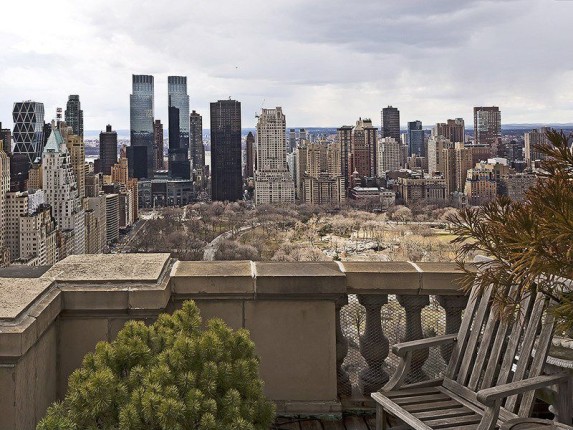
In New York, luxury real estate has long stopped being simply a question of square footage. Here, an apartment can become status, history, stage set, collectors object and almost myth. Especially when it is located not merely in Manhattan, but at the top of one of the citys most legendary hotels - The Pierre on Fifth Avenue, across from Central Park. This was the residence once described as the most expensive penthouse in the United States: a triplex occupying the 41st, 42nd and 43rd floors, where private life literally rises above the city.
Today, it is no longer accurate to describe this penthouse as being on the market for $125 million. That price belongs to the market story of 2013, when the property was indeed listed with a record-setting ask. Later, the price was reduced several times, and in 2017 the residence sold for approximately $44 million. But that gap between asking price, legend and real transaction makes the story even more interesting. It shows that even in the world of ultra-luxury, value is not only about marble, views and address. It is also about timing, liquidity, the taste of a new generation of buyers and whether an object can be not just expensive, but truly desirable.
An address that is already a form of luxury
The Pierre is one of those hotels that feels like part of old New York mythology. It stands at 795 Fifth Avenue, beside Central Park, in a zone where urban geography becomes social code. The Upper East Side, Fifth Avenue, park views, proximity to museums, galleries, boutiques and private clubs - all of this creates not just convenience, but a particular kind of status.
Unlike the new glass towers of Billionaires’ Row, The Pierre speaks a different language. It is not height for the sake of height, nor the cold minimalism of new development. It is old-school New York: a famous hotel, co-op apartments, history, service, tradition and the feeling of a closed world where luxury exists not as performance, but as inherited habit.
A residence on three levels
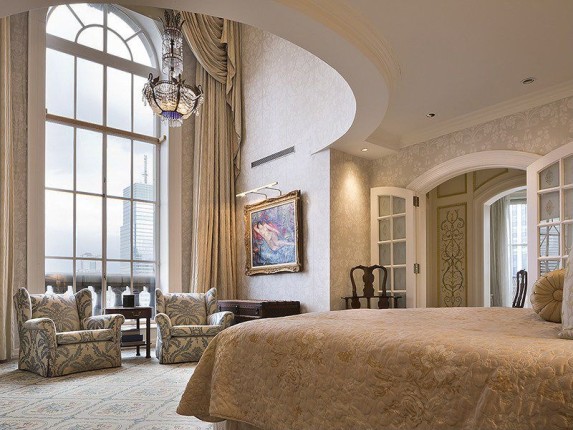
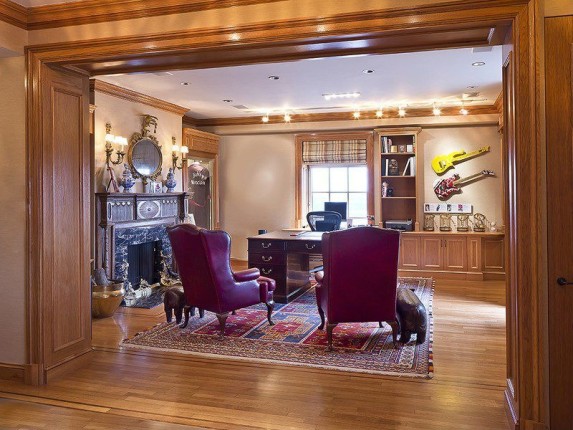
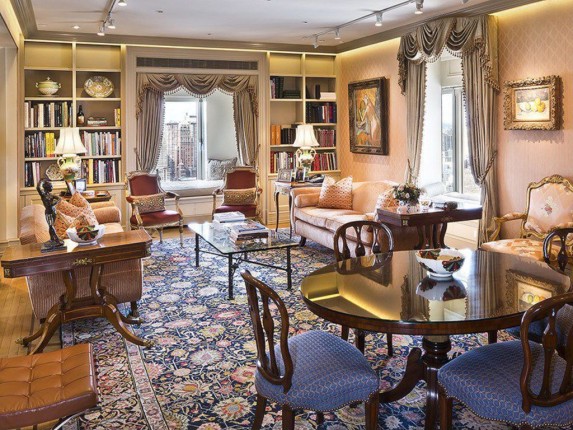
The legendary penthouse occupies the building’s top three floors: the 41st, 42nd and 43rd. In scale, it feels less like an apartment than a private city mansion lifted into the sky. Inside are around 16 rooms, multiple bedrooms, bathrooms, service areas, separate entrances, a private internal elevator and four terraces with views of Manhattan, Central Park and the city skyline.
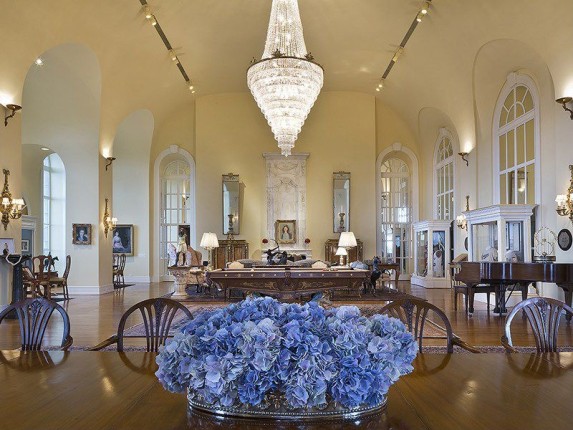
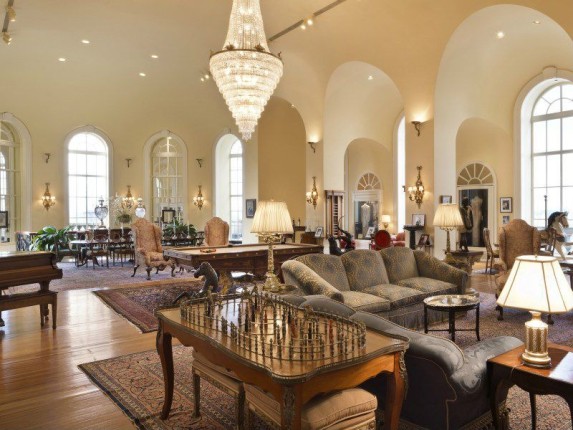
Ceilings in some rooms reach nearly seven metres, which in a New York apartment sounds almost unbelievable. The central space was once described as a ballroom - not metaphorically, but in its actual scale and mood. Two corner terraces adjoin this grand room, opening views toward Central Park and turning the interior into a continuation of the city.
In properties like this, the layout becomes almost theatrical. The staircase, elevator, salons, terraces, private rooms and service routes all function like parts of a larger scenario. This is a home not only for living, but for entertaining, collecting, socializing, displaying taste and controlling space.
Baroque drama above Manhattan
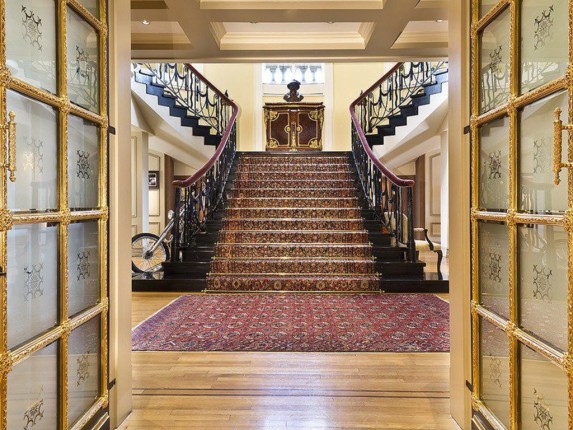
One of the penthouse’s most striking features is a dramatic staircase of black marble, wood and decorative detail. Carved railings, bas-reliefs, figures, rich finishes and an almost European palace-like theatricality set this residence sharply apart from the current New York fashion for seamless stone, neutral fabrics and quiet minimalism.
The central living room, with its arched windows, recalls architectural images of old Europe. Five rooms featured antique eighteenth-century wood-burning fireplaces brought from Italy. Such elements make the interior not merely expensive, but historically saturated: luxury here is built not on newness, but on provenance, collectability and cultural memory.
Yet this decorative richness eventually became both an advantage and a challenge. For some buyers, such an interior represents a rare chance to live in a private palace above Central Park. For others, it is a heavy, highly personal aesthetic requiring costly modernization. That is one of the key lessons of ultra-expensive real estate: uniqueness increases status, but it does not always increase liquidity.
Martin Zweig and the age of collectors
The penthouse’s most famous owner was Martin Zweig, the investor and stock market analyst known for predicting the 1987 market crash. He purchased the residence in 1999 for $21.5 million, already a record price for a New York apartment at the time. For Zweig, the penthouse was not simply real estate, but part of a larger collector’s world.
This type of owner is highly characteristic of the old New York elite of the late twentieth century. These were people for whom a home became an extension of biography: a place for art, historical objects, rarities, family stories and symbols of personal victory. The penthouse at The Pierre suited that spirit perfectly. It was not a neutral box for resale. It was a stage for someone who wanted to live among symbols of power, history and success.
After Martin Zweig’s death, the penthouse came to market with a spectacular $125 million asking price. At the time, it seemed like a new level of ambition for Manhattan trophy real estate. But the market responded more coolly than expected. The property remained unsold for a long period, the price was reduced, the interiors were refreshed, and the final deal came in far below the original ask.
Why a record price does not always become a record sale
The story of The Pierre penthouse is valuable because it reveals the difference between asking price and market value. In luxury real estate, a headline price often becomes part of the marketing. It attracts press, creates legend and places a property among the city’s most talked-about addresses. But a real buyer in the ultra-luxury segment still evaluates not only status, but practicality, condition, layout, co-op rules, carrying costs, privacy, renovation potential and alternatives on the market.
The Pierre penthouse had almost everything needed for legend: address, height, history, scale, views, terraces and a dramatic interior. But it was also a co-op property in a historic building, with its own rules, restrictions and very specific style. Against new towers with contemporary amenities, private elevators, wellness floors, underground parking and fully updated interiors, some buyers may have seen it not as a ready-made dream, but as a complex project.
That is why the final sale at roughly $44 million did not destroy the legend, but made it more honest. It reminded everyone that even the most beautiful property must belong to its time. Luxury does not exist in a vacuum: it changes with taste, lifestyle and buyer expectations.
What makes such penthouses timeless
And yet residences like this do not disappear from the cultural imagination. They continue to be discussed, photographed, retold and compared with palaces because they embody a rare big-city dream: to live above the noise, to have private terraces over Central Park, to see Manhattan from a height where the city becomes scenery, and to remain inside a classic address with history.
Contemporary luxury is increasingly quiet, minimalist and technological. But The Pierre penthouse belongs to another tradition - more theatrical, European and collector-driven. It reminds us that luxury is not only new, smooth and discreet. Sometimes luxury is a black marble staircase, an antique fireplace from Italy, an arched window, a terrace above the park and the feeling that an apartment could become the setting for a novel about money, power and old New York.
The lesson of old Manhattan
The story of this penthouse is not merely a story about an expensive apartment. It is a story about how the very idea of value changes. Yesterday’s buyers paid for address, scale, ornament and the chance to own something unique. Today’s buyers increasingly demand functionality, fresh design, infrastructure, ease of maintenance and liquidity as well.
But some things cannot be built again in pure form. The Pierre, with its history, cannot simply be recreated. A true Fifth Avenue address across from Central Park cannot be duplicated. The feeling of old Manhattan cannot be manufactured mechanically if it has not been accumulated over decades. That is why such properties remain important even when the market argues with their price.
The penthouse atop The Pierre is not only real estate. It is an artifact of an era when an apartment could be palace, collection, stage and biography at the same time. Perhaps that is why it remains so interesting: not as “the most expensive penthouse in the United States,” but as one of the most expressive symbols of what luxury once was - and what it may never be, in exactly the same way, again.