
How a Quiet Retirement Town Became New Showcase of Luxury
Naples, FL
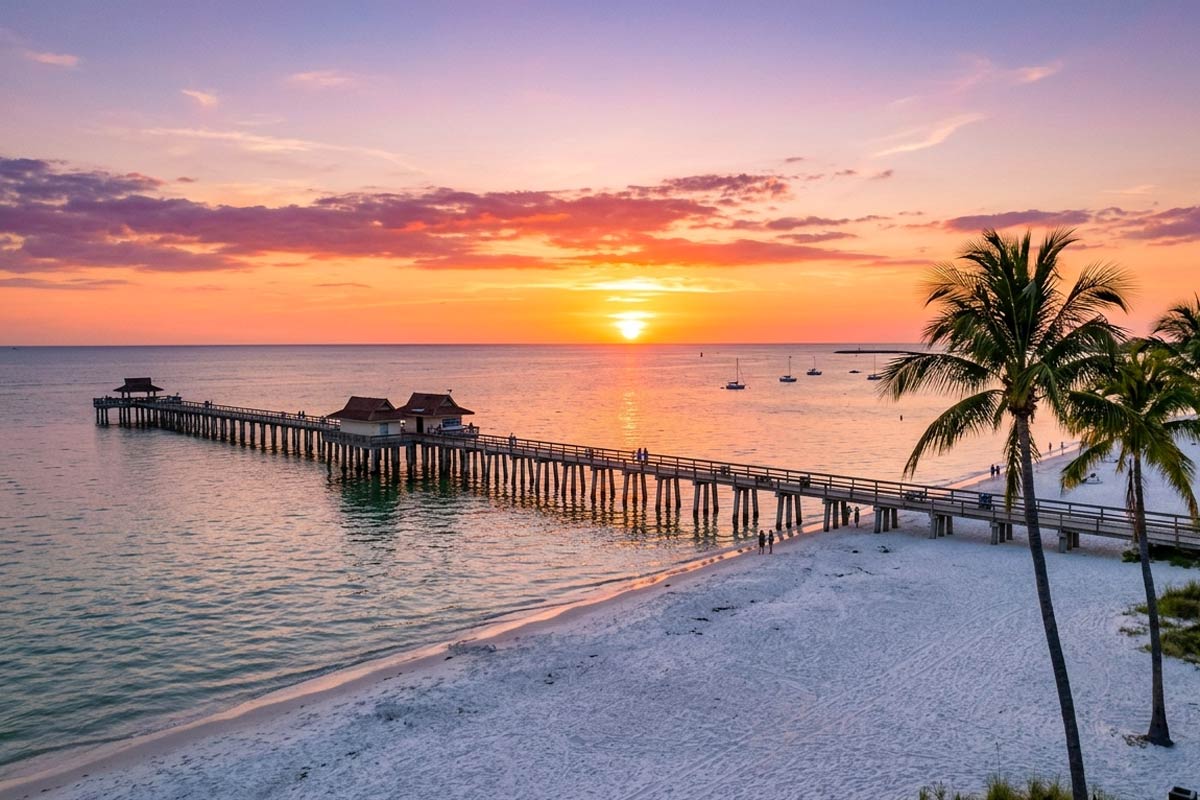
Thirty or forty years ago, Naples on Florida’s Gulf Coast was viewed almost as a hidden resort town known mainly to insiders. Quiet streets, low-rise homes, golf clubs, fishing piers, an unhurried pace of life, and a population that went to bed before the evening news. There was none of Miami’s aggressive glamour, none of the towering skyline of Sunny Isles Beach, and none of the feeling of a city constantly performing for attention. Naples existed in its own reality - calm, affluent, and almost old-fashioned. Today, the city is undergoing one of the most expensive transformations in America.
Over the past several years, Naples has become a magnet for billionaires, financiers, technology entrepreneurs, and wealthy transplants from New York, California, and Chicago. What makes this especially fascinating is that it achieved this transformation not through noise, but through the opposite of noise. While Miami sold energy, nightlife, and architectural spectacle, Naples sold control, privacy, and the feeling of living without constant disruption.
That is precisely why its luxury real estate market is now considered one of the strongest and most expensive in the United States.
A City That Was Never Built for Tourists
The history of Naples has always differed from that of other Florida resort destinations. In the late nineteenth century, the area began developing as a winter retreat for wealthy Northerners. The name Naples was chosen deliberately - local businessmen compared the climate and fishing to Naples, Italy, hoping to create associations with Mediterranean living.
But the citys true character emerged later, during the second half of the twentieth century. While Florida’s East Coast filled with high-rise towers and hotels, Naples maintained strict height restrictions for decades. The city consciously resisted vertical chaos. No one was trying to build another Miami Beach. Instead, the local elite prioritized low density, landscaping, greenery, and the atmosphere of a private club.
Decades later, that decision proved remarkably visionary.
Today, as many affluent Americans grow tired of overcrowded cities and constant visual noise, Naples is increasingly perceived as a rare form of luxury: space, silence, and freedom from the need to display anything at all.
Luxury Without the Noise
The defining difference between Naples and many other luxury destinations in Florida is that wealth here almost never looks performative.
Yes, the parking lots are filled with Rolls-Royces and Bentleys. Yes, there is an enormous concentration of private jets and yachts. Yes, the price of some waterfront homes has long surpassed tens of millions of dollars. But the city’s aesthetic follows a different philosophy. Here, money is not meant to shout. What matters instead is privacy, comfort, and the sense of complete control over ones life.
Naples lacks much of the visual aggression that defines parts of modern luxury culture. The architecture remains restrained. Many homes are hidden behind palm trees and landscape design. Even the citys most expensive neighborhoods feel less like exhibitions of status and more like perfectly maintained private communities.
In that sense, Naples has become unexpectedly modern. At a time when old-money aesthetics have regained cultural influence, the city suddenly appears more relevant than many newly built luxury destinations.
The Pandemic Changed Everything
Naples experienced its true explosion after 2020. The pandemic fundamentally changed how affluent Americans defined comfortable living.
People who had spent years dividing their lives between Manhattan, San Francisco, and Los Angeles began searching for places with lower taxes, strong infrastructure, safety, and warm weather. Florida became one of the greatest beneficiaries of this migration of wealth. But within Florida itself, Naples stood apart.
While Miami attracted young entrepreneurs, crypto investors, and media personalities, Naples became the destination for those seeking not hype, but quality of life.
Hedge fund managers, private business owners, Fortune 500 executives, and ultra-high-net-worth families began relocating here in large numbers. The real estate market reacted immediately. Waterfront home prices surged. Many properties sold off-market without public advertising. Some neighborhoods effectively transformed into private enclaves for America’s wealthiest residents.
Yet Naples somehow managed to preserve its atmosphere. That may be the most remarkable part of its story.
Fifth Avenue South and Third Street South: A New American Classic
Unlike Miami with its vertical drama, Naples is built around a human scale. The heart of the city - Fifth Avenue South and Third Street South - feels almost cinematic.
Low-rise Mediterranean-style buildings, terrace restaurants, white facades, galleries, palm trees, expensive cars that make no attempt to attract attention. Here, luxury is felt not through display, but through the quality of details.
There is no sense of constant urgency in Naples. Even luxury moves more slowly here. That is exactly why the city appeals so strongly to people who no longer feel the need to prove anything to anyone.
What is equally remarkable is that Naples largely avoided the aesthetic decline experienced by many American resort towns. Development, neighborhood appearance, and architectural standards are tightly controlled. As a result, Naples feels unusually cohesive - as if it had been designed by one person with exceptionally expensive taste.
America’s Most Underrated Luxury Market?
Compared to Palm Beach and Miami, Naples remained somewhat overlooked in the international press for many years. Yet within the United States, luxury real estate analysts have increasingly described it as one of the country’s strongest luxury markets.
The reason is simple: supply here cannot easily expand. The city is geographically constrained, while new development remains heavily regulated. This creates scarcity, which is only intensified by the continuing influx of wealthy residents.
Properties with waterfront access, private docks, and direct entry to the Gulf of Mexico are especially prized. Some homes in Port Royal - one of Naples’ most exclusive neighborhoods - now compete in price with premier addresses in Palm Beach and Beverly Hills.
And yet, psychologically, Naples still feels quieter than its competitors. That may be its greatest advantage.
A City for Those Tired of Performative Luxury
The modern luxury world is changing. In the 2000s, wealth was often displayed as loudly as possible. Today, the most expensive things increasingly appear almost invisible. The best neighborhoods, clubs, and services are becoming less public. Naples fits perfectly into this new reality.
It does not try to impress visitors instantly. There is none of Dubai’s visual shock or South Beach’s theatricality. Naples works differently: gradually, subtly, through atmosphere, control, space, and quality of life.
Perhaps that is why so many people who originally arrive “for the season” ultimately stay forever.
Because Naples is no longer simply a resort town. It has become a new version of American luxury. Quieter. More mature. And perhaps far more enduring than many places built solely to create instant spectacle.