
From websites to answers: why the internet we knew is disappearing
Not long ago, the internet was built in a simple and almost honest way: people wrote for people. Someone shared experience, someone argued, someone sold, someone explained, someone made mistakes, someone searched for truth, and someone simply wanted to be heard. The web was noisy, imperfect and overloaded, but at its core there was still a human logic: pages, authors, sources, opinions, personal experience, forums, blogs, company websites, media, comments, a search bar and a long journey from question to answer. Now that model is quickly becoming part of the past.
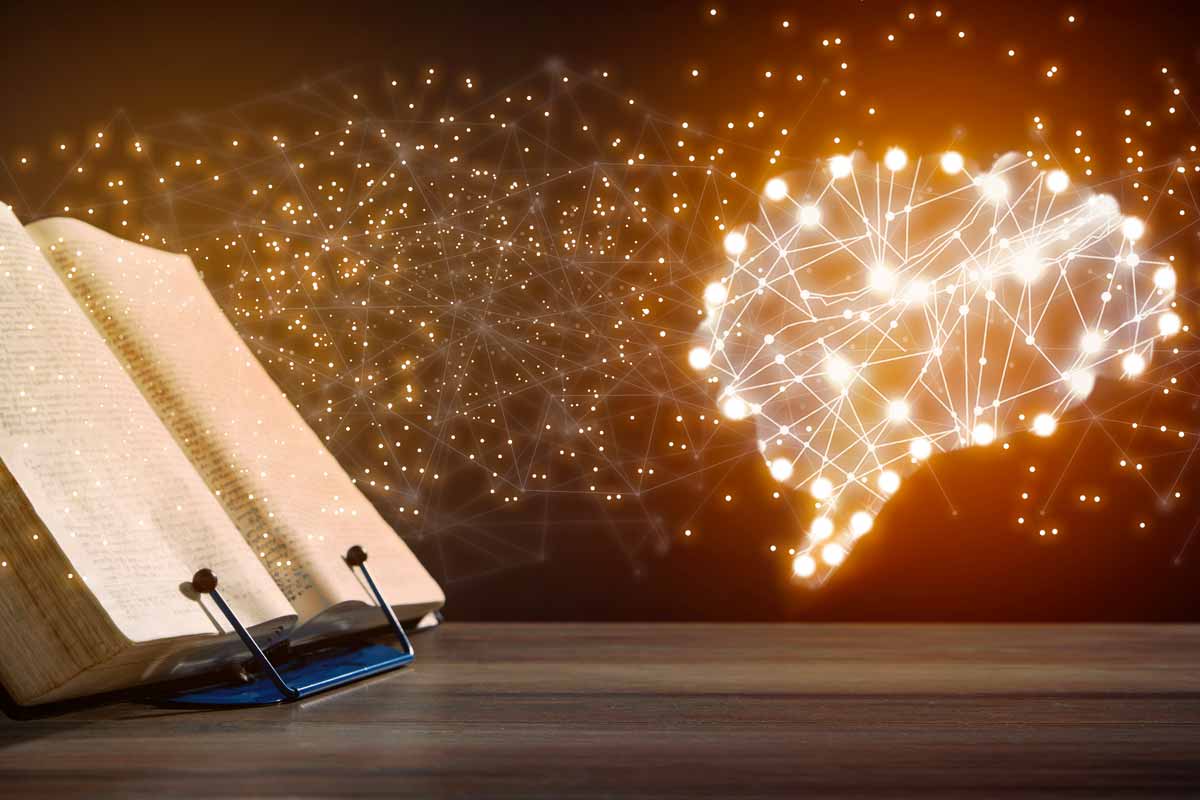
The internet of pages is being replaced by the internet of answers. There is no need to open ten tabs, compare opinions, read old forums, decode SEO texts, separate advertising from real experience and spend an evening searching for something that could be explained in two minutes. Artificial intelligence is already turning the web from a vast library of other people’s materials into a personal layer of interaction. It no longer merely shows where an answer might be. It formulates the answer itself - for a specific person, a specific situation and a specific request.
This is the real rupture. The old internet gave us access to the world. The new internet will increasingly give us a processed, compressed and personalized version of the world.
The internet was made by people for people
The first web was imperfect, but alive. It contained a great deal of excess, yet that excess was exactly what created the feeling of a human environment. Forums, blogs, personal websites, independent media, comments under recipes, long reviews, travel diaries, instructions from enthusiasts, Reddit discussions, local websites, small businesses with awkwardly designed pages - all of this was not simply content. It was evidence of human presence.
We were not searching only for information. We were searching for other people’s experience.
Which neighbourhood to choose. Which doctor is better. How to survive a divorce. How to fix a computer problem. Why a child is not sleeping well. What to do if a car makes a strange noise. Which beach in Mexico is safer. What to pack for a trip. What pain in the side might mean. Where to buy a good sofa. Behind every question stood hundreds of other people’s answers: sometimes useful, sometimes foolish, sometimes contradictory, but human.
Search took time precisely because the internet did not answer for us. It offered routes. We chose whom to trust, what to compare, where to doubt and where to stop.
AI is changing not the appearance of the internet, but the mechanics of trust itself. It stands between us and the rest of the web as a new intermediary - far more convenient, far faster and far less transparent.
The new internet will know not only the question, but the person
The real power of AI is not that it can elegantly summarize other people’s texts. The true transformation will begin when it understands not only the content of the question, but the person asking it.
The same question requires different answers for different people. Where should I go in the summer? For a family with children, retirees, a young couple without children, a business owner or someone on a tight budget, these are five completely different answers. How do I choose a doctor? For a new immigrant, someone without a family physician and a patient with anxiety, these are also different tasks. What car should I buy? There is no answer separate from income, habits, climate, insurance, mileage, family, neighbourhood and one’s psychological relationship with risk.
The old internet did not understand this. It gave us pages and advertising.
The new internet will increasingly build an answer as a personal consultation: taking into account your language, location, age, budget, search history, lifestyle, past decisions, calendar, purchases, routes, health, work, interests and even how deeply you usually want to understand a subject.
For our readers, this is especially important. Immigrant life often works like an endless search for translations between systems: how healthcare works here, school, taxes, insurance, real estate, children’s activities, renovation, business, advertising, retirement, banking products, government forms. The old internet forced people to spend hours collecting fragments. The new AI internet promises to assemble them instantly into one understandable route: what applies specifically to your province, your status, your income, your family and your situation.
This is not merely convenience. It is a change in the fundamental layer of everyday life.
Less noise - but who decides what counts as noise?
The appeal of this change is obvious. Much of the internet has become exhausting. Search results are filled with optimized texts, affiliate links, advertising roundups, automated summaries and pages written not for the reader, but for the algorithm. A person asks a simple question and receives a marketplace fighting for attention.
AI promises to cut through that noise. Not ten articles, but one answer. Not twenty opinions, but a practical conclusion. Not endless choice, but a recommendation adapted to you. Not someone’s random forum experience, but structured help here and now.
But this is exactly where the central question of the new era begins: if AI removes the noise, who decides what is noise and what is an important nuance?
In the old internet, we at least had a chance to see contradictions. One doctor said one thing, another said something else. One car owner praised a model, another warned about a problem. One restaurant had beautiful photographs but poor reviews. One financial recommendation seemed convincing until you read comments from people whose outcome was very different.
AI smooths out contradictions. And it does so beautifully. It can sound confident even when the world is not simple. The new internet will therefore be more convenient, but not necessarily more honest. It will irritate us less, but sometimes it was precisely the irritating details that saved us from an overly smooth picture.
Content is increasingly created not by people, but by systems
At the same time, the material from which the web is made is changing. More and more texts, videos, images, advertisements, voices, presentations, avatars, instructions and comments are created not by humans from scratch, but by generative systems.
This is not the future. It is already happening. But for the internet, it means something larger: the web is beginning to fill with material that has no lived experience behind it. It has not been lived, seen or tested. It looks human, but increasingly it is a synthetic assembly of probable phrases, images and scenarios.
If the old internet’s main problem was too many human opinions, the new problem is too much content that is not an opinion at all.
When AI reads AI
The strangest part of the new reality is that AI does not only write for people. Increasingly, it writes for other systems.
Companies use AI to create pages in order to appear in answers. Bots analyze texts written by other bots. Automated systems generate product descriptions, reviews, news, recommendations and comments that then enter training data, summaries, aggregators and, again, answers.
This creates the risk of a closed loop: machines produce information, machines read it, machines create new information from it - and the human being gradually becomes not the author of the environment, but the user of an already processed synthetic layer.
This does not mean human content will disappear. On the contrary, real human expertise, professional responsibility and local knowledge will become more valuable. But they will be harder to distinguish from imitation. The old internet required us to know how to search. The new internet will require us to understand where an answer comes from.
Who said this? On what basis? From what source? When was it updated? Is there a conflict of interest? Is this personal experience, an expert position, an advertising assembly or a synthetic text that simply sounds good?
In a world of AI answers, literacy will no longer mean only knowing how to use search. It will mean not losing your sense of reality in front of a polished formulation.
Search will no longer be the only entrance to the internet
The old internet was built around search. A person asked a question, received a list of links, opened websites, compared pages, read reviews, moved through directories, studied company profiles and gradually assembled a conclusion of their own. This model created an entire digital economy: SEO, media, blogs, reviews, rankings, maps and more.
AI does not cancel this system in one motion. It does something else: it adds a new layer above it. If the user once travelled the path from question to answer personally, now an intelligent intermediary will increasingly travel that path on the user’s behalf. It will read, compare, filter, explain and suggest the most suitable options. But for AI to recommend anyone at all, it still needs reliable digital sources: structured profiles, clear service descriptions, geography, languages served, specialization, contacts, reviews, articles, mentions and other trust signals.
That is why websites and apps are not disappearing. Their role is changing and becoming even more important. They are no longer only pages that the user must necessarily visit. They are becoming digital trust infrastructure - the layer from which search engines, maps, AI assistants and other services draw information when answering real questions from real people.
For local businesses in North America, this matters especially. The user may no longer search in the classic way by opening ten websites and comparing them manually. They may ask: find a Russian-speaking family lawyer in the GTA, where can I get my car diagnosed near Richmond Hill, which restaurant is right for my brother’s birthday, where can I order flowers for delivery tonight. At that moment, the business that wins is not the one with a random page somewhere online, but the one whose information is well organized, regularly updated, clearly structured and present in digital ecosystems that search and AI services can trust.
This is exactly where platforms such as iSpravochnik.com and the Spravochnik mobile apps for iOS and Android become especially important - at the intersection of the old and new internet. This is no longer merely a familiar business directory for the Russian-speaking audience. It is a multilayered digital platform where a company profile works in several directions at once: for the ordinary user searching through the website or app; for traditional search, which needs clear pages with keywords and structured information; and for the new AI environment, where algorithms must quickly understand what the company does, where it operates, what solutions it offers and why it can be recommended to a specific person in a specific situation.
The new era therefore does not kill local pages - but it raises the standard for their quality. Simply saying we are online is no longer enough. A company must be described in a way that both a human being and algorithms can understand: who you are, where you work, what language you serve clients in, what exactly makes you different, what problems you solve, what region you cover, why you can be trusted and whom you should be recommended to.
In this sense, the future belongs not simply to websites and not simply to apps, but to platforms that connect several layers of visibility at once: traditional search, mobile access, a local directory, thematic articles, structured business profiles and AI integration. Such a platform works simultaneously for the familiar internet and the internet of the future. Yesterday, it helped a client find a company through a search engine or app. Today, it strengthens a business’s presence in the digital environment, becoming a serious source that intelligent assistants can rely on when forming a short, personalized answer.
In the old internet, a business fought for a place in a list of links. In the new one, it will fight for the right to appear in the answer. And the business that gets there will not necessarily be the one that paid the most to be first in a list of links, but the one whose digital presence is clear, indexed, structured and reliable enough to be recommended with confidence.
A personal assistant instead of a common internet
The deepest change is that AI is turning the internet from a shared space into a personal interface.
Before, we all used roughly the same web, only with different search results and different feeds. Now each person will receive an increasingly individualized version of digital reality. One assistant will help manage the chronic uncertainty of life: sorting emails, explaining bills, preparing documents, planning trips, finding gifts, reminding us of tasks, comparing insurance, choosing courses, managing a budget, formulating replies, finding specialists, translating official texts, helping a child prepare for an exam, supporting relatives.
The more it knows about a person, the better it will help. And the more dangerous an error becomes.
Personalization is always an exchange. We give the system context in order to receive quality. We give it fragments of life: schedule, habits, documents, tone, weak points, fears, purchases, routes, preferences, family circumstances. In return, we receive less noise and more precision. This can be incredibly convenient. But it also means the new internet will be built not only on information, but on portraits of people.
Who owns this portrait? Who updates it? Who sees it? Who earns money from it? Who is responsible if a personal assistant quietly leads a person not toward the best decision, but toward the one most profitable for the platform?
The old internet sold our attention. The new one manages our decisions.
Deepfakes are only the visible part of the problem
When people discuss the risks of AI, they most often mention deepfakes: fake videos of politicians, cloned celebrity voices, synthetic images, false statements, scam calls from relatives. This is genuinely dangerous. In politics, finance, personal security and reputation, synthetic media has already become a weapon.
But deepfakes are only the most spectacular layer.
The deeper issue is invisible influence. Not a fake video that can be exposed, but hundreds of small prompts, recommendations, rankings, formulations and optimal options that gradually shape behaviour. If a system knows that a person is anxious, tired, lonely, financially vulnerable or prone to impulsive decisions, it can help them. Or it can sell to them. It can support. Or it can nudge.
That is why AI regulation will inevitably develop: labelling of synthetic content, transparency requirements, protection against manipulation, restrictions in political advertising, rules for deepfake materials. But law will always lag behind. Technology changes faster than parliamentary procedure, and global platforms move faster than national regulators.
This does not mean regulation is pointless. It is necessary. But regulation alone will not be enough. Society will have to develop a new culture of digital trust: who verifies, who is responsible, who has the right to generate, who must label and who answers for harm.
The human will become premium
The paradox of the new era is that the more synthetic content there is, the higher the value of real human presence will become.
A living journalist who was there. A doctor who carries professional responsibility. A lawyer who understands local practice. A teacher who sees the specific child. An editor who feels the audience. A tradesperson who has actually done the renovation. A client who truly used the service. A small local media outlet that knows the neighbourhood, the language and the people. A business with a history, a face, a reputation and a footprint in the real world.
None of this will disappear. But it will become more expensive and more rare. Because in a sea of synthetic answers, a person - or their AI agent - will not simply search for information. They will search for a source that can be trusted.
In this sense, the new internet may unexpectedly restore the value of old things: reputation, authorship, expertise, locality. The web of pages is not dying completely. It is changing status. From a mass environment, it is gradually becoming a base of evidence, an archive of origin, a space of sources to which not only people but also machines will turn. And the bot-made garbage created to manipulate search engines will end up in the landfill.
What will happen to us
The biggest mistake is to think this transition concerns only technology. In reality, it concerns how we will think.
If people once spent hours searching, comparing, doubting and assembling conclusions from contradictions, they will now increasingly receive a ready-made formulation. This will save an enormous amount of time. In medicine, education, business, everyday life, immigration, documents, renovation, shopping and planning, AI assistance can become a real relief - especially for people who previously struggled to break through language barriers, bureaucracy, professional jargon or information chaos.
But along with this comes the risk of losing the skill of independent search and doubt. A convenient answer can gradually replace not only bad internet noise, but the very process of thinking. And sometimes the process mattered more than the result.
The new internet will demand a different maturity from us. Not simply the ability to search, but the ability to ask good questions. Not simply to trust an answer, but to understand its limits. Not simply to use an assistant, but not to give it the final right to decide for us. Not simply to enjoy personalization, but to remember that an overly convenient digital environment can quietly narrow our world to what it already knows about us.
The familiar internet is truly disappearing. Not all at once, not dramatically, not with a black screen and final credits. It is dissolving into answers, assistants, personal recommendations and interfaces that look less and less like websites and more and more like invisible intermediaries between the human being and reality.
But this is not a catastrophe. It could become one of the most useful technological shifts of recent decades. The internet of the future can remove an enormous amount of informational noise, help people make decisions, explain complexity, translate systems, save time and give each person a personal layer of support in everyday life.
The price of all this is trust.
If the old internet required us to know how to search, the new one will require us to know how to distinguish. Where there is help, and where there is manipulation. Where there is personalization, and where there is soft control. Where there is human experience, and where there is synthetic imitation. Where a short answer truly saves life, and where it deprives us of depth.
The internet is ceasing to be a library of pages and becoming an environment of personal answers. And now the main question is not whether AI will become part of our lives. It already has. The question is different: will we be able to trust AI enough to let it distinguish synthetic sources from genuine knowledge, convenient imitation from real human experience, and a short generated answer from a truth for which someone is truly responsible?