
The most driver-focused electric BMW in history
The new BMW i4
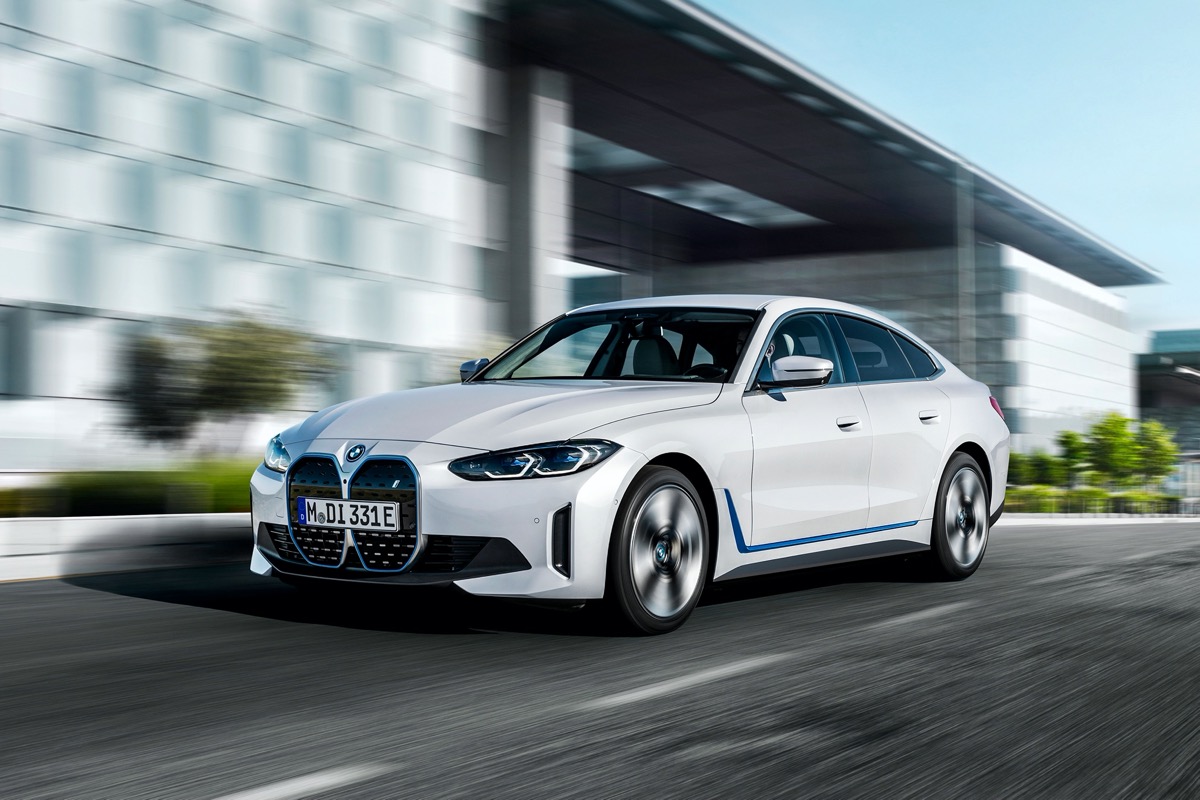
The BMW i4 became one of the brand’s most important electric vehicles because it made electric performance understandable for BMW’s traditional audience. It is not a futuristic experiment for the sake of design, and not a show concept built only to attract attention. It is a true Gran Coupe with the signature BMW seating position, sporting handling, a practical luggage compartment, a premium interior and an electric powertrain that translates familiar BMW character into a new format.
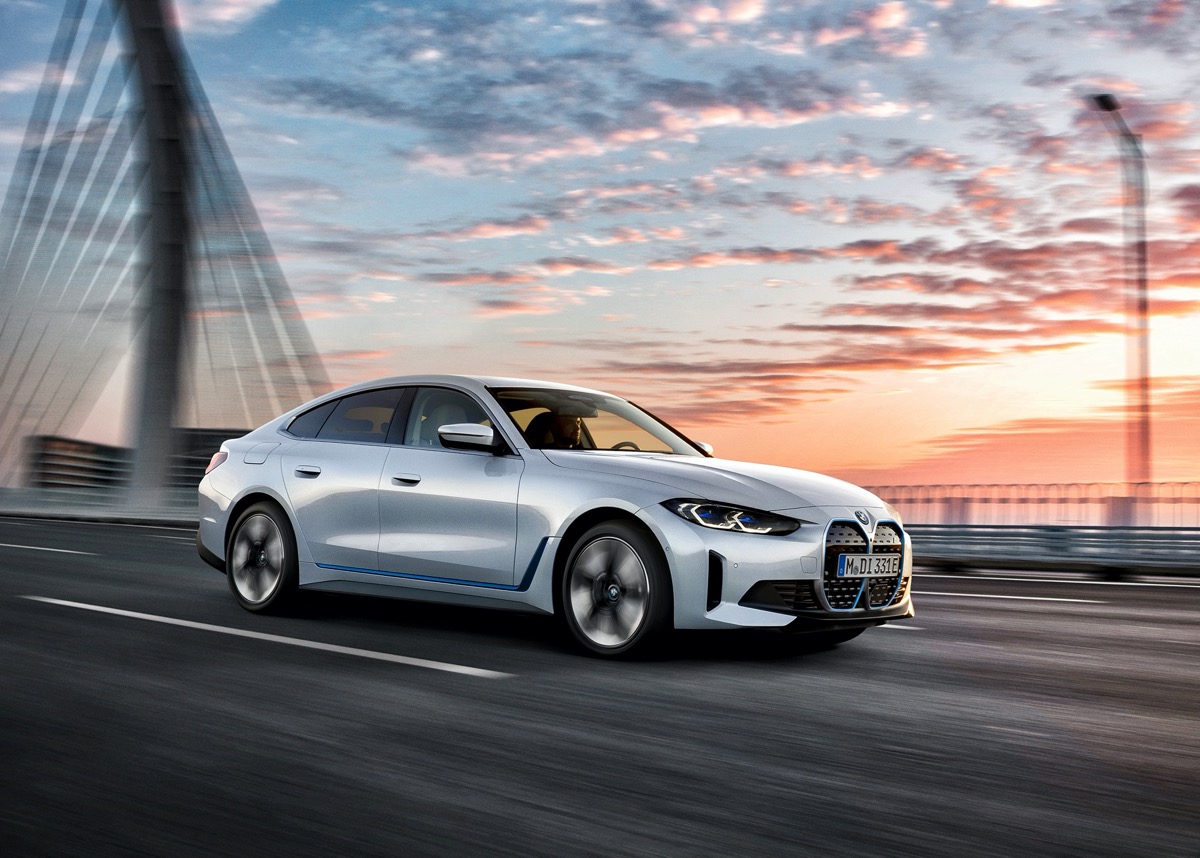
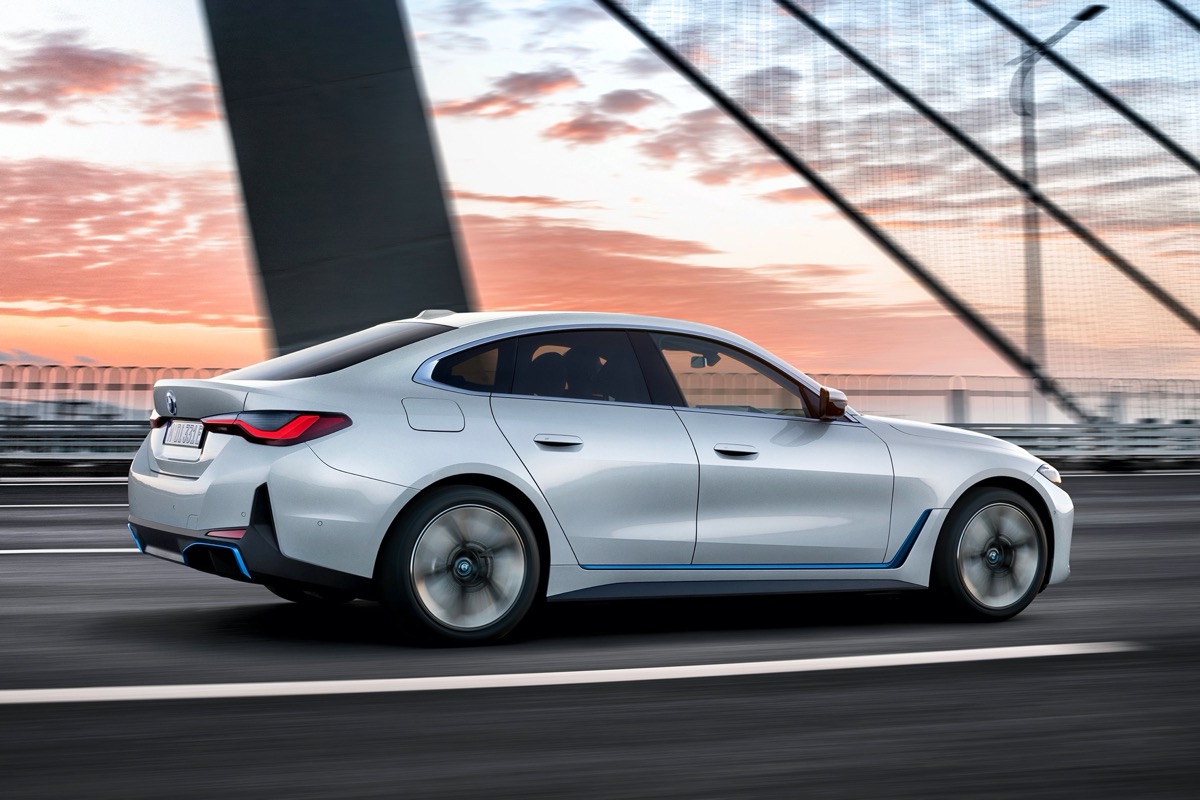
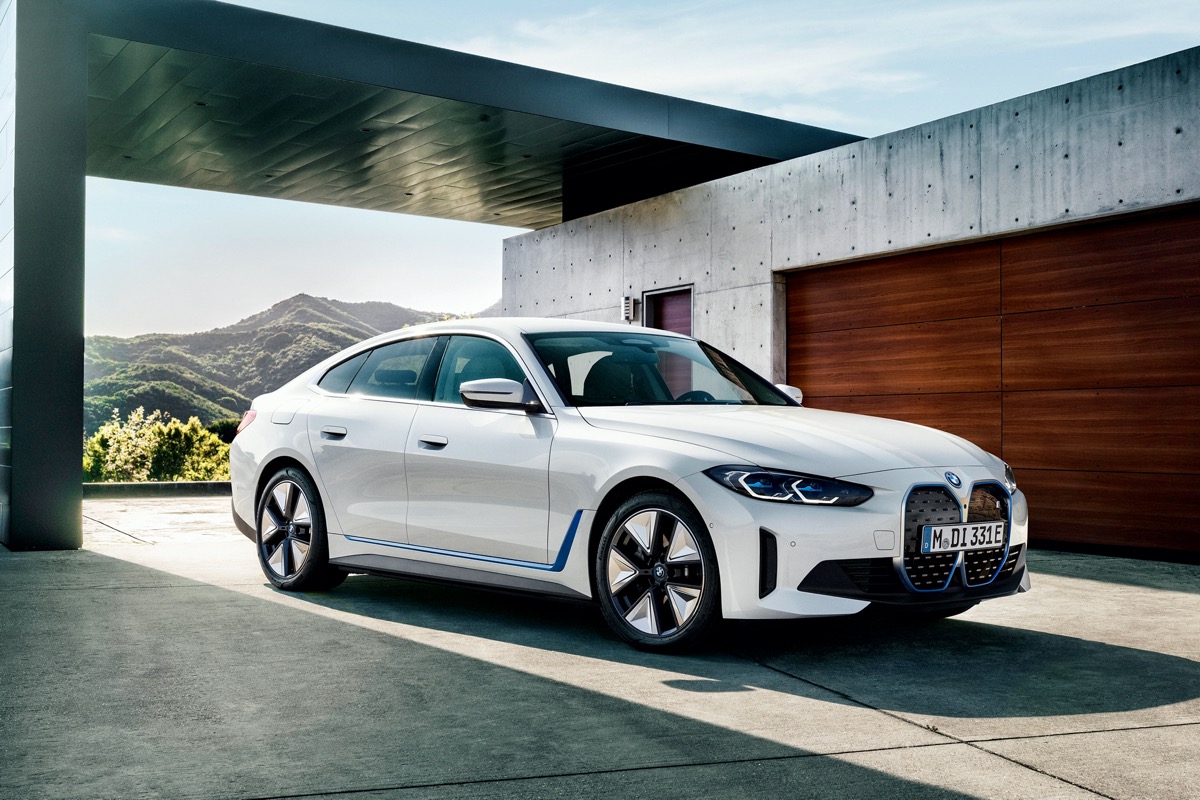
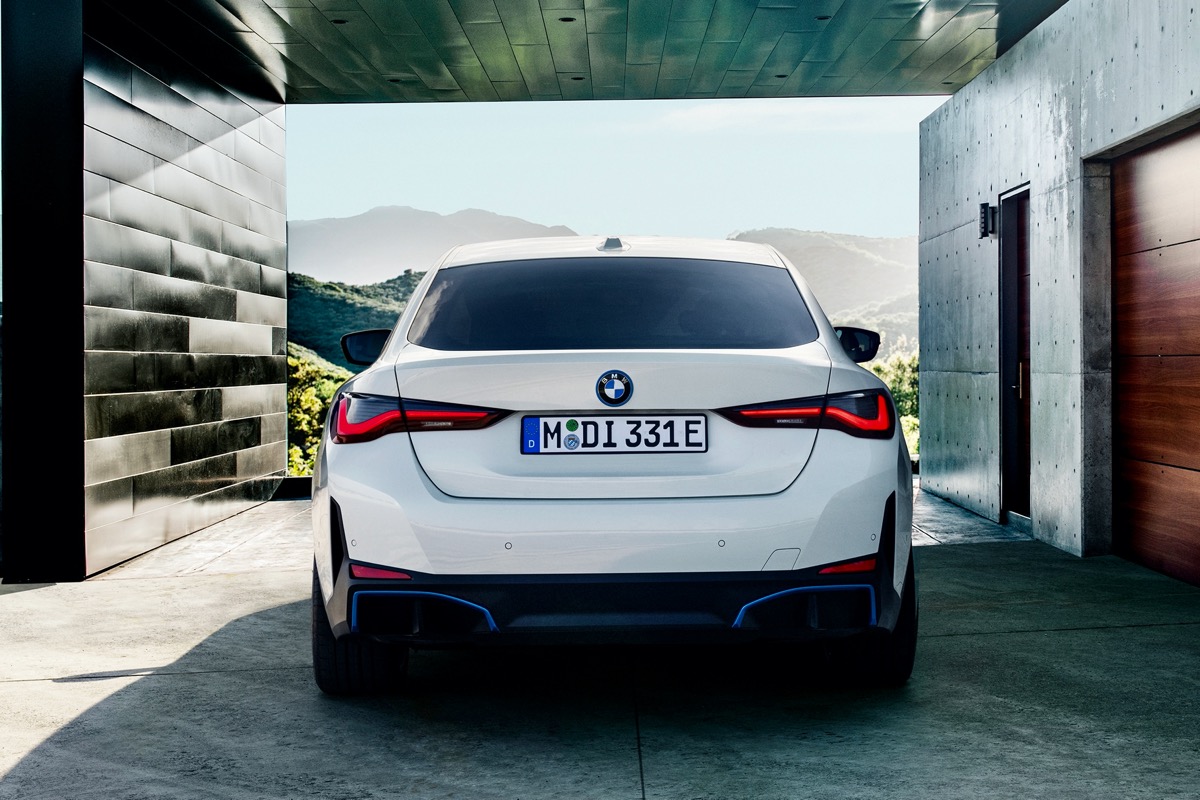
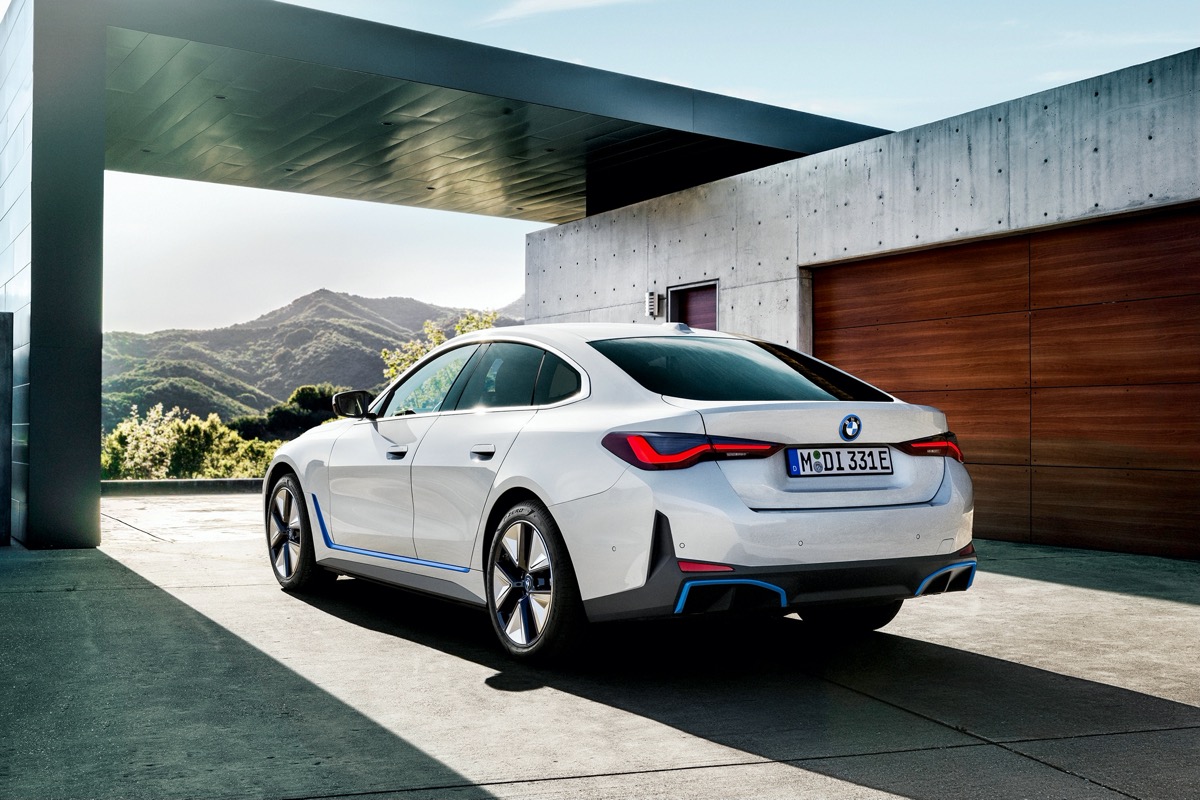
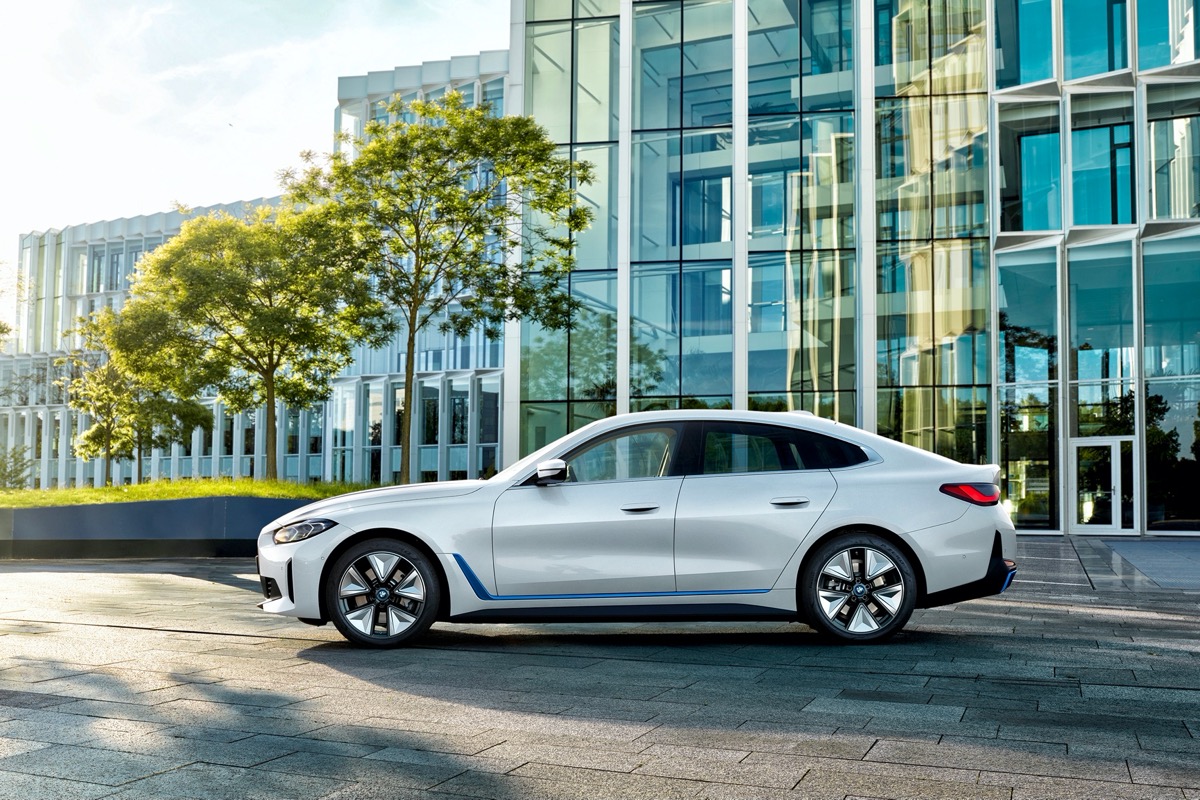
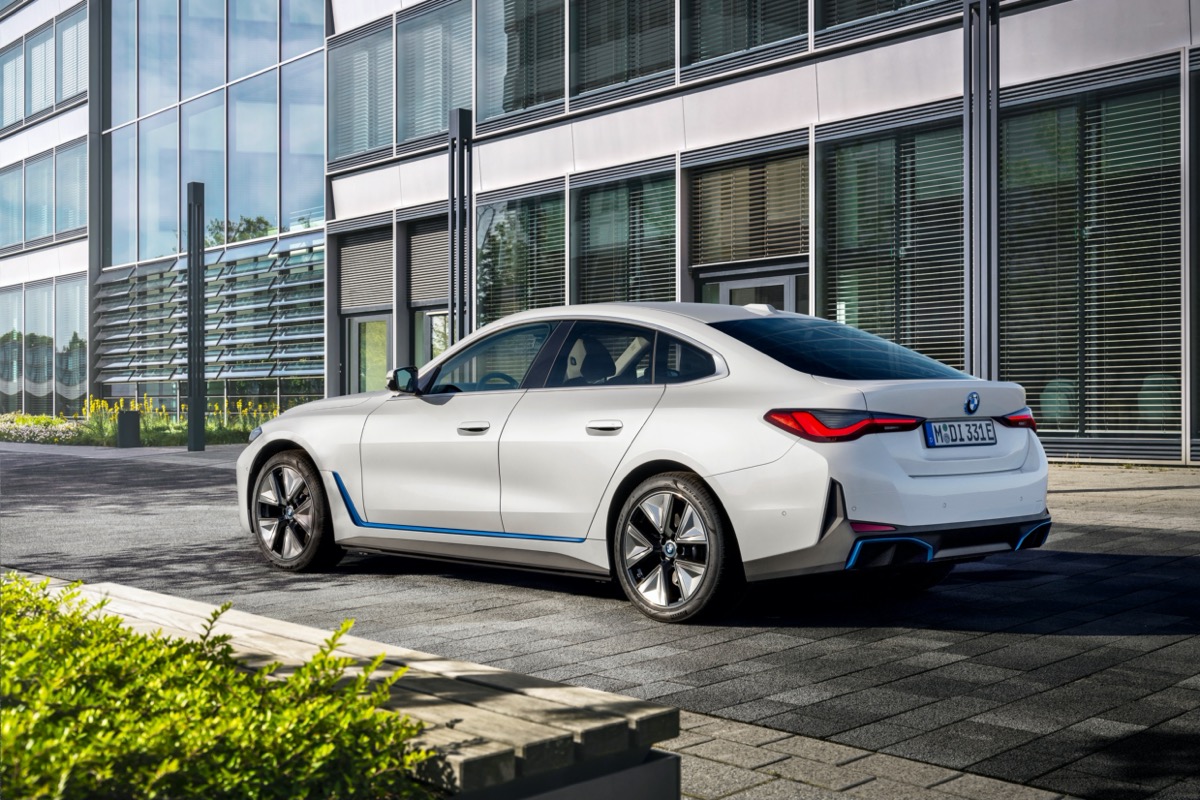
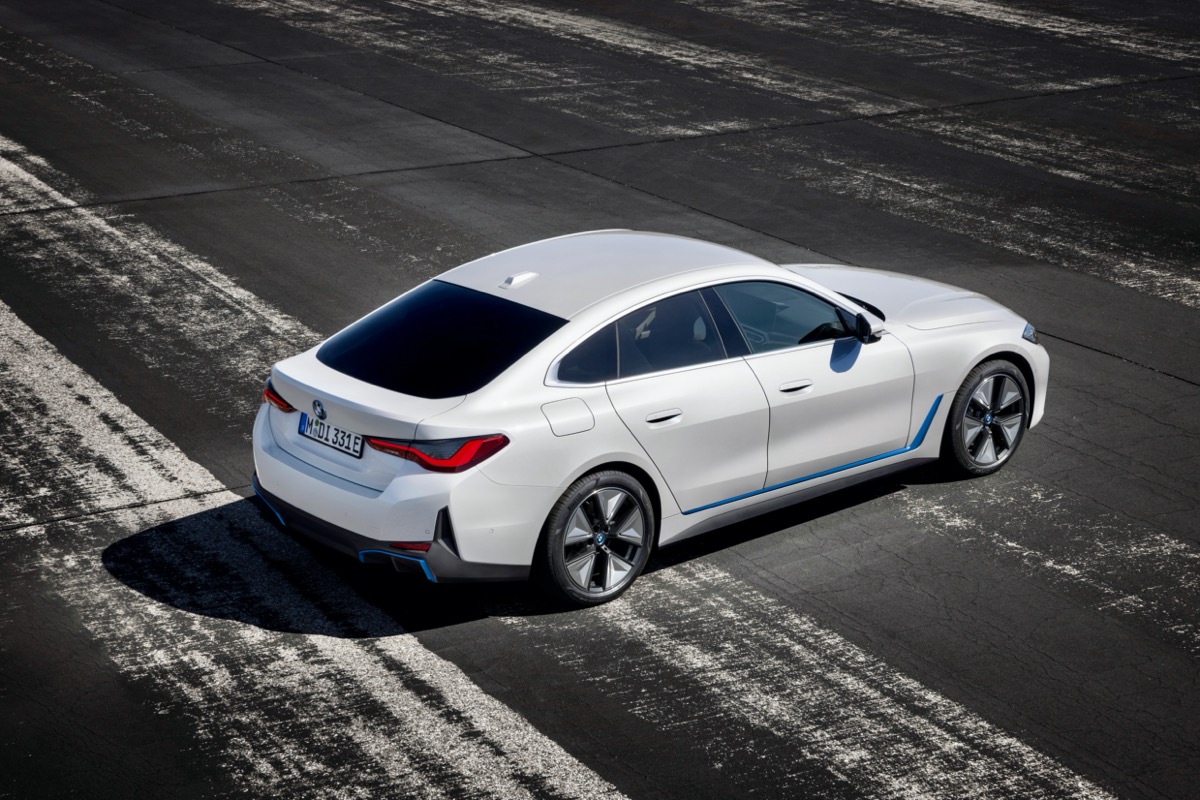
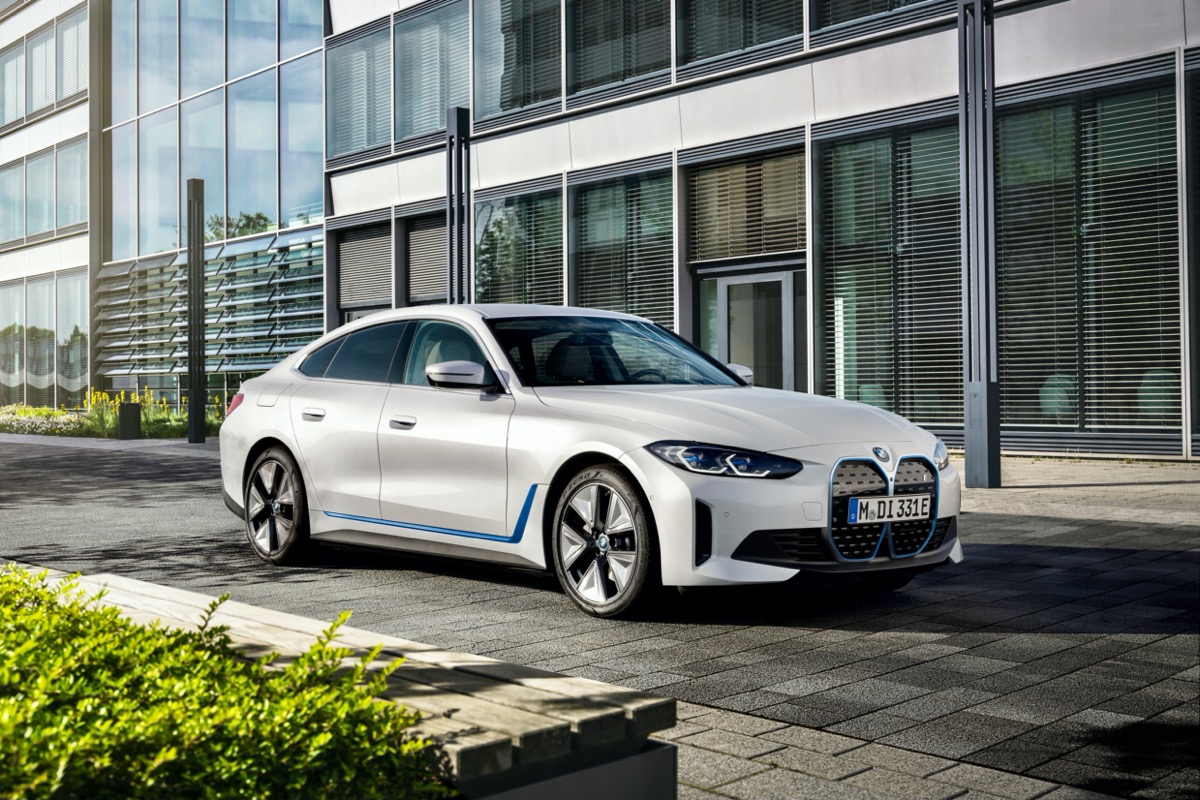
The electric BMW i4 combines BMW’s legendary handling, elegant design, high build quality and the everyday practicality of a Gran Coupe. Its exterior is built around classic proportions: a long wheelbase, short overhangs, a sloping roofline and a low, planted silhouette. Frameless doors and slim roof pillars strengthen the sporty impression, while the car remains practical enough for daily life.
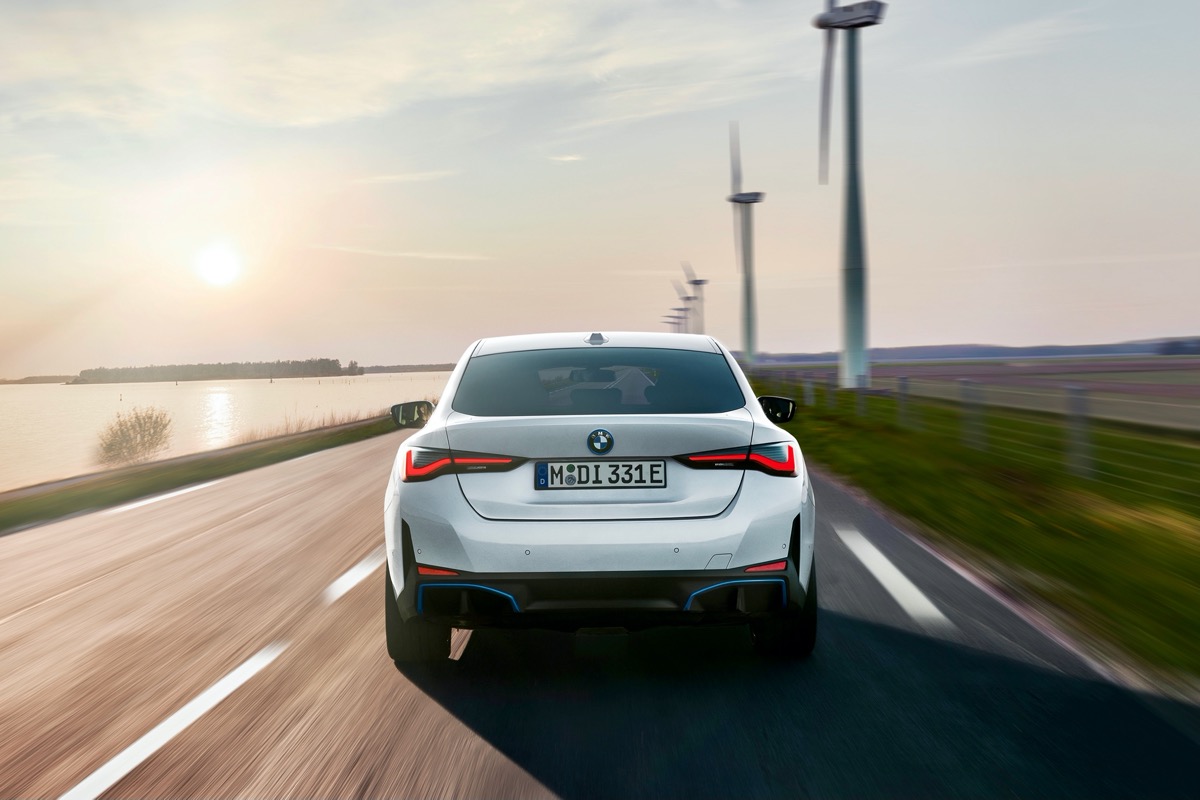
The body of the BMW i4 was carefully developed from an aerodynamic point of view. Every element - from the front bumper to the spoiler on the tailgate - helps reduce air resistance. BMW engineers also paid attention to areas the owner does not normally see: the high-voltage battery housing, motor compartment shielding and aerodynamic covers for suspension components. Together, they create an almost flat underbody with smooth transitions, while the rear diffuser effectively guides the airflow exiting beneath the car.
An active air flap in the lower section of the kidney grille helps reduce drag and can adjust through several stages. Air Curtains at the edges of the front bumper guide airflow along the wheels and reduce turbulence. Optional BMW Individual wheels are also aerodynamically optimized with special inserts between the spokes.
The entire package of aerodynamic measures helps reduce energy consumption and increase range. The BMW i4 eDrive40 has a drag coefficient of just Cd 0.24, while the BMW i4 M50 is around Cd 0.25. For an electric Gran Coupe with a practical body and a sporting character, this is a strong result.
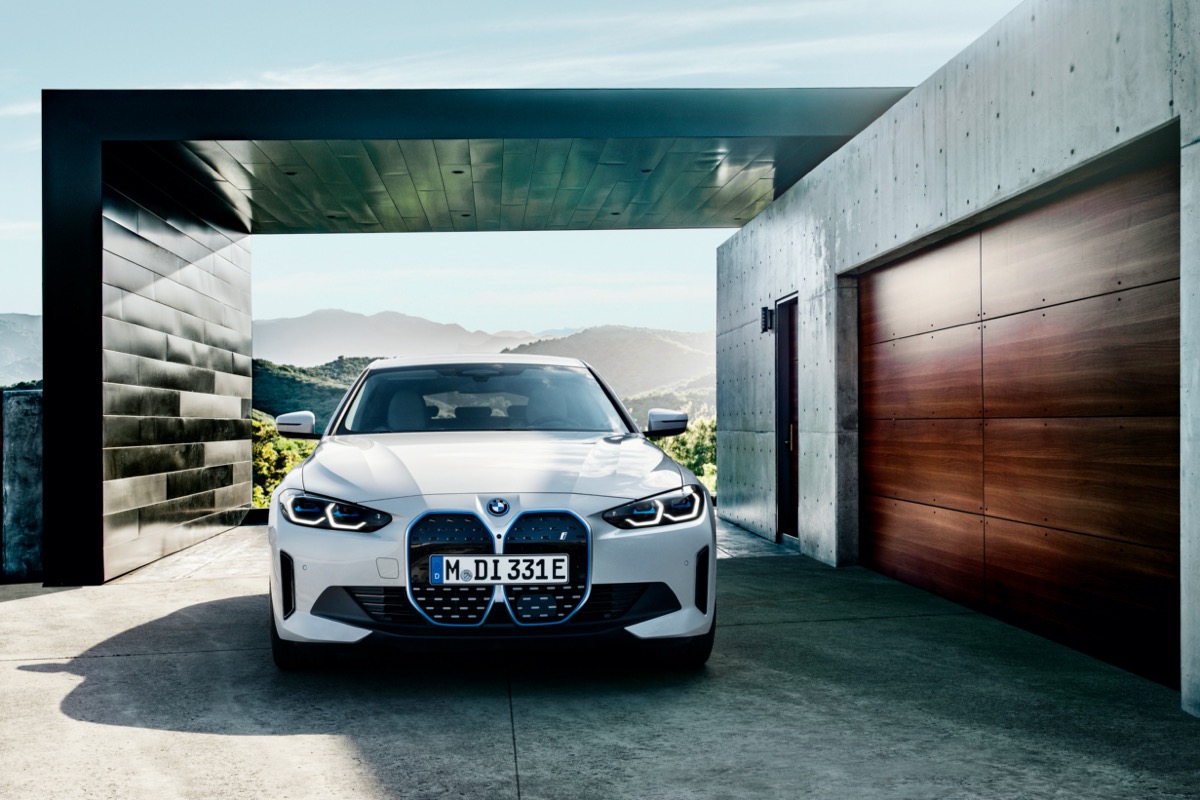
Slim LED headlights are standard on the BMW i4 and include U-shaped daytime running light elements. Adaptive BMW Laserlight headlights were available as an option, offering an extended light range, along with BMW Selective Beam high-beam control.
The signature closed BMW grille conceals cameras, radar and ultrasonic sensors. In its standard form, the BMW i4 stands out with BMW i Blue accents on the grille, side sills and diffuser elements.
The exterior design of the BMW i4 M50 and the BMW i4 eDrive40 in M Sport specification emphasizes the car’s athletic character. For further individualization, buyers can choose the M Carbon exterior package and M Performance accessories.
A greater feeling of openness is provided by the optional glass roof panel, measuring 0.33 m² and equipped with an electric slide-and-tilt mechanism. An electric sunblind allows the amount of sunlight and fresh air entering the cabin to be controlled.
Interior features
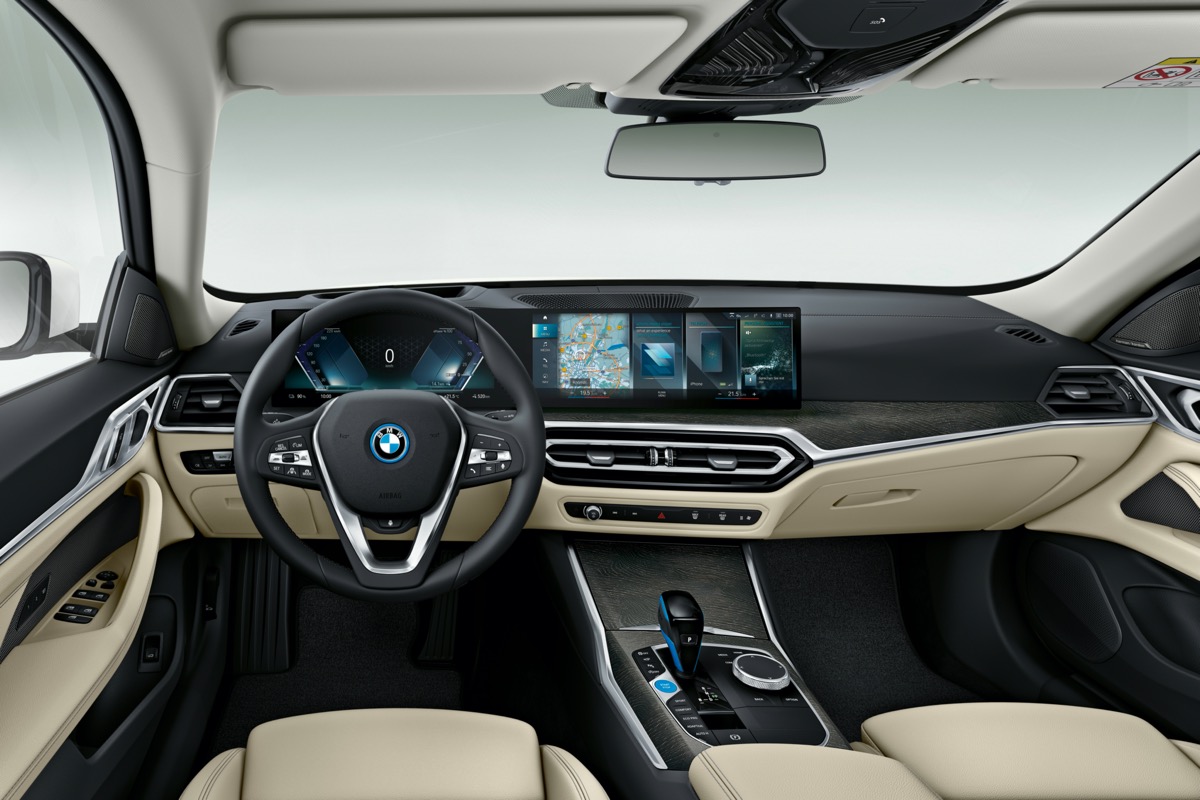
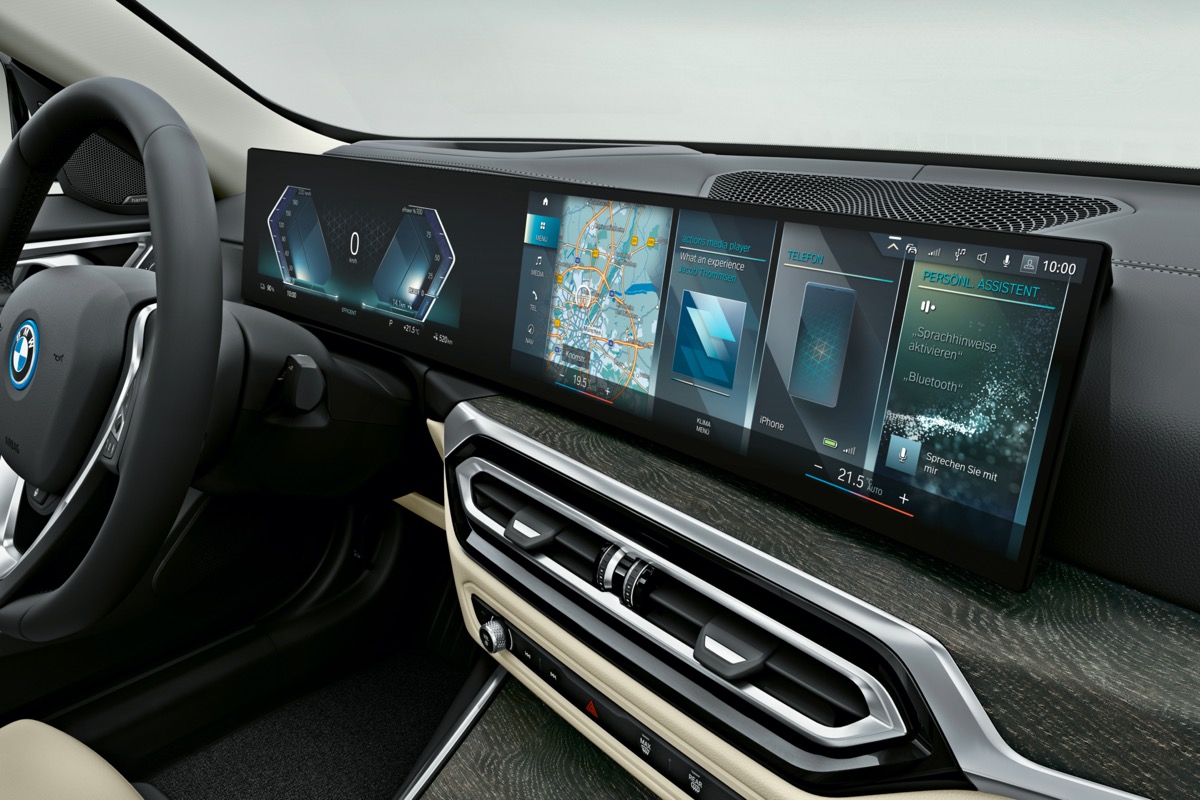
The interior of the BMW i4 combines driver-oriented ergonomics with the atmosphere of a premium Gran Coupe. The drive mode selector, BMW iDrive controller and functional buttons on the centre console are brought together into a clean, unified cluster that preserves the familiar BMW logic of control.
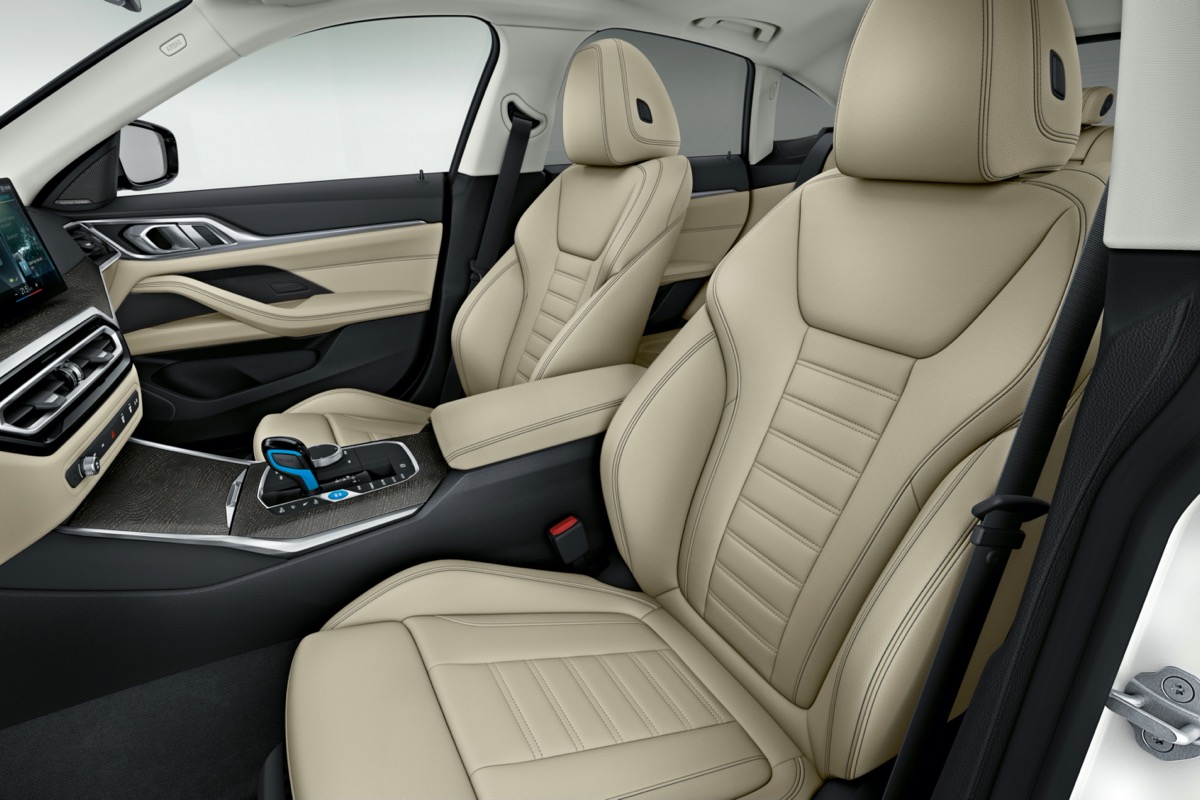
As standard, the BMW i4 offers acoustic comfort glazing, pre-heating and pre-conditioning of the cabin, and sport seats with strong lateral support. The tailgate is electrically operated, while luggage capacity ranges from 470 to 1,290 litres, making the i4 not only quick, but also practical for everyday use.
Optional equipment includes electrically adjustable seats with memory function, active ventilation for the driver and front passenger seats, and heating for both front and rear seats. Alongside cloth and Sensatec upholstery, customers could choose Vernasca leather, extended BMW Individual Merino leather or full BMW Individual Merino leather upholstery.
Intelligent climate control takes into account the number and location of passengers in the cabin. Automatic climate control can be operated through the touchscreen or by voice command. The system adjusts not only the amount and distribution of air, but also seat heating and ventilation.
Key specifications
The fifth-generation BMW eDrive system combines the electric motor, transmission and power electronics in one compact housing. The electric motors operate as electrically excited synchronous motors, where the magnetic field is generated not by permanent magnets, but by precisely controlled electrical energy. This allowed BMW to avoid using rare earth materials in the magnetic components of the motors.
At launch, two key versions were presented: the BMW i4 eDrive40 and the BMW i4 M50. The BMW i4 eDrive40, with 340 hp and 430 Nm of torque, uses classic rear-wheel drive. Acceleration from 0 to 100 km/h takes 5.7 seconds, while top speed is electronically limited to 190 km/h. WLTP range reaches up to 590 km, although North American EPA ratings are traditionally lower and closer to real conditions in the United States and Canada.
The BMW i4 M50 became the first fully electric model from BMW M GmbH. It is equipped with two electric motors and all-wheel drive. Peak system output reaches 544 hp, while maximum torque is 795 Nm. WLTP range is up to 510 km.
In the BMW i4 M50, one electric motor is mounted on the rear axle and the second on the front axle. The rear motor develops up to 313 hp, while the front motor produces up to 258 hp. Intelligent coordination of the two motors ensures stable acceleration and confident traction even in difficult weather conditions.
The system can flexibly distribute power between the axles - from a predominantly rear-wheel-drive character to all-wheel drive with maximum grip. This helps the BMW i4 M50 maintain a balance between classic BMW driving feel and the advantages of an electric drivetrain.
The Sport Boost function further emphasizes the sporting character of the BMW i4 M50. In Sport mode, it briefly increases the output of the drive system to the maximum 544 hp and 795 Nm. Peak power is available for more than 10 seconds, while acceleration is accompanied by an expressive BMW M-style sound effect.
Sport Boost can be activated several times in succession if the battery charge allows. BMW M enthusiasts will also appreciate Launch Control, which helps deliver an ideal start from a standstill. The BMW i4 M50 accelerates from 0 to 100 km/h in just 3.9 seconds, while top speed is electronically limited to 225 km/h.
Chassis tuning and dynamics
BMW’s long sporting experience was built into the development of the i4 powertrain and chassis. The dynamic potential of the model goes far beyond quick acceleration in a straight line. The main task was to ensure that the electric Gran Coupe remained a true BMW in corners, on highways and in everyday driving.
The BMW i4 chassis uses a front double-joint spring-strut axle and a five-link rear suspension. Standard equipment includes electromechanical Servotronic steering, Dynamic Stability Control DSC and rear-axle air suspension.
The BMW i4 M50 is equipped with Adaptive M suspension and M Sport brakes. Torque distribution between the two electric motors occurs much faster and more precisely than would be possible with a traditional mechanical transfer case between the axles.
The wheel-slip limitation function quickly corrects loss of grip, while DSC optimizes directional stability through selective braking of individual wheels. DTC mode allows a higher degree of wheel slip, helping an experienced driver explore the limits of the car.
For the most confident drivers, DSC off mode significantly reduces electronic intervention and provides a more direct connection with the car. These settings show that the BMW i4 was not developed only as an environmentally responsible electric vehicle, but also as a car for people who genuinely care about driving.
High-voltage battery and charging
The lightweight and efficient design of the drive system delivers impressive performance and strong range without the need for an excessively large and heavy battery. The high-voltage battery of the BMW i4 has a gross capacity of 83.9 kWh, while usable capacity is around 81.5 kWh.
The BMW i4 architecture was deeply adapted for an electric powertrain. Structural elements, including the front-axle subframe and special reinforcements, are rigidly connected to the high-voltage battery housing, improving body stiffness.
The battery cells of the BMW i4 are only about 110 mm high. Thanks to the battery’s position in the floor, the centre of gravity of the BMW i4 is significantly lower than in comparable combustion-engine models. This is one of the keys to its precise handling in true BMW style.
The BMW i4 is equipped with an integrated heating and cooling system with heat pump function for the cabin, high-voltage battery and drive system. The heat pump uses ambient energy and heat generated by the electric motors. In low outside temperatures, this helps reduce the energy required for heating and increases real-world range compared with conventional electric heating systems.
Predictive thermal management helps optimize battery temperature before a stop at a fast-charging station, making the charging process quicker and more efficient.
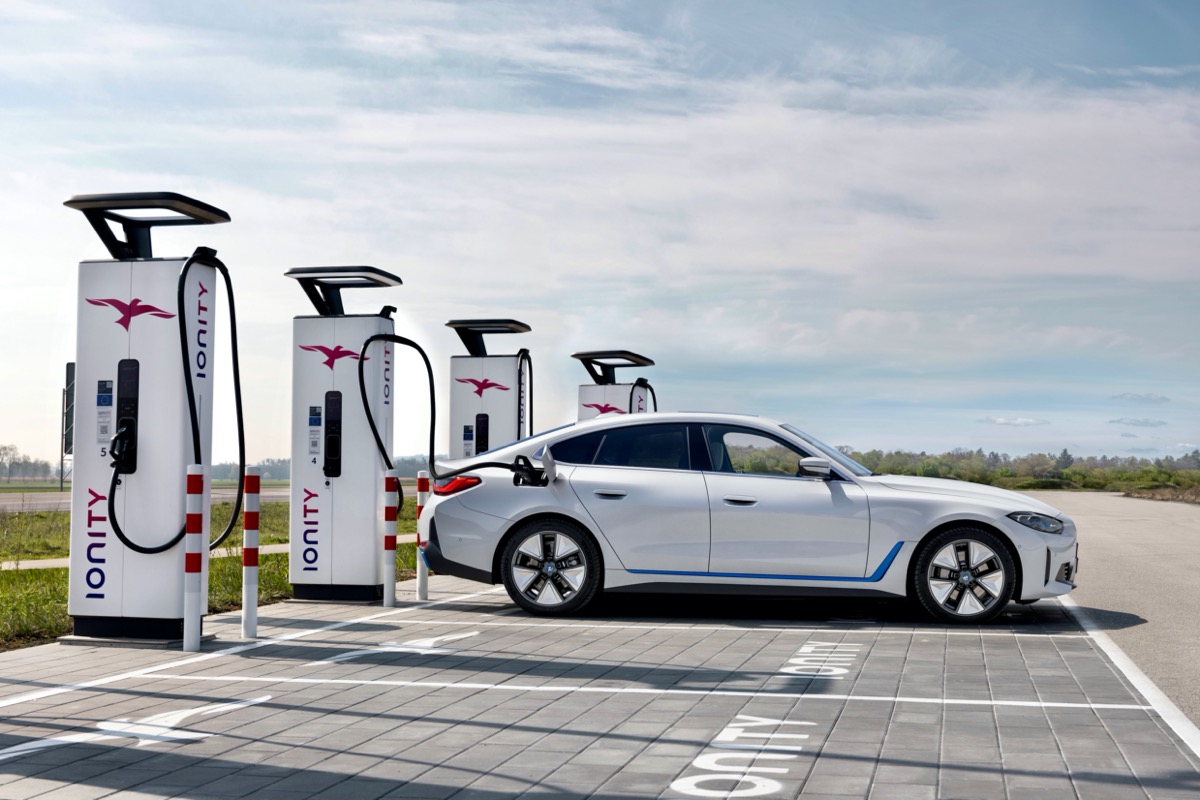
From a home Wallbox, the BMW i4 can charge on AC power at up to 11 kW. A full charge in this mode takes less than 8.5 hours. At DC fast-charging stations, the car supports charging at up to 200 kW.
Under favourable conditions, 10 minutes of fast charging can add up to 164 km of range to the BMW i4 eDrive40 and up to 140 km to the BMW i4 M50 under the WLTP cycle. This makes the i4 convenient not only for city use, but also for longer journeys.
The BMW i4 also uses adaptive brake energy recuperation. The intensity of recuperation can adapt to the driving situation using data from navigation and driver assistance systems. For example, when approaching an intersection, the system can increase deceleration; on open stretches of road, it can allow coasting. Maximum recuperation power is up to 116 kW in the BMW i4 eDrive40 and up to 195 kW in the BMW i4 M50.
Digital environment and multimedia
The BMW i4 is equipped with the new-generation BMW iDrive system and BMW Curved Display. It combines a 12.3-inch information display and a 14.9-inch central control display. The system is based on BMW Operating System 8 and includes the BMW Intelligent Personal Assistant.
BMW IconicSounds Electric provides unique acoustic feedback when the accelerator is pressed and speed increases. The sound effects, created in collaboration with composer Hans Zimmer, strengthen the emotional side of driving an electric vehicle and make acceleration more expressive.
BMW Live Cockpit Professional is standard on the BMW i4. Depending on the market and specification, different audio systems are offered, including a Hi-Fi system and the premium Harman Kardon Surround Sound system with 16 speakers and a powerful digital amplifier.
Remote Software Upgrade technology allows the latest digital functions to be installed without a service visit. The BMW i4 also supports modern online services and high-speed data transfer, bringing its digital capabilities to the level expected from a premium electric vehicle.
Driver assistance systems
The list of driver assistance systems includes a broad range of features. Standard equipment on the BMW i4 includes front collision warning, speed limit information and lane departure warning. Park Distance Control and a rear-view camera are also offered as standard equipment in many markets.
Driving Assistant Professional is available as an option and includes steering and lane control assistance, as well as active cruise control with Stop and Go function.
The optional Parking Assistant includes Reversing Assistant, which helps the car retrace a path in reverse. Parking Assistant Plus adds surround view and Remote 3D View, making it easier to monitor the space around the vehicle.
The concept of sustainability
The BMW i4 is produced at BMW Group Plant Munich. Renewable energy is used in the production of battery cells. More broadly, BMW emphasizes reducing CO2 emissions throughout the vehicle’s life cycle - from raw material sourcing and production to use, recycling and disposal.
The design of the electric motors eliminates the use of rare earth materials in magnetic components. Cobalt and lithium for the batteries are sourced through controlled BMW Group supply channels. The cobalt content in the cathodes of the BMW i4 battery cells was reduced to less than 10%, and the battery itself was designed with material recycling in mind.
The BMW i4 matters not only as another electric vehicle. It became a bridge between the familiar world of BMW and the new electric era. For those afraid that switching to an EV means losing driver engagement, the i4 offers a convincing answer: an electric car can be fast, practical and technologically advanced - while still feeling like a real BMW.