

Google Amsterdam office
When a corporate interior becomes brand storytelling
A good office is no longer just a collection of desks, meeting rooms and coffee machines. This is especially true for companies that sell not only products, but also their own culture. In such spaces, the interior becomes a language: it tells us where the company came from, how it thinks, how it treats people and what kind of atmosphere it considers productive. That is why Google Amsterdam office, designed by D-DOCK, is interesting not only as a vivid example of creative workplace design, but also as an almost museum-like story of how a garage-born startup became a global technology empire.
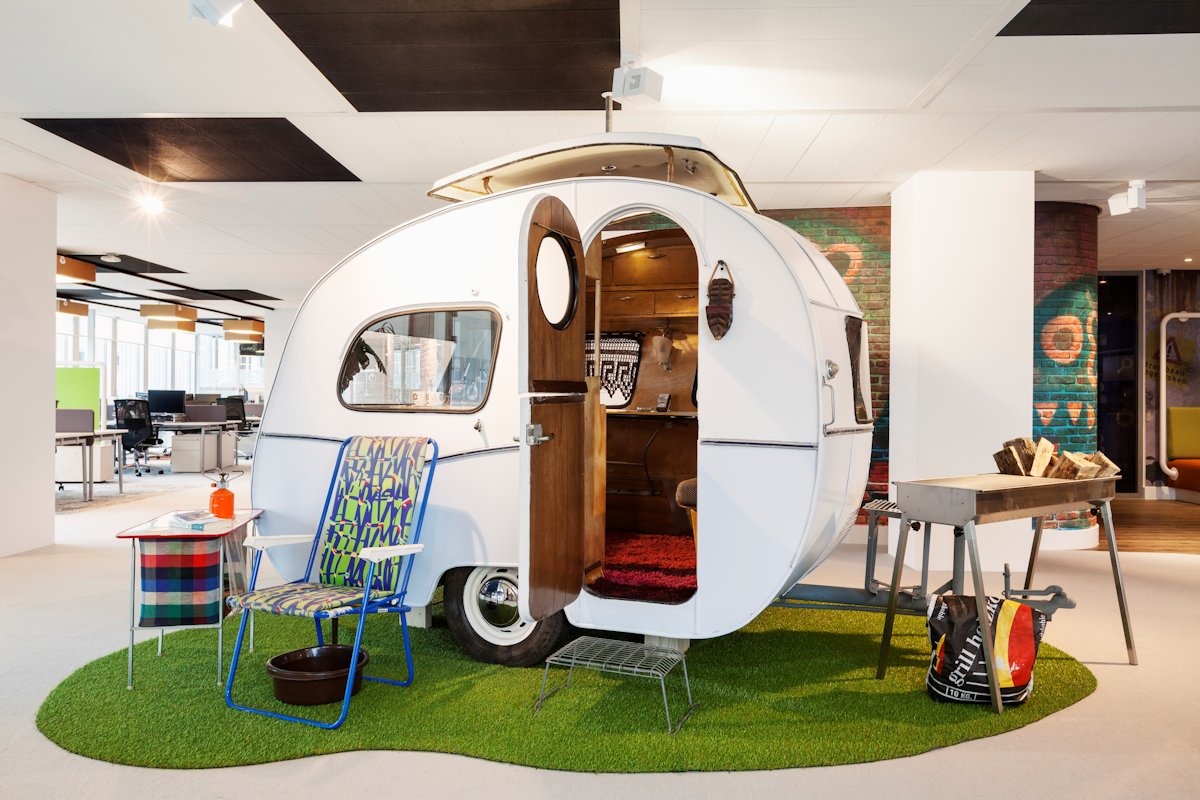
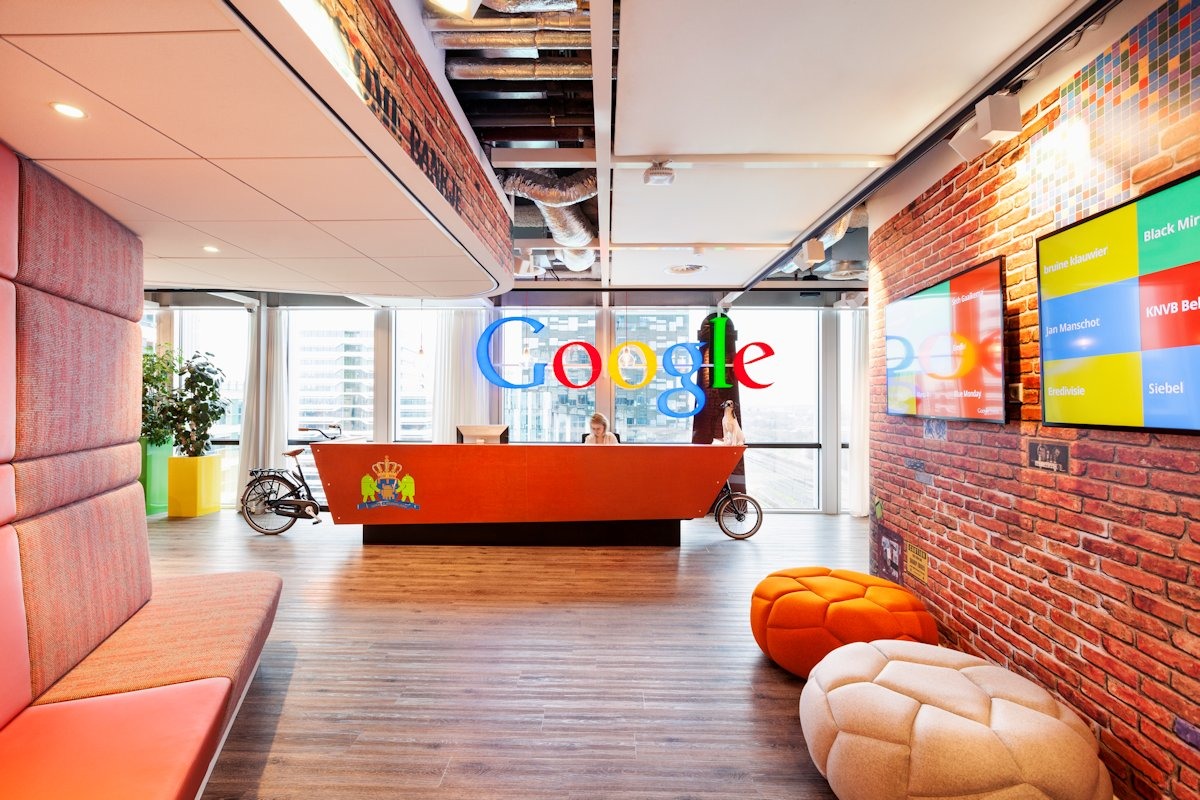
D/DOCK transformed roughly 3,000 square metres of office space in Amsterdam’s Vinoly Tower into an interactive working environment for the Google team. The inspiration for the project was the famous garage in Menlo Park where Larry Page and Sergey Brin began building Google. But the designers did not turn the office into a literal garage set. They took the idea of the beginning itself: a little improvisation, a little boldness, a little student energy and the feeling that big things can be born in the most informal places.
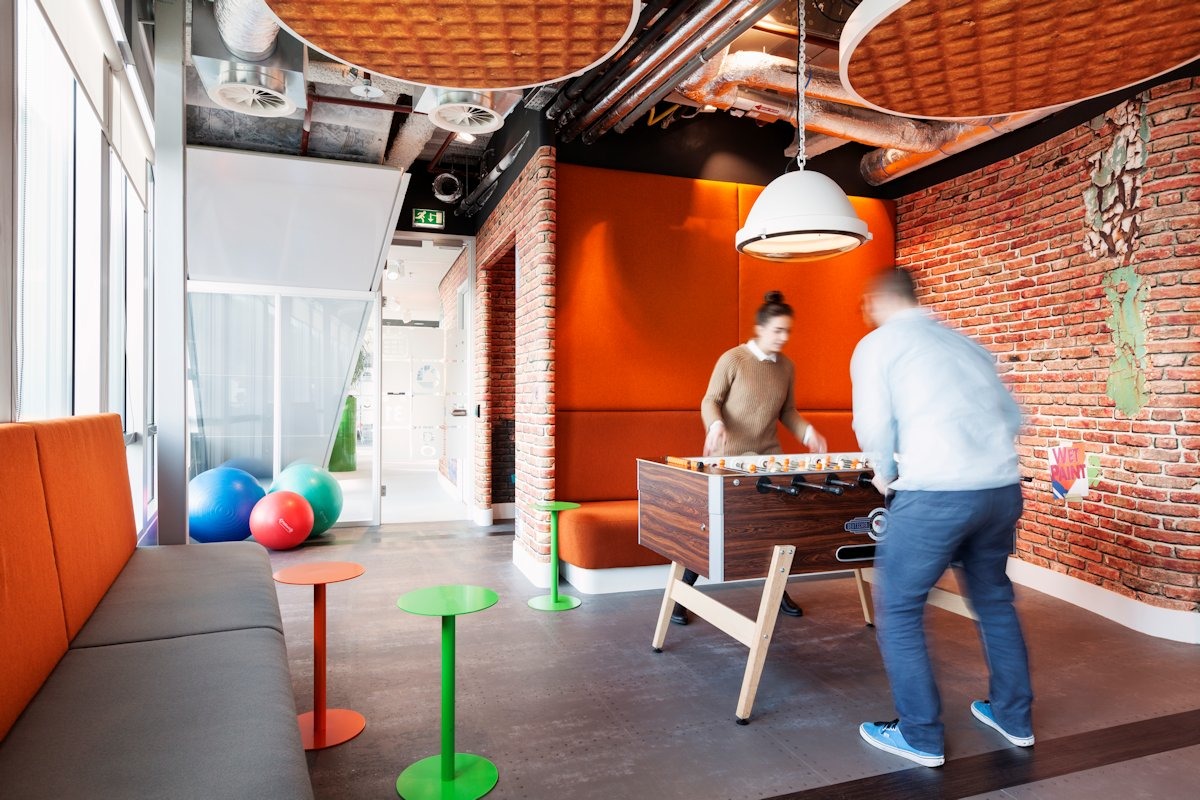
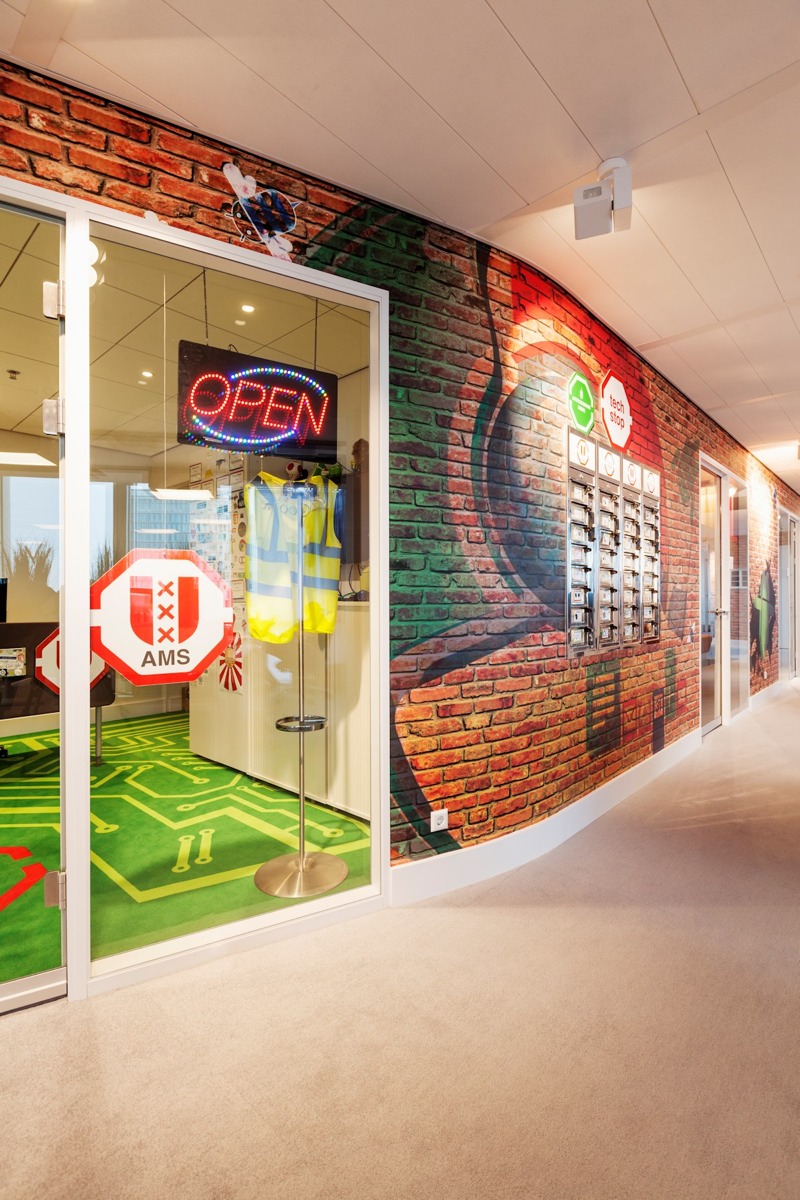
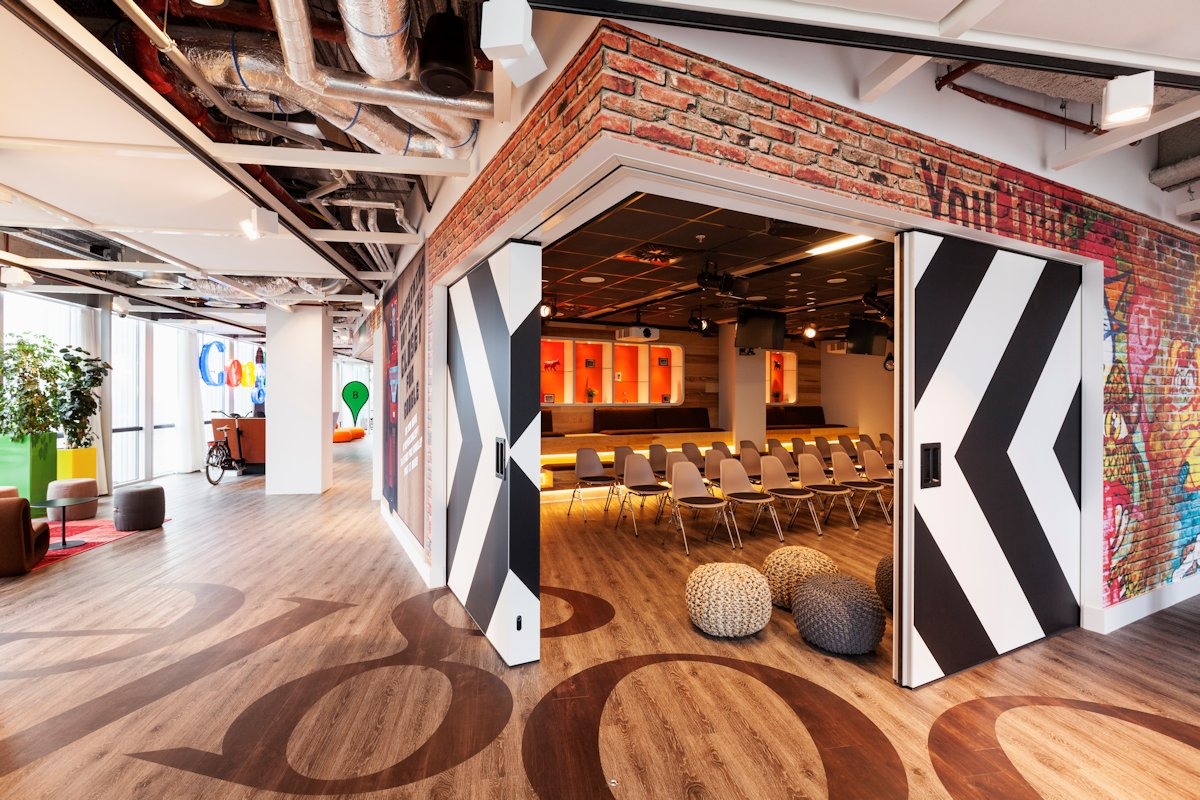
That is where the graffiti walls, cardboard box-style lights, exposed ceilings, industrial details and the container wall in the 70-seat Tech Talk auditorium come from. These elements do not feel like random jokes. They remind employees of the company’s origins: before campuses, billion-dollar valuations and global influence, there was a garage, cables, servers, temporary solutions and belief in an idea.
The garage as corporate mythology
The story of many technology companies begins with an almost legendary space: a garage, a dorm room, a small room, a first rented office. For Google, this image is especially important because it connects the scale of the company today with its entrepreneurial beginning. In the Amsterdam office, D/DOCK used this motif not as nostalgia, but as a reminder of the value of experimentation.
The garage here is not about poverty or temporary conditions. It is about the freedom to try. About an environment where the idea matters more than formal status, and a solution can be assembled quickly, boldly and sometimes unconventionally. In this sense, the office interior works as a corporate code: it tells employees that innovation does not have to look sterile, and serious work can happen surrounded by play, colour and unexpected details.
Dutch character in the details
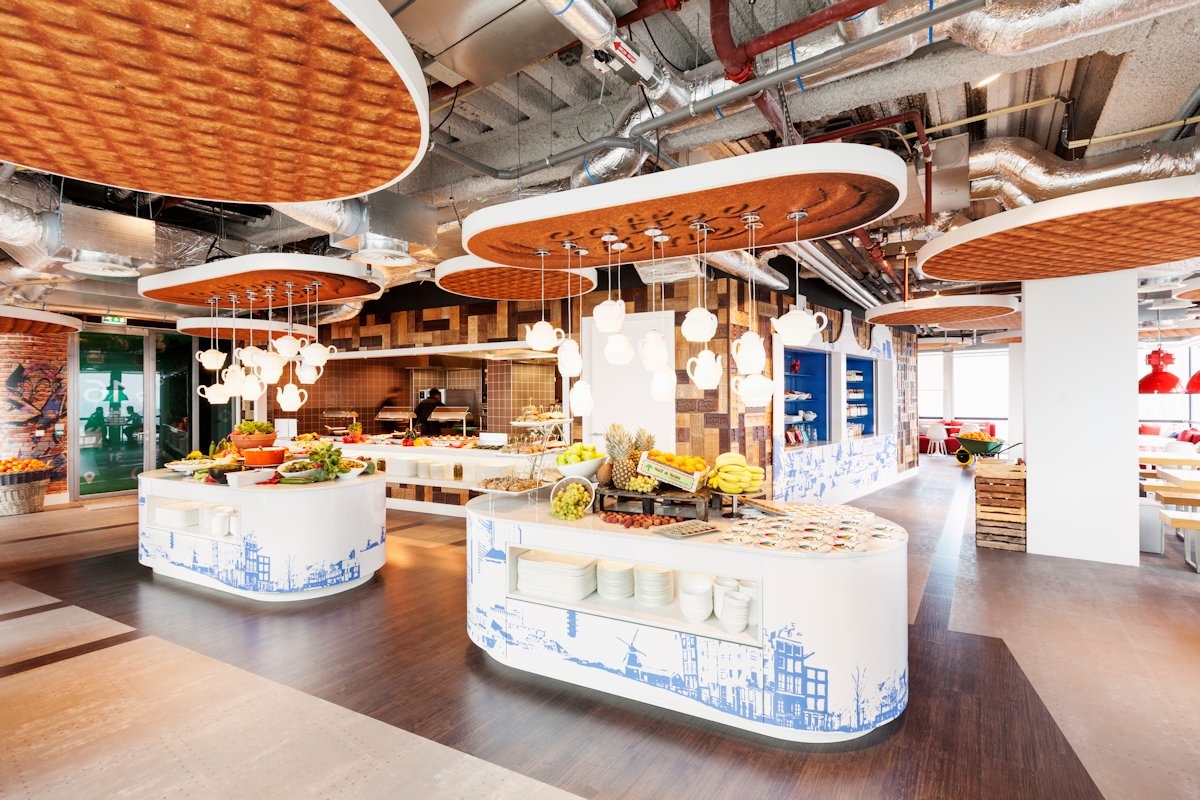
Despite its connection to Google’s history, the office does not lose its connection to Amsterdam. D/DOCK added typically Dutch motifs, but without turning the design into obvious folklore. Ceiling panels shaped like stroopwafels - the famous Dutch caramel-filled waffles - became one of the project’s most recognizable elements. In other areas, there are references to bicycle culture, Delft Blue graphics, bright colours and details that read clearly as a local Amsterdam touch.
This is what makes the project convincing. Google’s Amsterdam office does not feel like a generic corporate interior that could be moved unchanged to any city. It belongs to its place. Here, a global brand meets local culture, and the standard idea of a “creative office” gains a specific urban character.
The workplace as a landscape
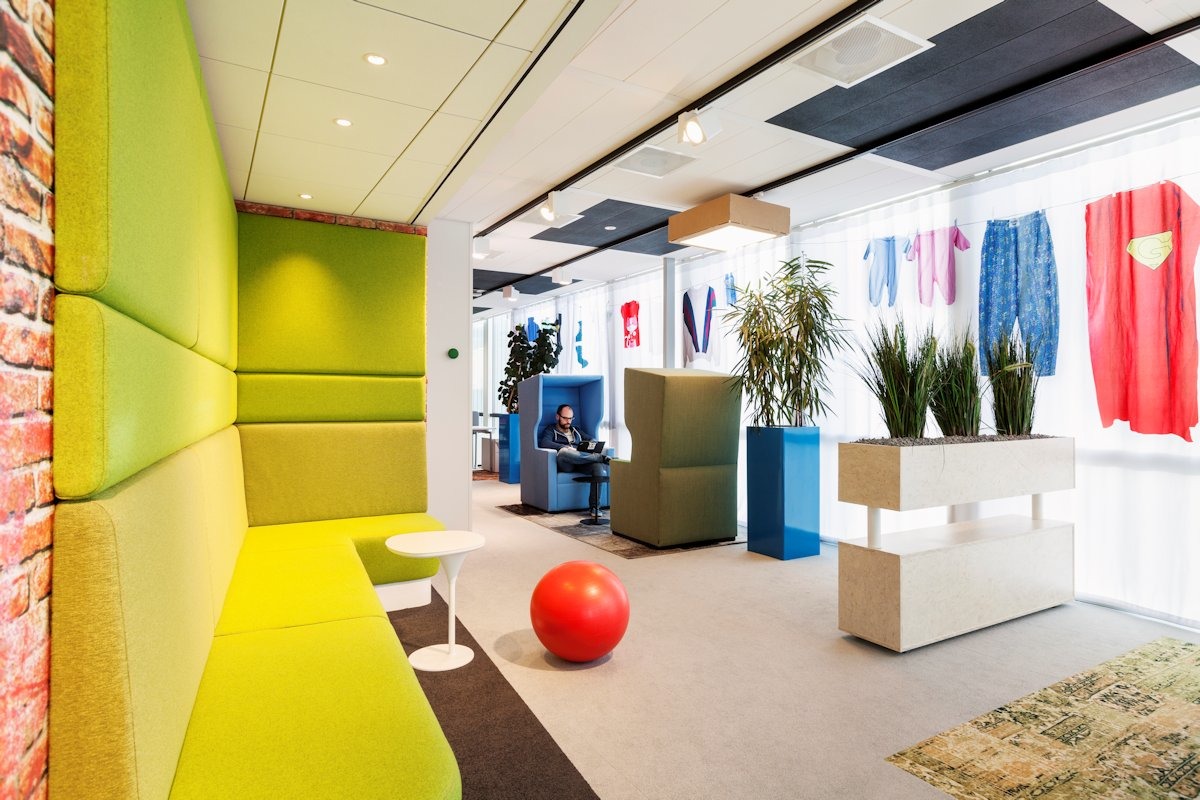
The office layout is built around the idea of an interactive landscape. Each floor is organized to combine open work areas, meeting spaces, micro-kitchens, small meeting rooms, video booths and places for quieter concentration. Workstations are placed along the windows so employees can benefit from natural light and views over the city.
This is an important principle of the modern office: productivity is not created only by seating density and the number of meeting rooms, but by balance. People need places to communicate, but also places to focus. They need open areas for exchanging ideas, but also quiet corners where work does not become constant noise. Google’s Amsterdam office tries to bring these modes together in one flexible environment.
Old objects with new functions
One of the strongest aspects of the project is the reuse of elements. In the micro-kitchens and common areas, restored and reimagined objects were given a second life. For example, an old snack wall, once connected with Amsterdam’s culture of quick bites, was transformed into a distribution point for computer accessories. This is not merely decorative play, but a good example of how an office can be sustainable, witty and functional at the same time.
D/DOCK also paid attention to healthy materials, energy efficiency and water consumption. In contemporary workplace design, this is no longer an extra bonus, but part of professional responsibility. A beautiful office built from toxic materials and careless resource use now looks outdated, no matter how striking it may appear in photographs.
Why this office still matters
The Google Amsterdam project was introduced in 2014, but it does not feel like an outdated design gimmick. Yes, some of its devices - bright zones, playful elements, informal meeting rooms, graffiti and decorative eccentricity - have become familiar in technology offices. But the strength of this project is not only in visual tricks. It lies in the fact that the interior is connected to brand history, the culture of the city and real patterns of work.
The weakest creative offices often make the same mistake: they look fun, but function poorly. They are created for photographs - slides, swings, neon, bright walls, unusual furniture - and then it turns out that people have nowhere to think quietly, hold difficult conversations or do deep work. In a good office, play must have meaning. In Google Amsterdam, it does not operate as entertainment for its own sake, but as part of a larger idea: to recall the company’s origins, support informal interaction and make everyday work feel less mechanical.
The office as a cultural signal
Office design always carries the risk of falsehood. If a company declares freedom but builds a space of control, people feel it. If it speaks of creativity but creates a sterile box without character, that is visible too. Google’s Amsterdam office is interesting because it does not try to look neutral. It openly says: we value experimentation, locality, play, technological history and human comfort.
For employees, such an office becomes more than a place to complete tasks. It creates an emotional frame for work. For visitors, it is a brand showcase. For designers, it is an example of how a corporate interior can tell a story without long explanations.
In the age of remote and hybrid work, the meaning of the office has changed. People increasingly ask: why go to the office at all if so much can be done from home? The answer cannot be only a desk and Wi-Fi. An office must offer what is difficult to achieve at the kitchen table or in a home study: team energy, accidental encounters, a sense of belonging, access to shared culture and a space where ideas become visible.
Google Amsterdam shows exactly that approach. It is an office not only for work, but for memory, identity and inspiration. In it, the garage legend of Silicon Valley meets Dutch irony, corporate culture meets local design, and a technology company reminds itself that even the biggest ideas once began in a small, imperfect, but very alive space.