
The Grand Canal in Venice
The main street, where water replaces asphalt
Venice cannot truly be understood from the shore. It must be seen from the water - slowly, almost ceremonially, as the façades of palaces do not stand before you like museum objects, but glide past, reflected in the canal. Nowhere does the city reveal itself better than on the Grand Canal, Venices main waterway. This is not simply a canal. It is the citys ceremonial avenue, its historical stage, its transport artery, its architectural gallery and the living memory of a republic that built its wealth on the sea, trade and the ability to turn water into power.
The Canal Grande runs through Venice in a broad reversed S shape. One end opens toward the lagoon near Santa Lucia railway station; the other leads into the San Marco Basin, where the city opens toward the square, the Doge’s Palace and the island of Giudecca. The canal is about 3.8 km long, roughly 30 to 70 metres wide, and has an average depth of about 5 metres. In an ordinary city, this might be the main avenue. In Venice, it is a water road along which vaporetti, water taxis, gondolas, service boats and daily life itself are constantly moving.
The name Rialto, the historic heart of Venetian trade, is linked to the ancient Rivoaltus or Rialto - often understood as “high bank” or “deep channel.” The Rialto area was for centuries the commercial centre of Venice, and the Grand Canal became its natural road. Here came goods, money, merchants, news, political connections and the ambitions of families who built their palaces not merely to live in, but to make a public statement of status.
The canal-palace
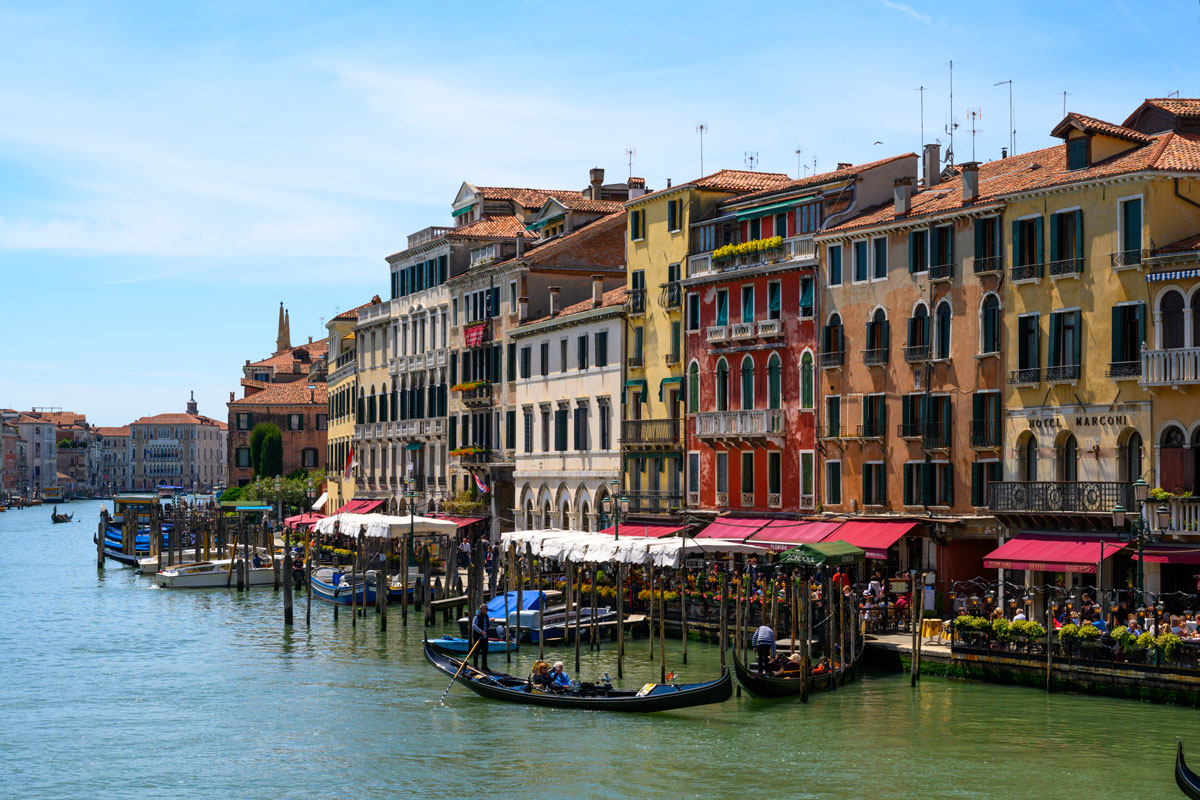
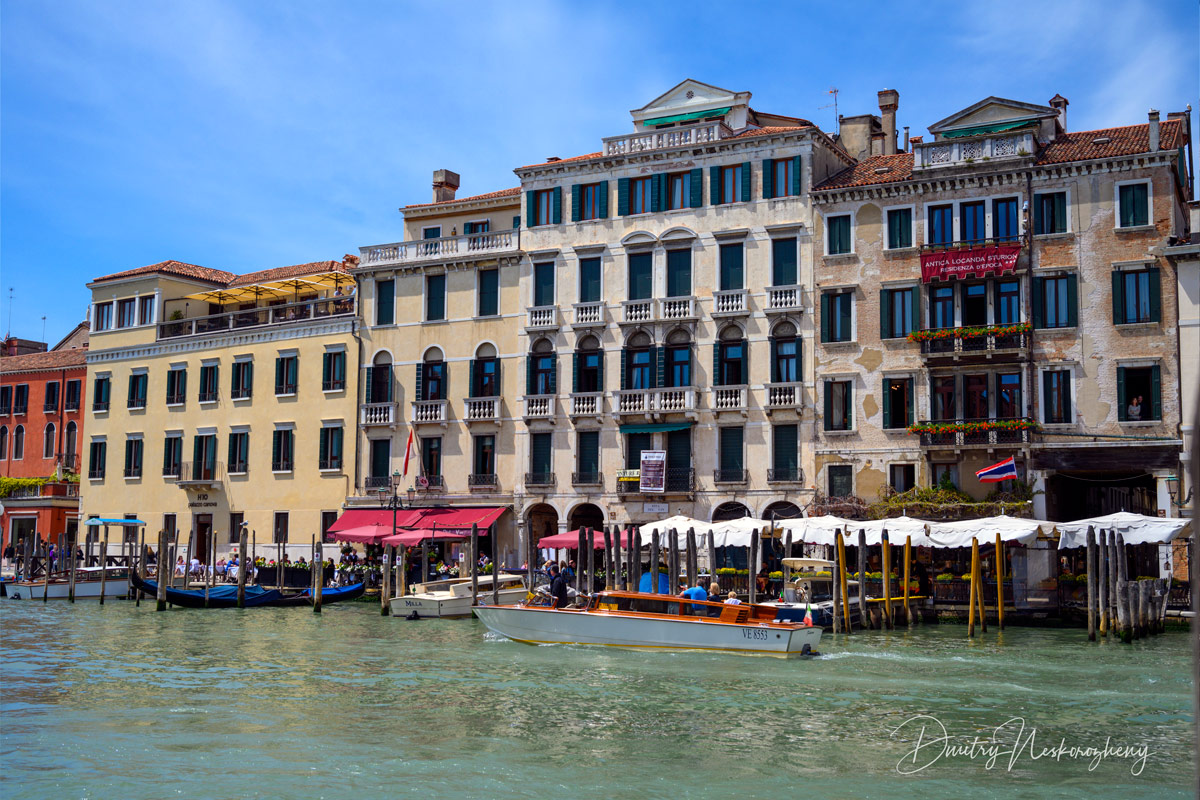
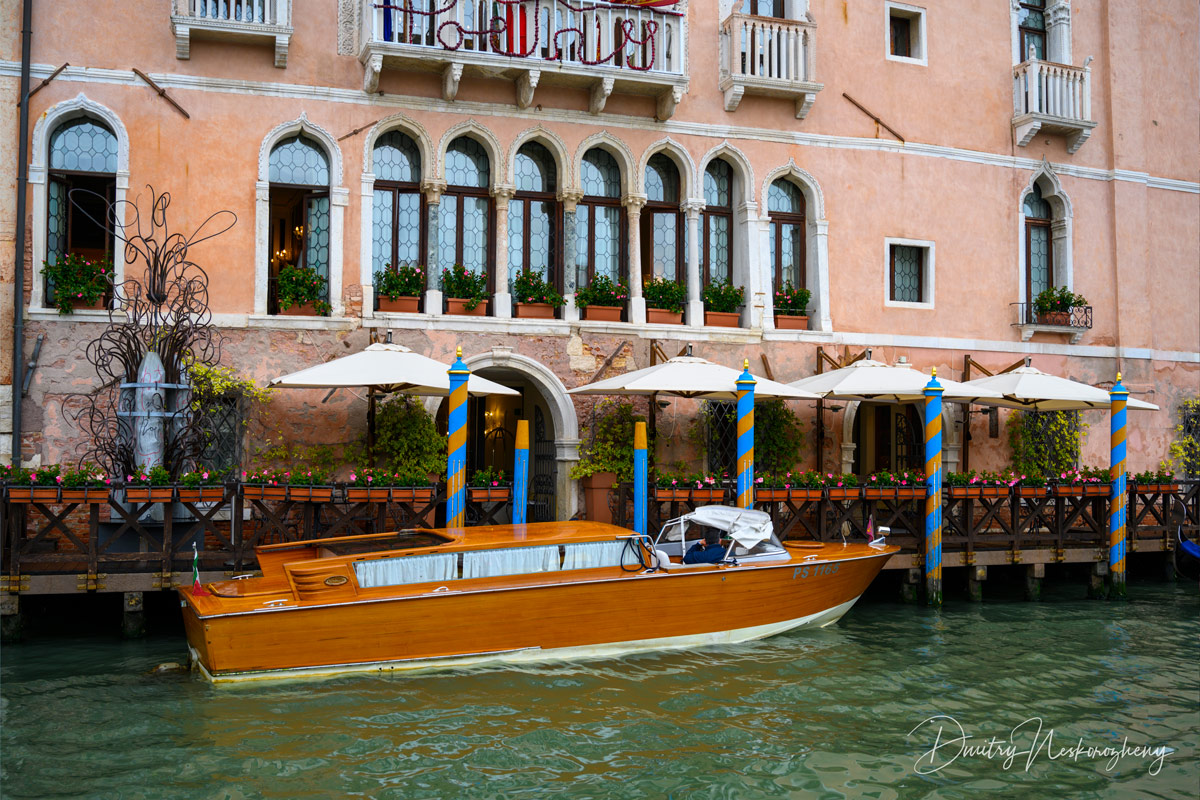
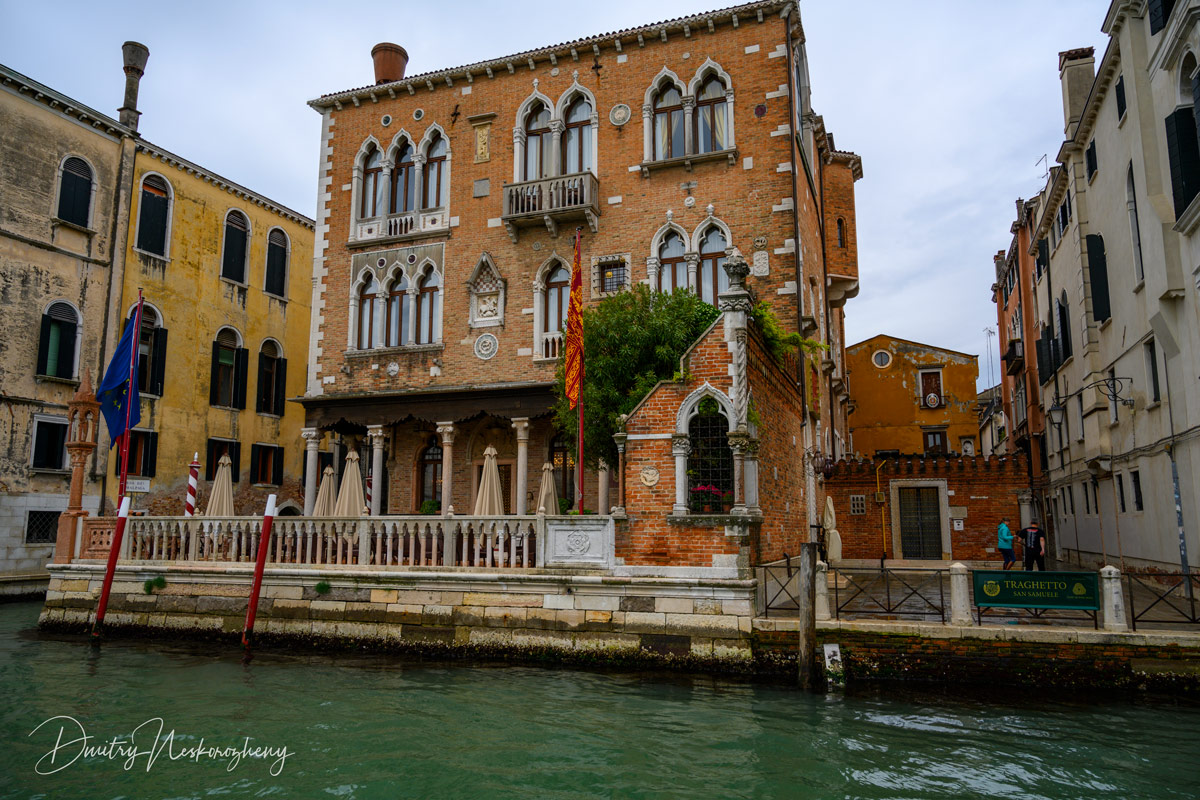
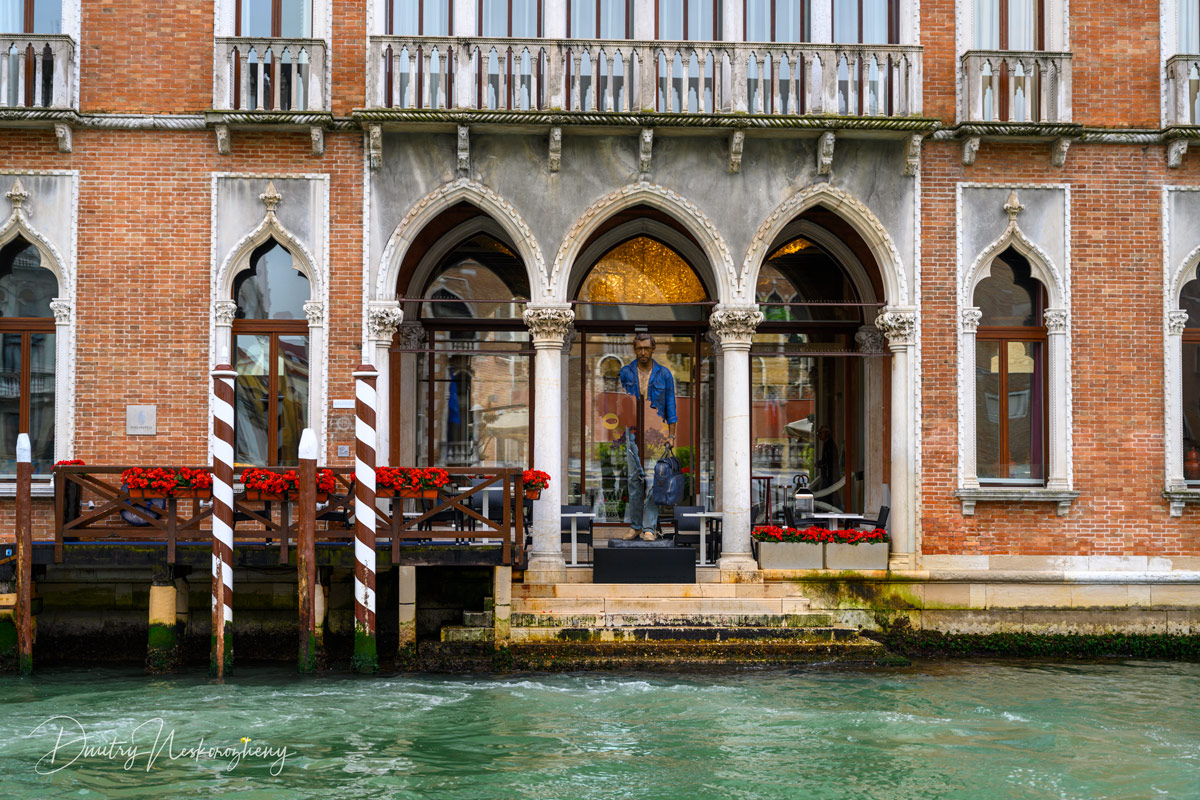
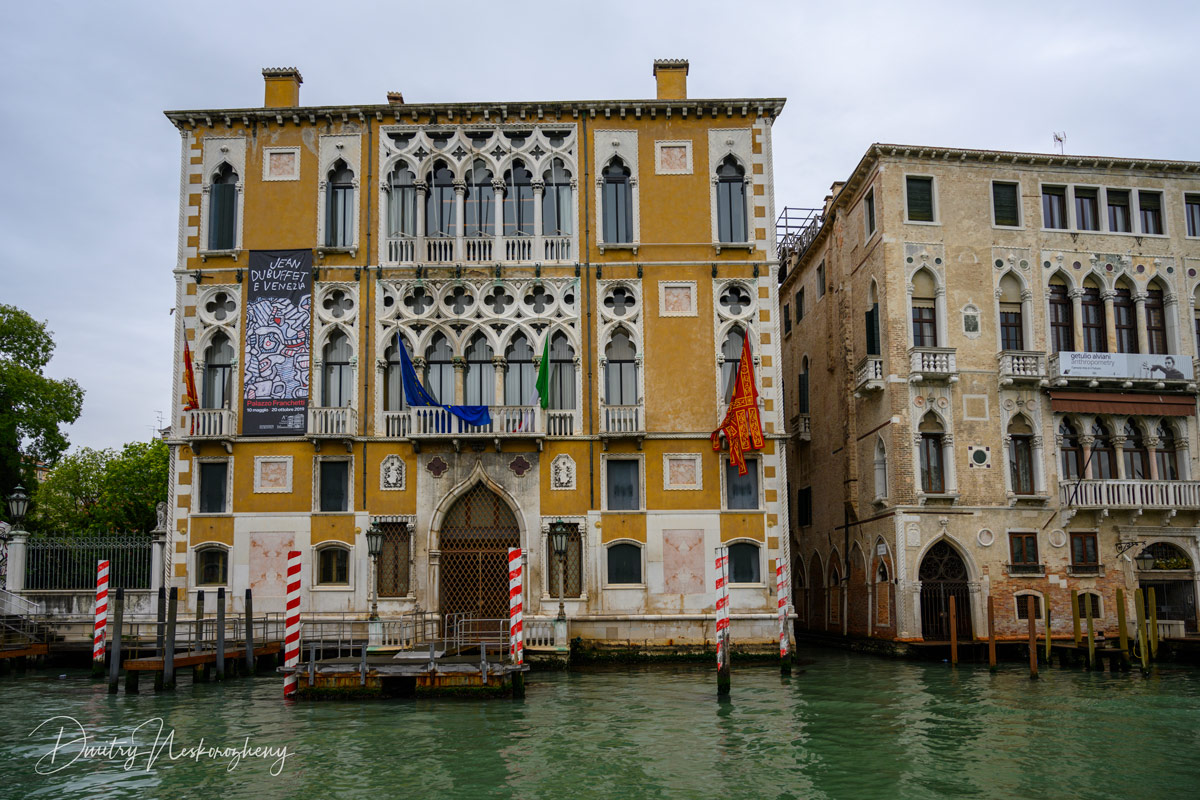
Venetians called the Grand Canal Canalazzo - not as an insult, but as a distinctive, almost familiar name for the city’s great canal. It can be thought of as a palace-canal, because its banks are almost entirely replaced by the façades of palazzi. Unlike the waterfronts of many other cities, the Grand Canal has very few broad promenades along the water. Instead, there are houses whose grand entrances face directly onto the canal.
This is one of the most important features of Venice: many buildings had two faces. One faced the land, the inner streets and narrow lanes. The other, far more ceremonial, faced the water. Guests, goods and ambassadors arrived by boat. The façade on the Grand Canal was therefore not the back of the house, but its main stage.
Along the canal stand dozens of extraordinary palaces and historic buildings: Ca’ d’Oro, Ca’ Rezzonico, Ca’ Foscari, Palazzo Barbarigo, Palazzo Grassi, Ca’ Pesaro and many others. Their architecture tells the history of the city better than any textbook: Byzantine influences, Venetian Gothic, Renaissance, Baroque and later classical forms. Venice was not built in a single style. It accumulated layers, like a fabric brought from distant countries, with each century adding its own colour and ornament.
Why there are almost no promenades
For a North American traveller, this can feel unfamiliar. In most cities, an important waterfront means a promenade: wide walkways, benches, cafés, bicycle paths. In Venice, the logic is different. The Grand Canal was not primarily a place for strolling along the water, but a working and ceremonial road. The city developed as a network of islands, bridges, calli, campi and water routes. Space was precious, and a façade on the water was too important to be given over to an ordinary embankment.
Houses were built on wooden piles driven into dense layers of lagoon soil. Materials arrived by water. People moved by water. Trade travelled by water. The city’s logic was therefore not automotive and not pedestrian in the modern sense, but amphibious: Venice lived simultaneously on land and on water.
That is why the best way to see the Grand Canal is not to try to walk its length, but to travel along it by boat. From the water, the architecture becomes more legible. Palaces line up in a living sequence, bridges become pauses, bends in the canal reveal new perspectives, and the city finally begins to speak in its native language.
Four bridges across the main artery
Despite the importance of the Grand Canal, only four bridges cross it. The most famous is the Rialto Bridge, the oldest bridge across the canal and one of the great symbols of Venice. The present stone bridge was built in the late sixteenth century to a design by Antonio da Ponte. It connects the districts of San Marco and San Polo and remains one of the busiest crossings in the city.
The second is the Accademia Bridge, a wooden-and-metal bridge near the Gallerie dell’Accademia. From it opens one of the most famous views of the Grand Canal - the perspective toward the dome of Santa Maria della Salute. Photographers especially love this spot because Venice here looks almost impossibly beautiful.
The third is the Ponte degli Scalzi, near Santa Lucia railway station. For many travellers, it becomes the first crossing of the Grand Canal after arriving in the city. The fourth is the Ponte della Costituzione, Santiago Calatrava’s modern bridge between the station and Piazzale Roma. It remains controversial, as almost all contemporary architecture in historic Venice does, but it has already become part of the route for those entering the city from the west.
Where there is no bridge, traghetti help: gondola ferries that cross the canal at several points. For a tourist, this may be a brief and almost invisible episode. For the city, it is a reminder of old practical Venice, where the gondola was not a romantic attraction, but ordinary transport.
Gondola, vaporetto or water taxi?
The Grand Canal can be experienced in different ways, and each creates a different version of Venice. The vaporetto is the most democratic and honest option. A ride along the canal offers an almost museum-like survey of the city for the price of public transport. The best approach is to board near the railway station and travel toward San Marco, especially in the early evening, when the light softens and the façades begin to reflect the sunset.
A gondola is a more theatrical experience. It is not meant for getting somewhere quickly. It serves another purpose: to feel the scale of the water, the silence of smaller canals, the low position above the surface and a movement that seems almost ancient. On the Grand Canal itself, a gondola may be surrounded by heavy traffic, so for intimacy it is best combined with smaller side canals.
A water taxi is the most comfortable and expensive option. It is especially striking when arriving at a hotel on the water or seeing the city for the first time. Venice from a private water taxi can feel almost cinematic: spray, light, façades, a turn - and suddenly the city appears like a stage.
The Grand Canal as a history of taste and power
The greatness of the Grand Canal lies not only in its architecture, but in the fact that this architecture was a language of power. Venetian families built palazzi along the canal in order to be seen. The façade was a social manifesto: we are wealthy, we are connected to trade, we know East and West, we are part of a republic that stands on water but thinks like an empire.
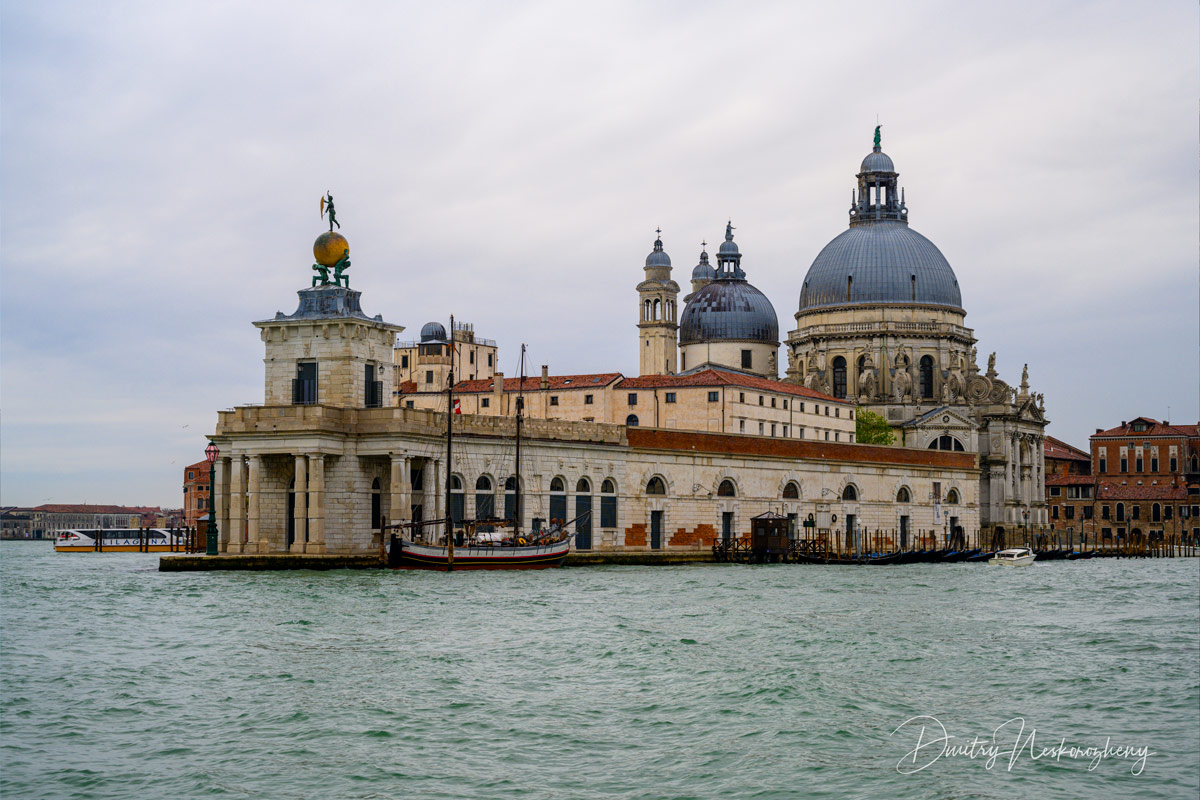
Ca’ d’Oro, with its delicate Gothic lightness, recalls a taste for precious surfaces. Ca’ Foscari speaks of the power of families and institutions. Ca’ Rezzonico preserves the atmosphere of the eighteenth century and late Venetian luxury. Santa Maria della Salute, at the entrance to the Grand Canal, turns the approach to San Marco into an almost theatrical culmination.
This beauty was not innocent. It was born from trade, diplomacy, maritime control, wealth and competition. That is why the Grand Canal is so powerful: it shows Venice without simplifying it. This is a city of art and money, prayer and calculation, light and power, fragility and extraordinary ambition.
The first movement of the camera
The Grand Canal also holds an important place not only in the history of architecture, but in the history of cinema. In 1896, cinematographer Alexandre Promio, working with the Lumière brothers, filmed Venice from a moving boat - a panorama of the Grand Canal with the camera placed on a boat. This short film is considered one of the earliest examples of a moving camera shot in cinema history.
Before that, early cinema often treated the camera as a fixed eye: it was placed in front of a scene, and movement occurred inside the frame. Promio did something different. He allowed the camera itself to move. Venice gliding before the lens became not merely the object of filming, but a way to discover a new cinematic language. It is no accident that this happened here. A city best understood through movement on water suggested to the camera that it, too, could travel.
Why the Grand Canal still fascinates
Today, the Grand Canal remains both a tourist symbol and a real urban artery. Residents travel along it, goods are delivered, services operate, boats move, and funerals, weddings, regattas and endless routes of visitors all pass through it. It is beautiful, but not decorative. It is historical, but not dead.
That is its power. The Grand Canal is not like a museum street preserved only for photographs. It continues to function. Its palaces age, the water rises, and the city argues with tourism, climate, time and its own fame. But when a vaporetto enters the wide curve of the canal and the silhouette of Rialto or the dome of the Salute appears ahead, it becomes clear why Venice has held the imagination for centuries.