
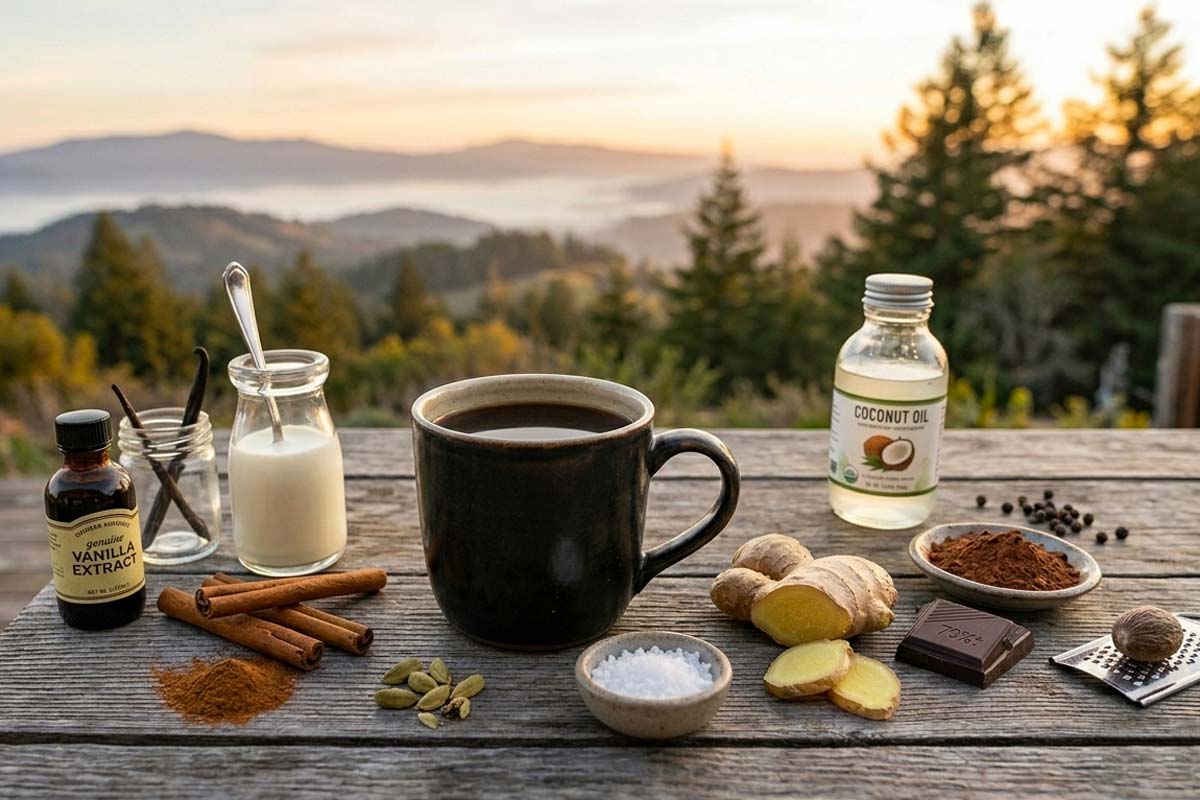
What to add to your coffee
A honest look at natural coffee additions — flavor, chemistry, benefits
Coffee stopped being just a morning drink a long time ago. It is one of the most chemically complex everyday beverages in the world: hundreds of aromatic compounds, antioxidants, oils, acids, alkaloids, roasting reactions, and extraction variables all interacting inside a single cup. The moment something else is added to coffee, two things change simultaneously: flavor changes - and chemistry changes. Sometimes for the better. Sometimes dramatically for the worse.
The important distinction is this: there is a massive difference between natural additions and industrial coffee flavoring products. Between real cream and coffee creamer. Between Ceylon cinnamon and “cinnamon-flavored syrup.” Between vanilla bean and synthetic vanillin.
This is not a TikTok trend list. It is a practical and honest guide to coffee additions that actually have culinary value, cultural history, and in some cases, legitimate scientific support.
1. Heavy Cream
Popularity: Very high
Flavor impact: Maximum
Real heavy cream and industrial coffee creamer are fundamentally different products, even if people often treat them as interchangeable.
Most commercial creamers are essentially emulsions of water, vegetable oils, sugars, stabilizers, and flavorings. Many contain little or no actual dairy fat. They make coffee sweeter and thicker, but they also flatten and mask its character.
Real heavy cream - typically 35-36% milk fat in North America - behaves differently. Fat softens bitterness and acidity while carrying aromatic coffee oils more effectively across the palate. The texture becomes not merely creamy, but velvety.
An important distinction: 10% half-and-half and 35% heavy cream are not variations of the same ingredient. They create entirely different cups.
For people monitoring sugar intake, full-fat cream contains surprisingly few carbohydrates and causes minimal glycemic impact. Fat also slows caffeine absorption, often resulting in smoother and longer-lasting energy rather than a sharp spike.
2. Cinnamon
Popularity: High
Flavor impact: Strong
Health support: Well documented
Cinnamon is one of the rare coffee additions that makes sense both gastronomically and scientifically.
Flavor-wise, cinnamon softens perceived bitterness while adding warmth and natural sweetness. Even a small pinch changes the profile noticeably.
Several clinical studies and meta-analyses suggest regular cinnamon consumption may improve insulin sensitivity and help regulate blood sugar in people with type 2 diabetes and prediabetes.
But there is an important detail most people never hear about.
Most supermarket cinnamon is cassia cinnamon - darker, stronger, and very aromatic, but also high in coumarin, a compound that may stress the liver in excessive amounts.
Ceylon cinnamon - lighter, softer, and more expensive - contains dramatically less coumarin and is generally the better choice for regular daily use.
3. Cardamom
Popularity: Moderate in North America, extremely high in the Middle East and Scandinavia
Flavor impact: Powerful and transformative
Cardamom in coffee is not a modern trend. It is one of the oldest coffee traditions on earth.
Arabic qahwa has featured cardamom for centuries. Scandinavian coffee traditions absorbed it through historic Middle Eastern trade routes dating back to the Viking era. Across Central Asia, cardamom remains common in both coffee and tea.
The flavor profile is difficult to mistake: floral, resinous, slightly minty, spicy, and deeply aromatic. Cardamom does not overpower coffee - it elevates it.
A few crushed green cardamom pods or a small pinch of freshly ground cardamom can completely transform a cup.
It also carries antioxidant and anti-inflammatory properties and has traditionally been used to soften coffee’s effect on digestion.
One important note: use green cardamom, not black. Black cardamom is smoky, heavier, and intended primarily for savory cooking.
4. Salt
Popularity: Low - unfairly so
Flavor impact: Subtle but remarkably effective
This may be the most underrated coffee addition of all.
Sodium ions partially suppress bitterness receptors on the tongue, making coffee taste smoother and even slightly sweeter without adding sugar. The acidity itself does not chemically change - only the perception changes.
The effect works particularly well with darker roasts and Turkish-style coffee.
Dosage is critical. A tiny pinch per cup is enough. Beyond that threshold, coffee simply starts tasting salty.
Sea salt, kosher salt, or mineral salt without additives work best.
5. Ginger
Popularity: Growing
Flavor impact: Warming and vibrant
Coffee and ginger have existed together for centuries in Yemen, Ethiopia, and Indonesia.
Fresh ginger adds bright citrus-like heat and spice. Ground ginger creates a softer and more delicate warmth.
Its active compounds - gingerol and shogaol - are well studied for anti-inflammatory and anti-nausea effects. Many people with sensitive stomachs also find ginger-coffee combinations easier to tolerate.
It pairs exceptionally well with cardamom, cinnamon, and a touch of cream.
6. Dark Chocolate or Unsweetened Cocoa
Popularity: Moderate
Flavor impact: Deep and layered
True mocha is coffee combined with real dark chocolate or unsweetened cocoa - not the sugar-heavy syrups commonly sold under that name in chain cafés.
High-quality cocoa amplifies chocolate, nutty, and roasted notes already naturally present in coffee.
Theobromine in cocoa works synergistically with caffeine, often creating a smoother and more sustained stimulant effect.
The best approach is simple: a teaspoon of quality cocoa powder or a small piece of dark chocolate containing at least 70% cocoa.
7. Coconut Oil
Popularity: High among keto and intermittent fasting communities
Flavor impact: Polarizing
Bulletproof coffee became one of the defining wellness trends of the 2010s.
Adding coconut oil does create longer satiety and slows caffeine absorption. For some people, it effectively replaces breakfast.
However, coconut oil is approximately 90% saturated fat - even higher than butter. Debate around long-term cardiovascular impact continues within nutritional science.
Flavor is subjective. Small amounts add subtle tropical softness. Larger amounts dominate the cup entirely.
8. Nutmeg
Popularity: Low
Flavor impact: Elegant and understated
Nutmeg in coffee was once common in Dutch and Flemish coffee culture centuries ago, yet today it is almost forgotten.
Freshly grated nutmeg adds warmth, softness, and a slightly sweet aromatic lift that works beautifully with milk and cream-based coffee drinks.
Freshness matters enormously. Whole nutmeg grated directly into the cup is a completely different experience from pre-ground powder sitting in a jar for a year.
9. Black Pepper
Popularity: Rare but justified
Flavor impact: Unexpectedly precise
It sounds strange. In practice, it works remarkably well.
A small amount of freshly cracked black pepper is an old southern Italian tradition, particularly in Naples and Calabria.
Pepper does not make coffee spicy. Instead, it adds subtle aromatic depth and complexity to the finish.
It works best with darker roasts and chocolate-forward coffees. With delicate floral single-origin coffees, however, it tends to overpower nuance.
10. Real Vanilla
Popularity: Extremely high
Flavor impact: Soft and calming
Vanilla and coffee are almost universally loved together. The problem is that most vanilla flavoring used in cafés and homes is synthetic vanillin rather than actual vanilla.
Real vanilla contains hundreds of aromatic compounds that create depth and warmth. Synthetic vanillin reproduces only one molecule from that entire system.
The best options are genuine vanilla extract or real Vanilla planifolia beans.
Vanilla works especially well in cappuccinos, lattes, and cream-based coffee drinks.
What Is Better Avoided
Many flavored syrups are essentially sugar solutions with artificial aromas. Their flavor is aggressive, flat, and often bears little resemblance to the ingredient named on the bottle.
Industrial coffee creamers are emulsions of oils and stabilizers rather than true dairy products.
Even labels such as “natural flavors” can legally refer to highly processed compounds that no longer resemble the original source ingredient in any meaningful way.
The Bottom Line
If the goal is maximum impact with minimal effort, two additions stand above the rest: a tiny pinch of salt and freshly crushed cardamom. Both can transform a cup instantly.
For indulgent comfort, heavy cream combined with dark chocolate creates extraordinary depth and texture.
For regular daily use with the strongest evidence behind it, Ceylon cinnamon remains one of the smartest choices.
And for occasional evenings when coffee becomes ritual rather than routine, freshly grated nutmeg is worth rediscovering.
Coffee already has character. The best additions reveal it, support it, or deepen it - never bury it.