

Еhe skyscraper that changed the silhouette of Manhattan
432 Park Avenue
In New York, height has always been more than an engineering problem. It is a language of ambition. The Empire State Building spoke of speed and the twentieth centurys faith in progress. The Chrysler Building spoke of decorative daring and the age of Art Deco. 432 Park Avenue speaks of a different era: super-slender towers, private luxury, billionaire verticality and a city where a view from the window can cost more than an entire estate. This building did not simply rise above Manhattan. It changed the very idea of what elite residential architecture in the twenty-first century could look like.
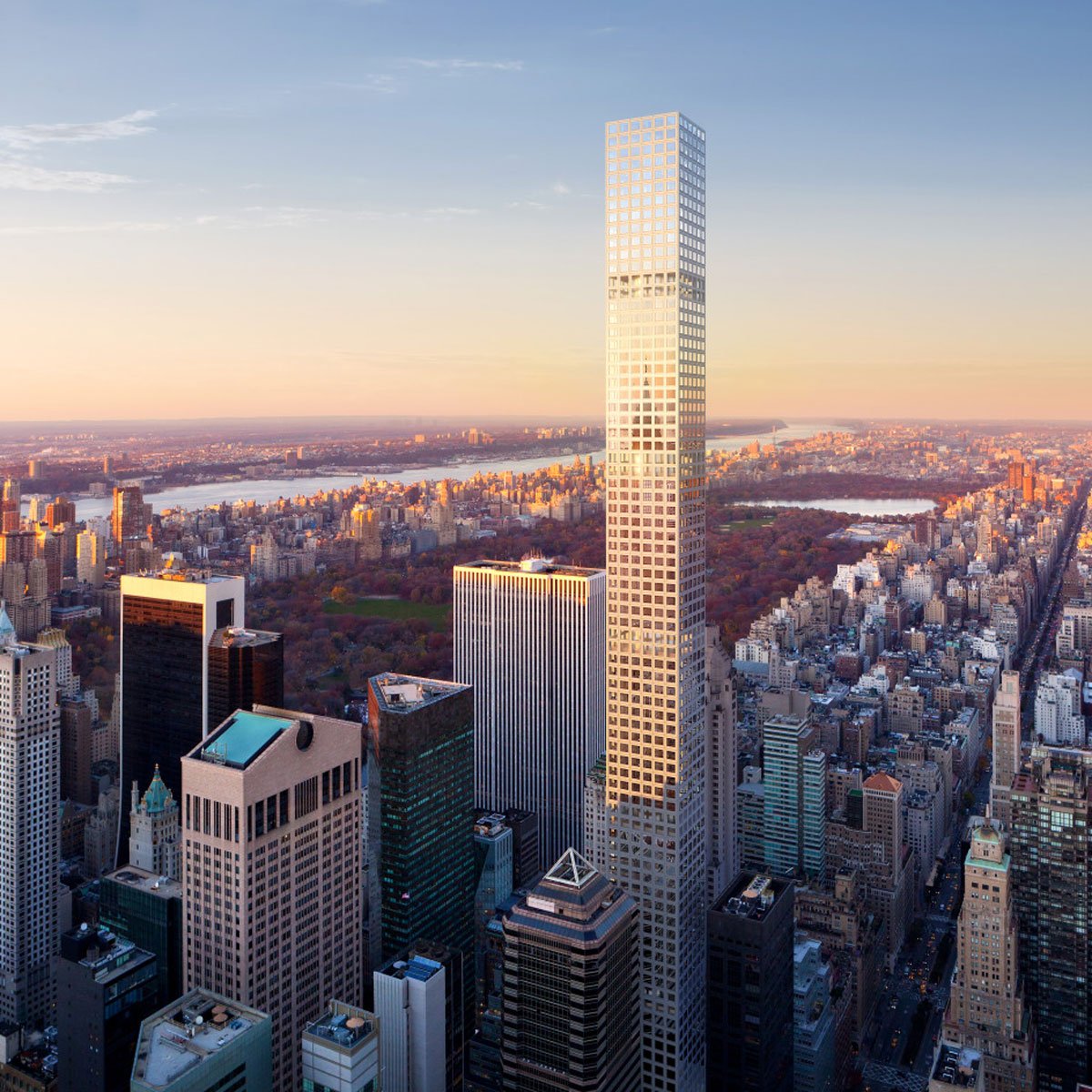
432 Park Avenue stands between 56th and 57th Streets, in the heart of Midtown Manhattan, along the famous corridor of ultra-expensive skyscrapers often called Billionaires’Row. Rising 425.5 metres, the tower was designed by architect Rafael Viñoly and became one of New York’s most recognizable new silhouettes. When it reached its final height, it became the tallest residential skyscraper in the Western Hemisphere and one of the most discussed buildings in the world. Today, it can no longer be called the tallest residential building on the planet; that title has moved to later projects, including Central Park Tower. But 432 Park Avenue remains one of the defining symbols of New York’s new generation of super-slender residential towers.
The square as an architectural idea
The architectural power of 432 Park Avenue lies in its almost provocative simplicity. The tower is based on the square: a form that is strict, clear and surprisingly Manhattan-like. Viñoly built the building’s image around a regular grid of enormous square windows. This rhythm repeats across the entire height of the tower, turning the skyscraper into an almost abstract object - not so much a house in the usual sense as a vertical geometric column in the sky.
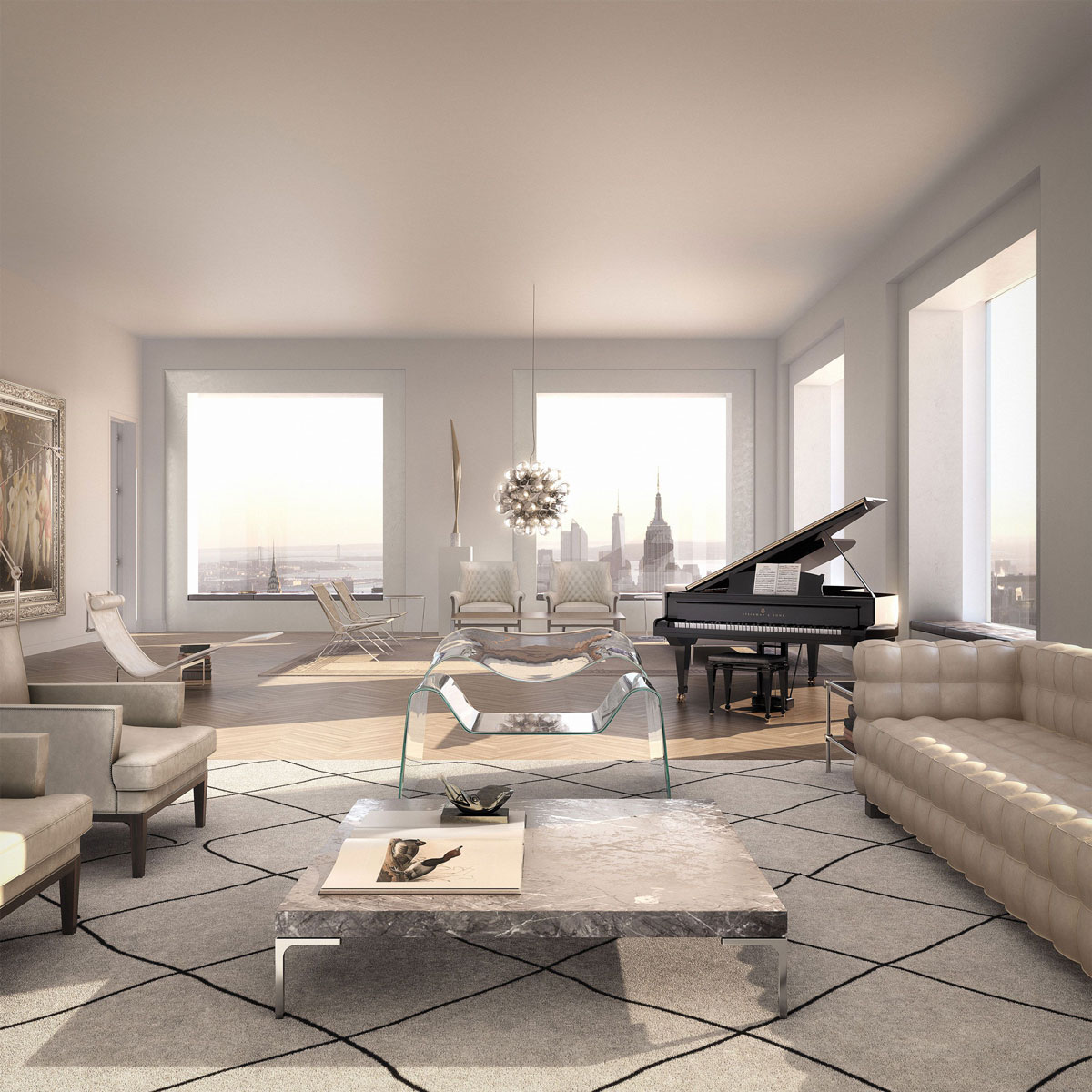
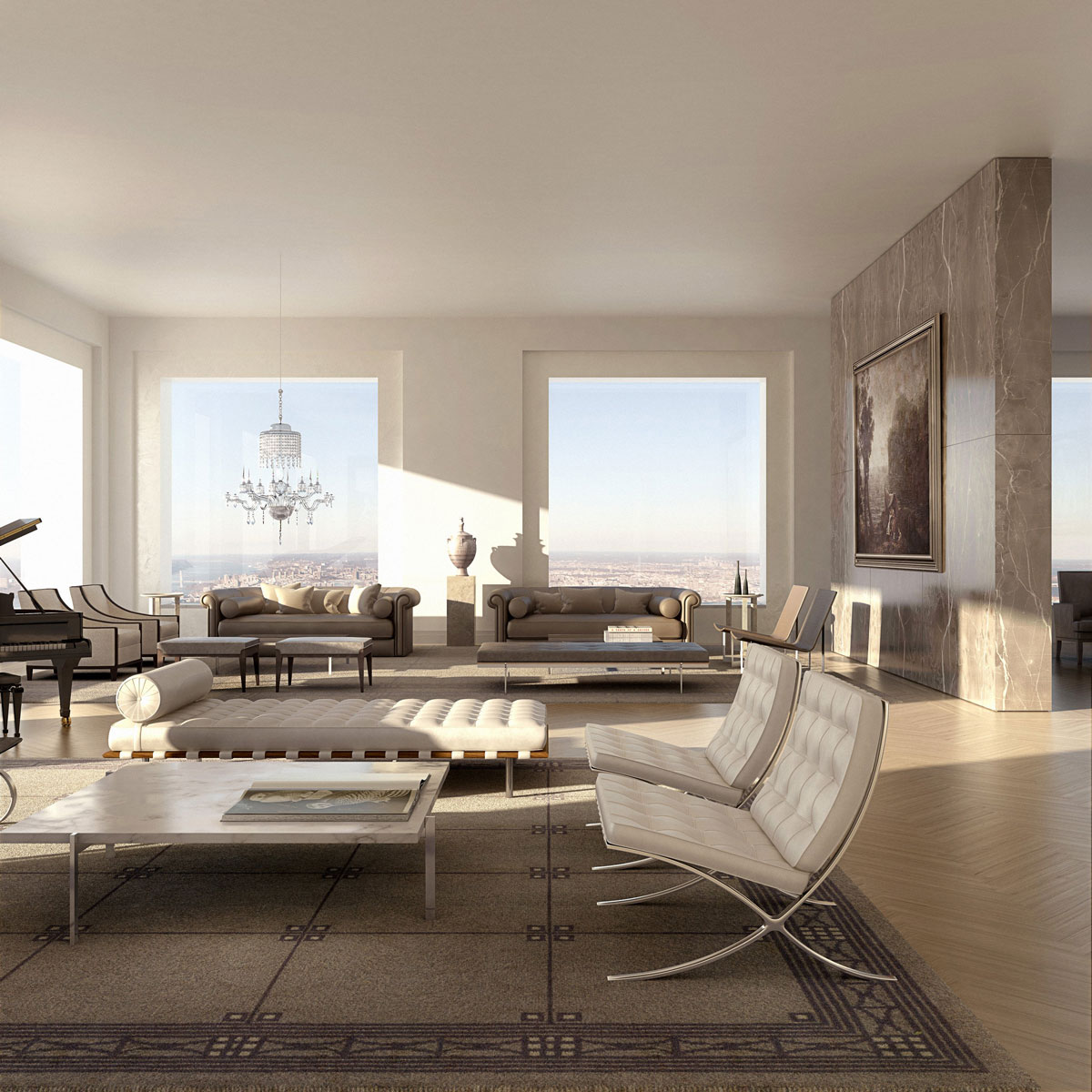
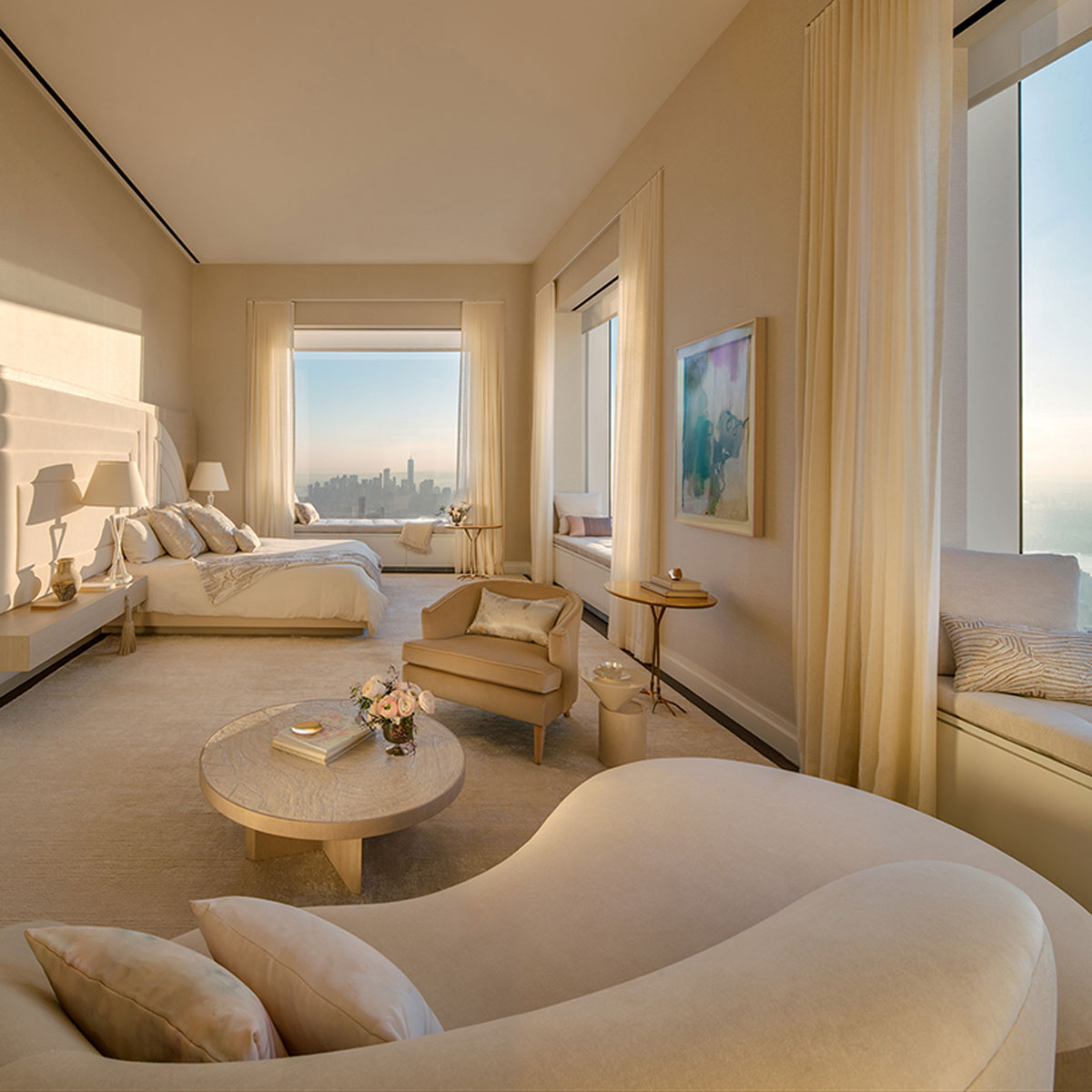
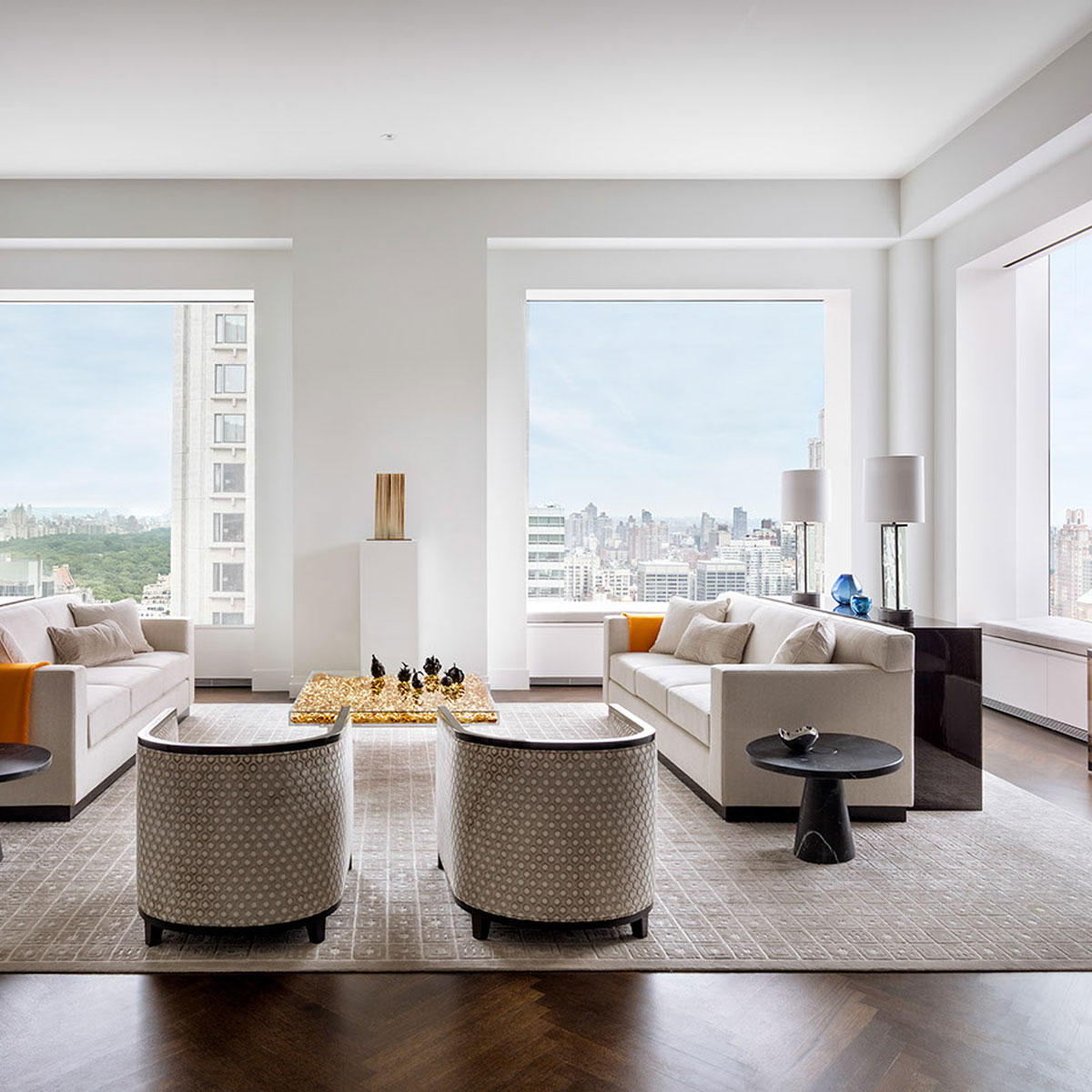
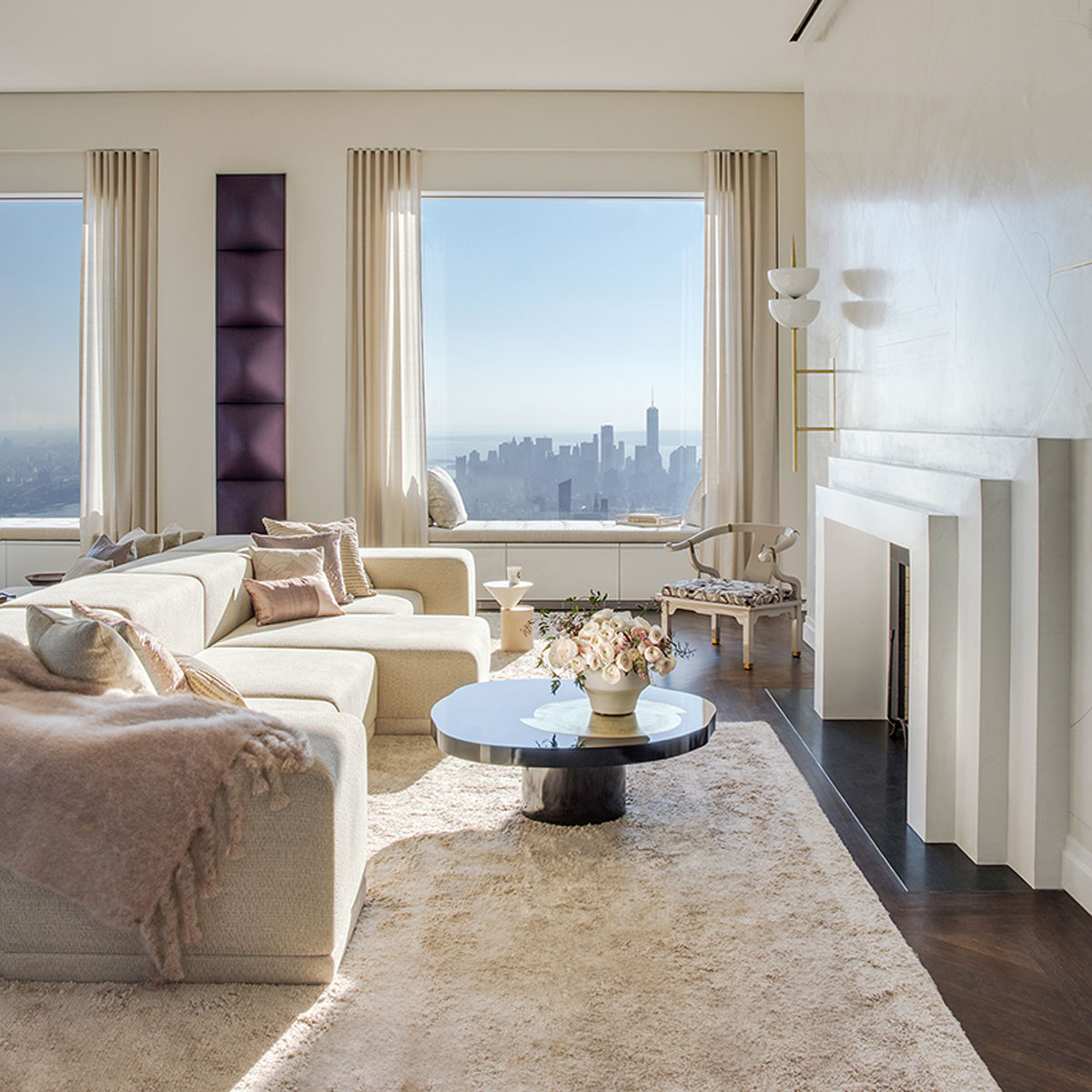
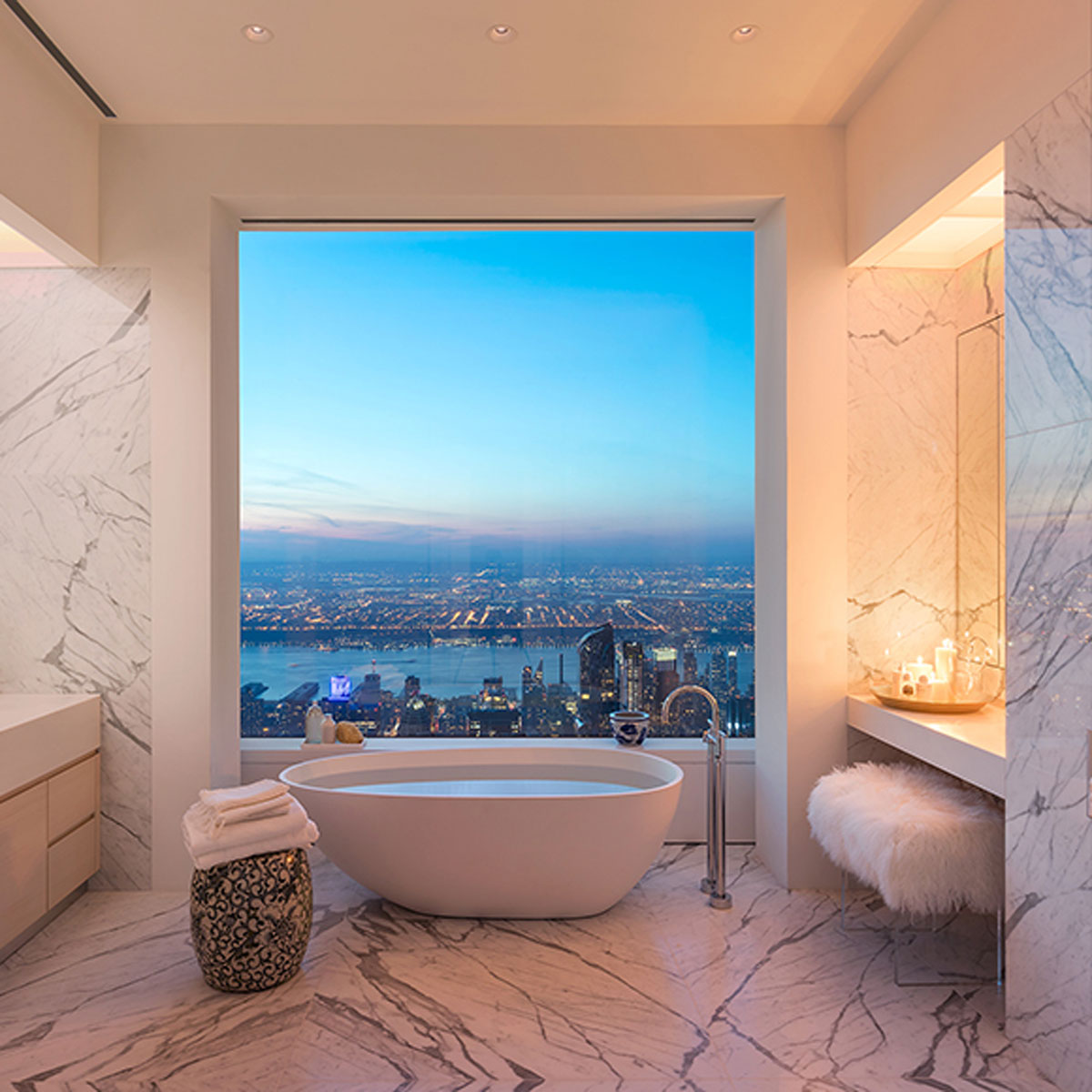
Each window measures about 10 by 10 feet, or roughly 3 by 3 metres. From inside, this is not merely an architectural detail, but the main element of luxury. At 432 Park Avenue, the view becomes part of the interior. Central Park, the Hudson River, the East River, Midtown, Downtown, bridges and city lights are not simply outside the window; they are almost inside the apartment.
The building appears extremely slender: its height is roughly 15 times its width. This slenderness ratio made the tower both structurally challenging and visually radical. In a city where skyscrapers are often perceived as massive volumes, 432 Park Avenue looks like an elongated chess piece placed against the edge of the sky.
How to hold up a super-slender tower
Behind the visual simplicity lies complex engineering. The tower is built of reinforced concrete, with a powerful central core and an exterior structural grid. This system allows interiors to be freed from unnecessary columns and creates spacious residences with panoramic views.
One of the most interesting features of 432 Park Avenue is its open mechanical floors, placed at intervals along the height of the tower. They appear as empty two-storey openings in the façade grid. This is not a decorative whim, but an important part of the engineering logic: these levels allow wind to pass through the tower and help reduce structural loads. The building also uses tuned mass dampers, special devices that help reduce movement caused by wind.
For the ordinary passerby, this is almost invisible. For engineers, it is central. The taller and thinner a tower is, the more important it becomes to control its movement. Super-slender skyscrapers are not meant to be absolutely still; they must safely and predictably work with wind loads. That is one of the central dramas of contemporary high-rise architecture: a luxury apartment in the sky is possible only because of an invisible system of calculations, concrete, steel, dampers and compromises.
Luxury above the city
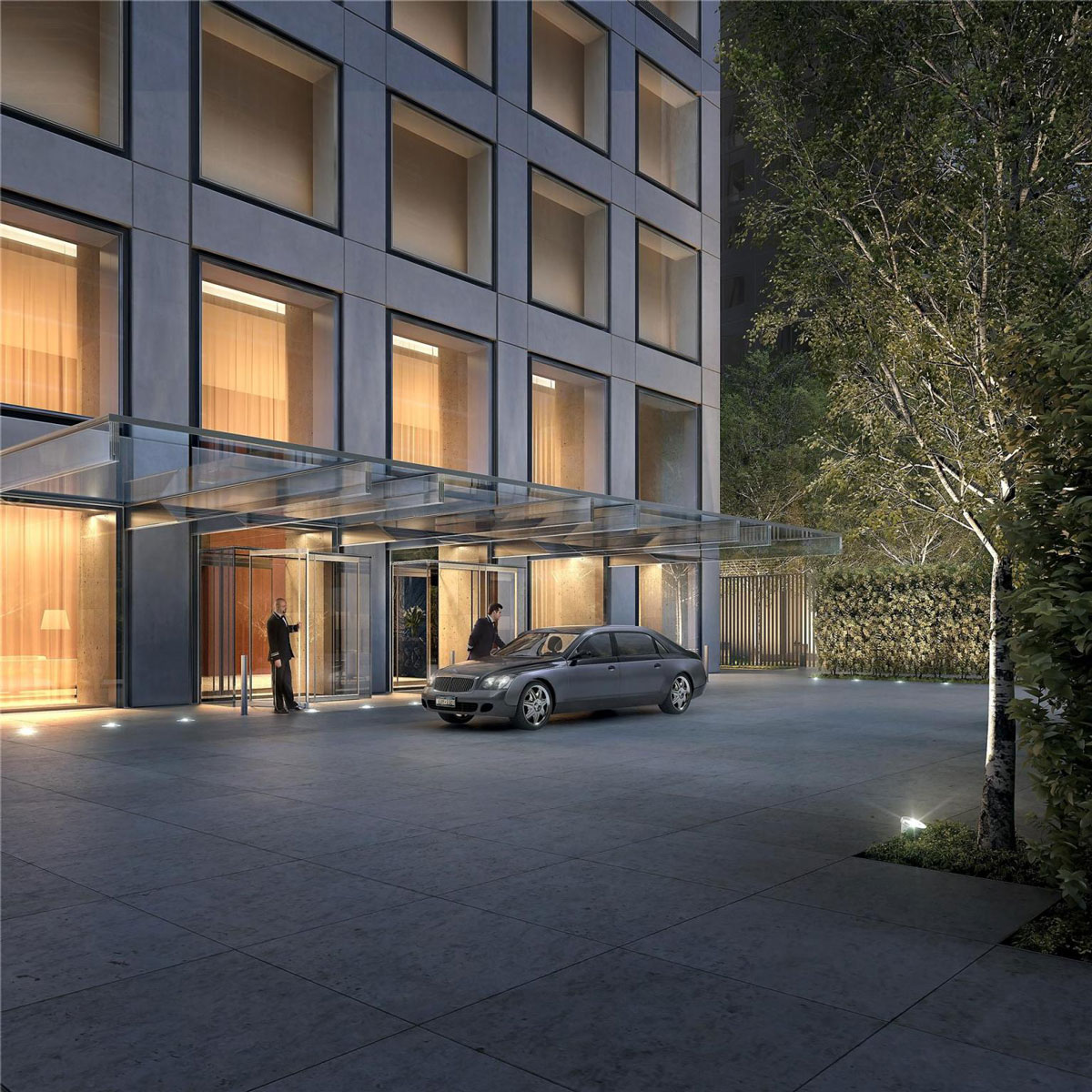
432 Park Avenue was conceived not merely as a tall residential building, but as a private club in the sky. The tower contains around one hundred luxury residences, including expansive full-floor apartments and penthouses on the upper levels. Ceilings in the residences reach roughly 15 feet, while the scale of the windows gives the spaces an almost museum-like quality: the walls become frames for New York.
The interiors of the residences were developed with Deborah Berke, known for a restrained, intelligent and tactile approach to contemporary luxury. This provides an important contrast to the mathematical strictness of the exterior. Outside: grid, square, concrete and an almost austere verticality. Inside: oak floors, marble, calm materials, a soft palette and layouts intended to recall the grandeur of prewar Park Avenue apartments, but in a twenty-first-century format.
The building offers amenities on the level of a five-star hotel: a private restaurant, lounge spaces, a library, screening room, billiards room, conference facilities, fitness centre, spa facilities and an indoor pool about 75 feet long. On the 12th floor are spaces for residents and their guests, including private dining and event areas. The idea is clear: owners receive not just an apartment, but a vertical private club with service, security and amenities usually associated with top hotels.
The price of the view
432 Park Avenue became one of the clearest examples of how New York sells not only square footage, but height. The higher the floor, the rarer the view - and with it, the higher the price. Penthouses and full-floor residences in the tower entered the market at tens of millions of dollars, while one of the best-known penthouses was priced at around $95 million.
In this kind of market, square footage is only part of the story. The buyer pays for the address, privacy, view, infrastructure, status, architectural image and the right to live above almost the entire city. In that sense, 432 Park Avenue became not simply a building, but a product of the new global economy of luxury real estate, where buyers may come from New York, London, Dubai, Hong Kong, Toronto or anywhere else in the world.
But this is also what made the tower controversial. For some, 432 Park Avenue is an elegant symbol of engineering precision and the new Manhattan. For others, it is a monument to extreme wealth, empty apartments and a city where the sky is increasingly privatized. That tension is the building’s true cultural role: it is beautiful, but uncomfortable; impressive, but irritating; simple in appearance, but full of difficult questions.
Its place among New York skyscrapers
432 Park Avenue is often compared with the great skyscrapers of the past, but the comparison is not entirely direct. The Empire State Building and Chrysler Building were public symbols of their time: signs of industrial optimism, corporate power and the urban dream. 432 Park Avenue is a more private symbol. It is not an office tower and not an observation deck for millions. It is a collection of residences for a very small circle of people, lifted to the height of an urban myth.
And yet the building cannot be ignored. Its square grid is visible from far away. It changed the Midtown skyline and became one of the most recognizable objects in photographs of Central Park. Even if one dislikes 432 Park Avenue, it is difficult to deny that the tower achieved what architecture seeks: it became an image.
Not only a legend, but a lesson
Every form of ultra-luxury architecture has a reverse side. Super-slender towers are difficult not only to build, but also to operate. In recent years, 432 Park Avenue has been the subject of reports involving owner complaints, legal disputes, leaks, noise, movement, engineering problems and concerns about the quality of certain elements. This does not erase the building’s architectural significance, but it makes the story more honest.
432 Park Avenue shows that height alone is not a guarantee of perfection. The more ambitious the building, the higher the cost of error - technical, design-related, operational or reputational. In this sense, the tower became not only a symbol of luxury, but also an important lesson for the entire industry of supertall residential architecture.
Why 432 Park Avenue still matters
432 Park Avenue is no longer the tallest residential skyscraper in the world, but its importance was never only about the record. Records age quickly. Architectural images last longer.
The tower matters because it captured the moment when Manhattan residential architecture moved sharply upward, becoming thinner, more expensive, more global and more controversial. It showed that an apartment could be not only a place to live, but a high-altitude statement of status. It turned the square window into a symbol of private ownership of the horizon. And it forced New York to argue again about who owns the skyline.
Perhaps that is why 432 Park Avenue is so difficult to judge simply. It is at once an engineering achievement, a luxury address, a visual experiment, a commercial product and a cultural irritant. But one thing is difficult to doubt: the building has already entered the history of New York. Not as the tallest forever, but as one of those skyscrapers after which the city begins to look different.