

The New Chevrolet Corvette
American sports car that decided to play by Ferraris rules
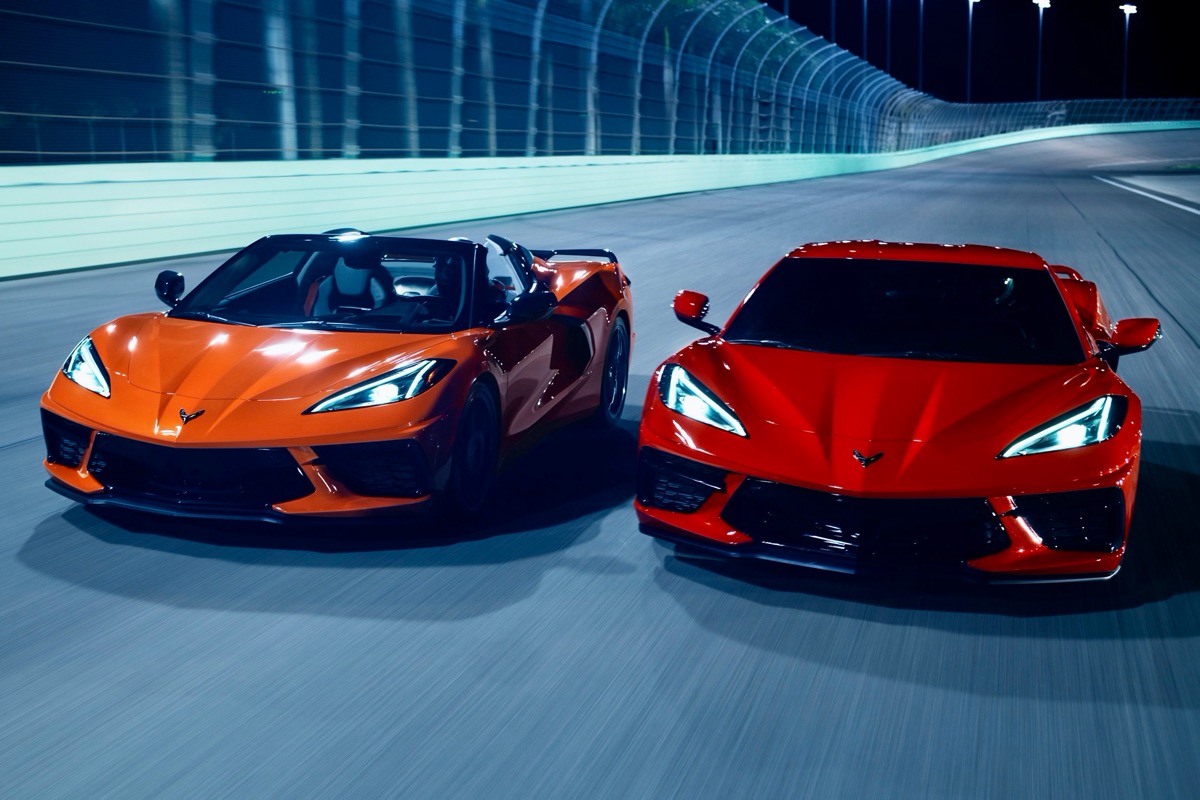
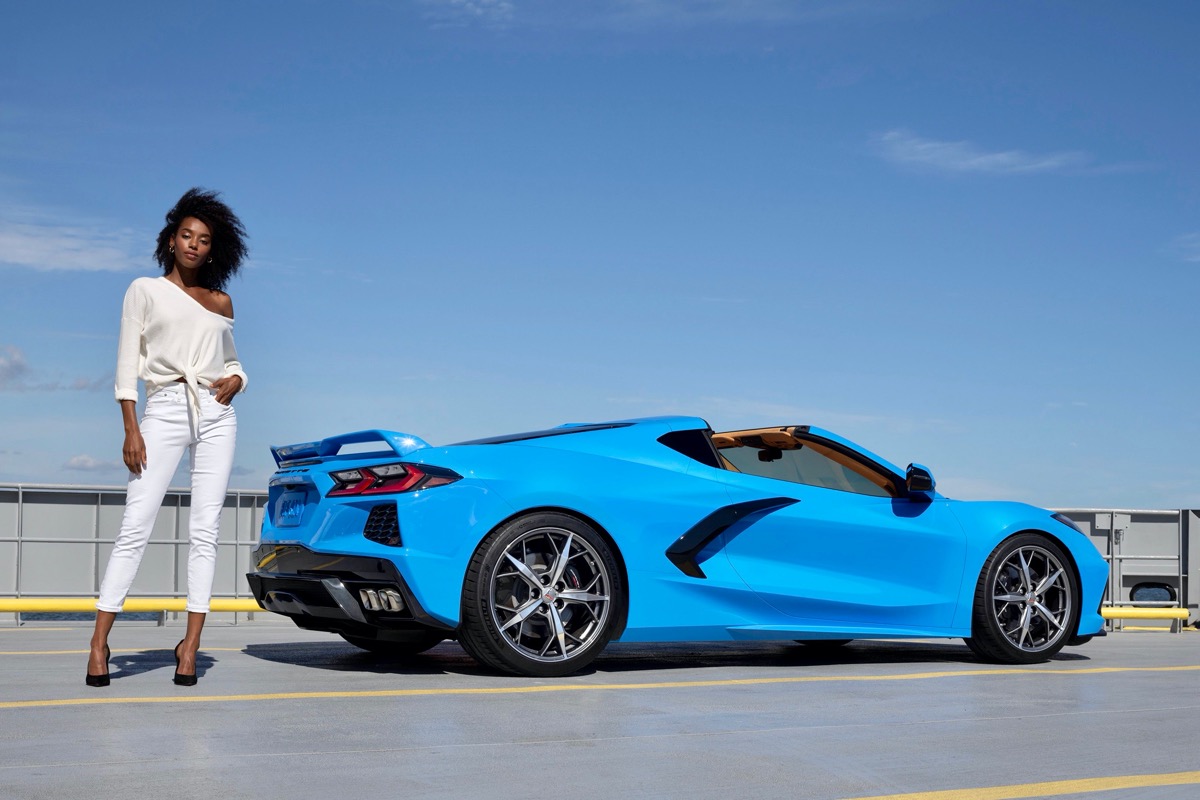
Some cars are simply updated. Others, at a certain moment, rewrite their own biography. The 2020 Chevrolet Corvette belongs firmly in the second category. The eighth-generation Corvette, known as the C8, became the first production Corvette with a mid-engine layout - an idea General Motors had been dreaming about for decades, but had long hesitated to bring into a mass-production car. That single move transformed the Corvette from a classic American sports coupe into a far more serious rival to European supercars.
For years, the Corvette represented a distinctly American formula for speed: a big V8 up front, rear-wheel drive, dramatic bodywork, plenty of power and a price that seemed almost provocative next to Ferrari, Lamborghini, McLaren and Porsche. But that formula had a ceiling. To reach a new level of handling, traction and performance, the Corvette had to do what many supercars had already done: move the engine closer to the centre of the car.
In the C8 Corvette, the engine sits behind the passengers, within the wheelbase. This is not just a technical detail, but a fundamental shift in philosophy. The layout improves weight distribution, helps the car put power down more effectively under acceleration and gives it a more composed feeling in corners. For the Corvette, it was a move from the world of the muscle-flavoured sports car into the territory of the true mid-engine performance car.
The V8 remained, but the character changed
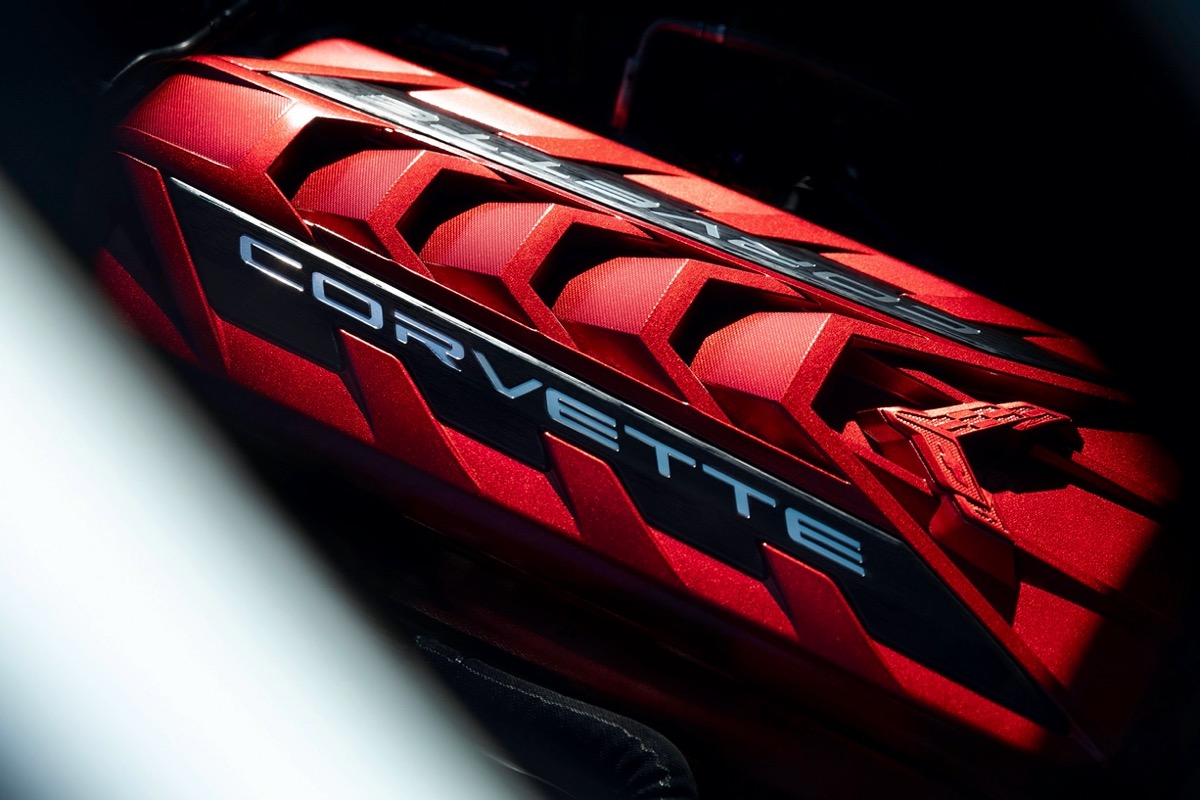
Under the hood - or rather, no longer under the front hood but behind the cabin - sits a 6.2-litre naturally aspirated LT2 V8. In standard form, it produces 490 hp and 465 lb-ft of torque, while the performance exhaust and Z51 package raise the figures to 495 hp and 470 lb-ft. By modern supercar standards, those are not extreme numbers, but that is exactly the cleverness of the Corvette: it does not try to defeat everyone on paper. It offers almost supercar-level sensations for far more reasonable money.
With the Z51 package, the sprint to 60 mph takes less than 3 seconds. For a car that launched at a price dramatically below its European mid-engine rivals, that was almost a shock to the market. The Corvette could run at the pace of machines costing two, three or even four times as much.
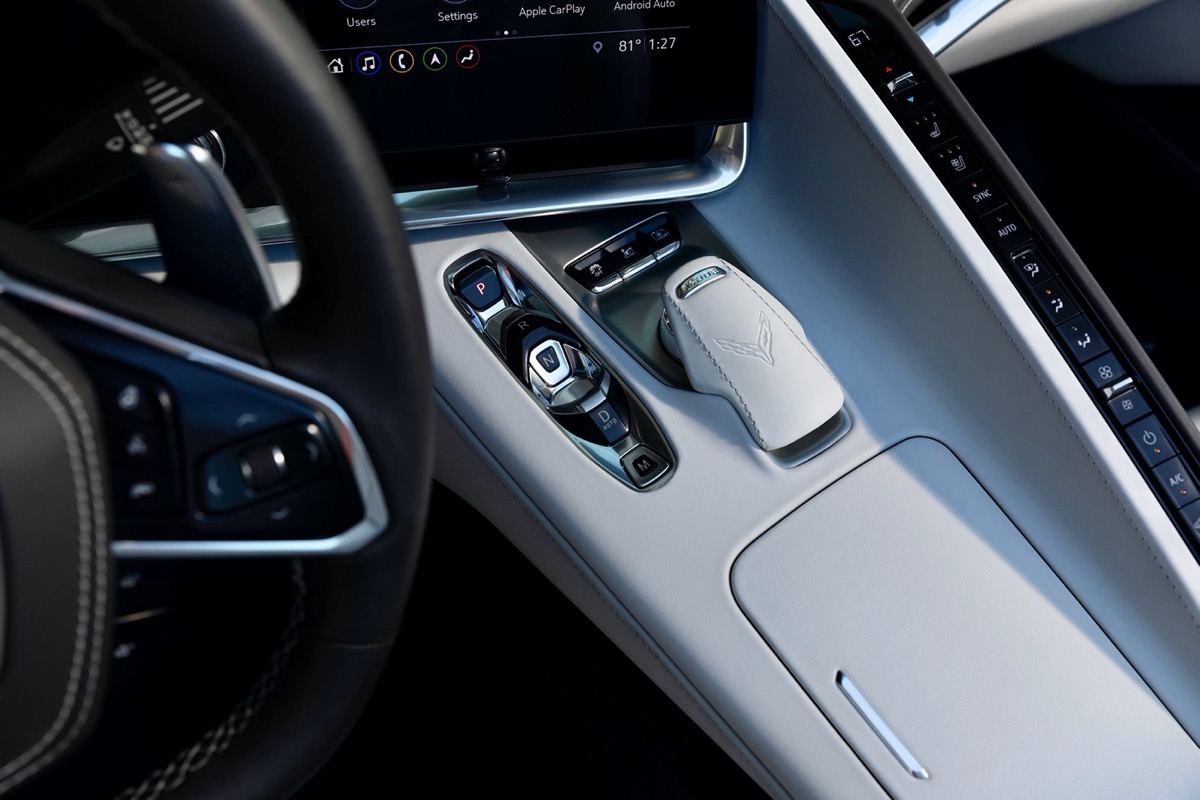
Instead of a traditional manual gearbox, the C8 received an 8-speed dual-clutch transmission. For some Corvette loyalists, this was painful: the manual had long been part of the model’s character. But in terms of speed, shift precision and overall efficiency, the decision made sense. The new Corvette became more technological, faster and more contemporary - even if that meant sacrificing some of the old romance.
Why the mid-engine layout matters so much
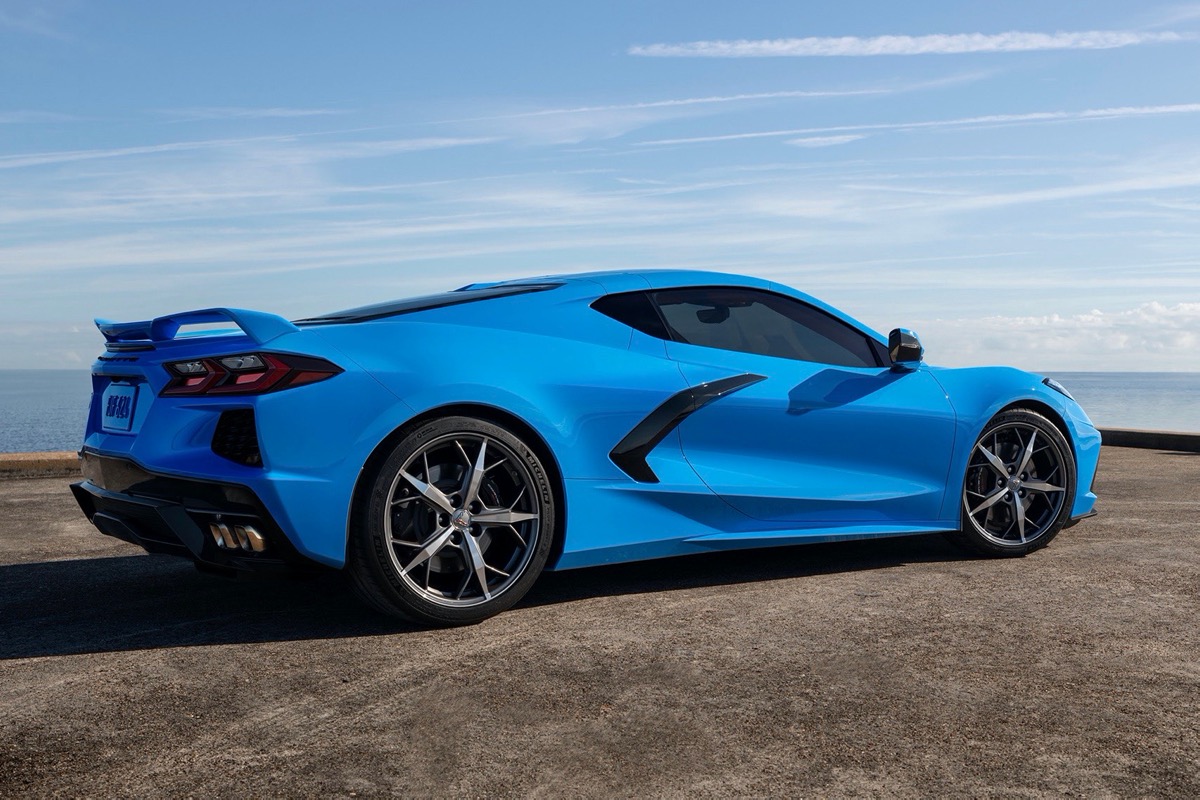
The central revolution of the 2020 Corvette is not its design or even its power figures, but its layout. When the engine is mounted in front, even a very well-tuned sports car must fight certain limitations of balance and traction. By moving the V8 closer to the rear axle, Chevrolet engineers gained more weight over the driven wheels and a better foundation for acceleration.
This is especially noticeable from a standstill. Where earlier Corvettes could struggle with wheelspin and required a delicate right foot, the C8 turns power into motion much more effectively. The car seems to settle onto its rear axle and fire forward with a confidence more often associated with Italian and British supercars.
But it is not only about straight-line speed. The mid-engine layout changes how the car feels in corners. The driver sits closer to the front axle, steering response feels sharper, and the whole car seems to rotate more naturally around its centre of mass. The Corvette remains American in spirit, but it now speaks a more international language of performance engineering.
Aluminium, carbon fibre and a new architecture
To achieve the required stiffness and control weight, the Corvette C8 uses aluminium, composite materials and carbon-fibre components throughout its structure. Exact weight figures depend on version and equipment, but the key point is not a single number. The important thing is that the C8 was not designed as a modified version of the old formula. It was built from the beginning around a new platform created for a mid-engine architecture.
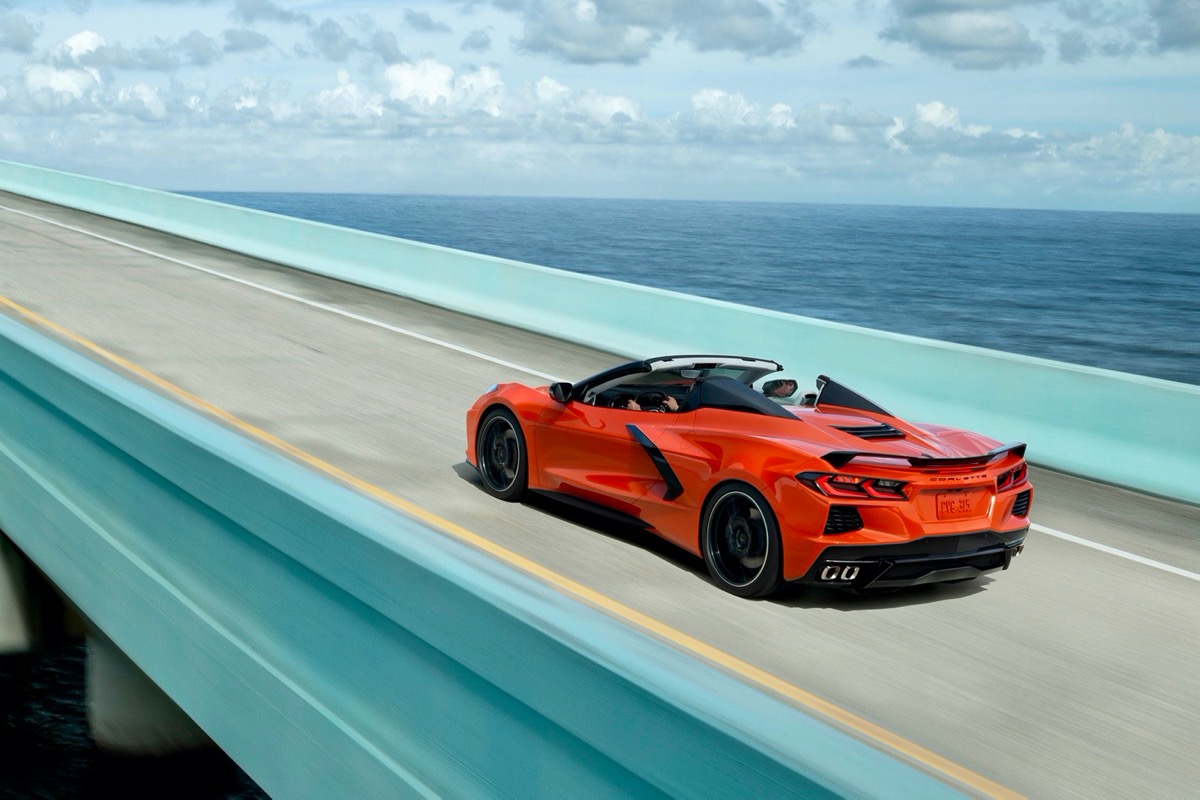
This allowed engineers to rethink aerodynamics, cooling, driver position, storage and vehicle balance. Yes, the Corvette remains more practical than many supercars, with a front trunk and space to store the removable roof panel. But behind that relative practicality lies a much more serious engineering transformation than may be obvious at first glance.
Design: more supercar, less familiar Corvette
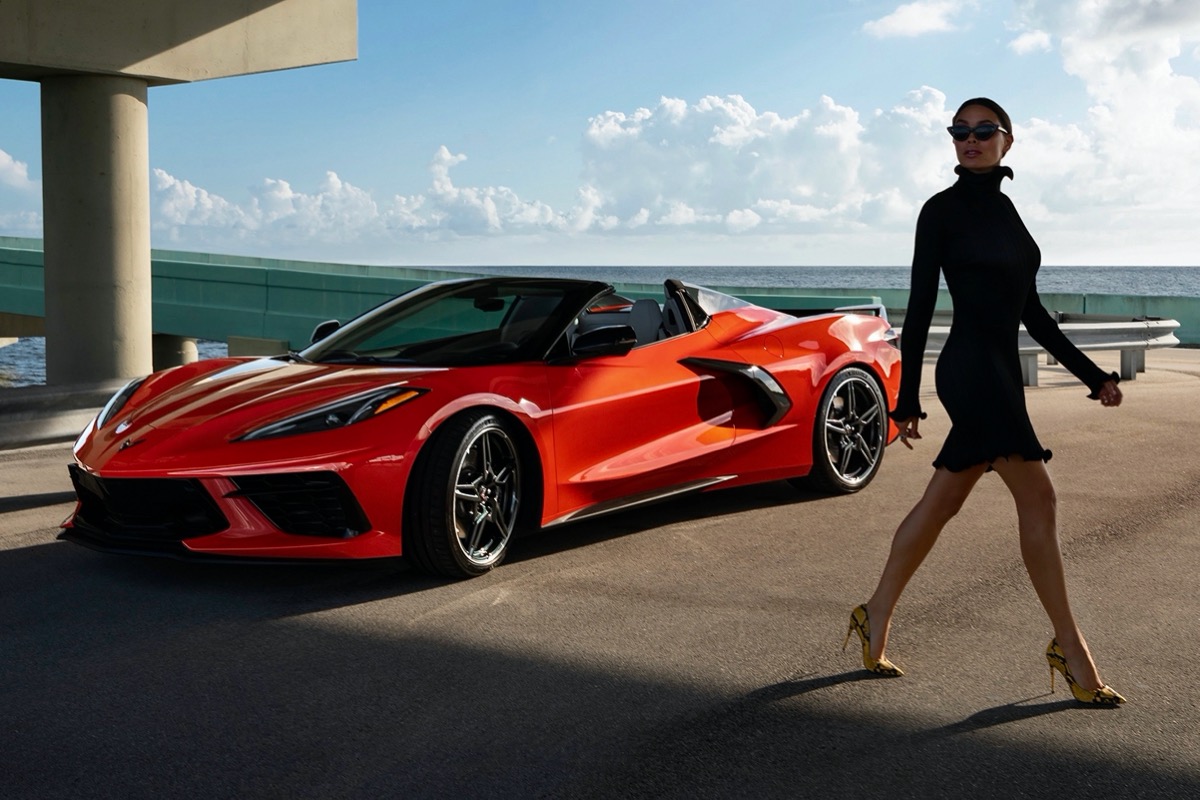
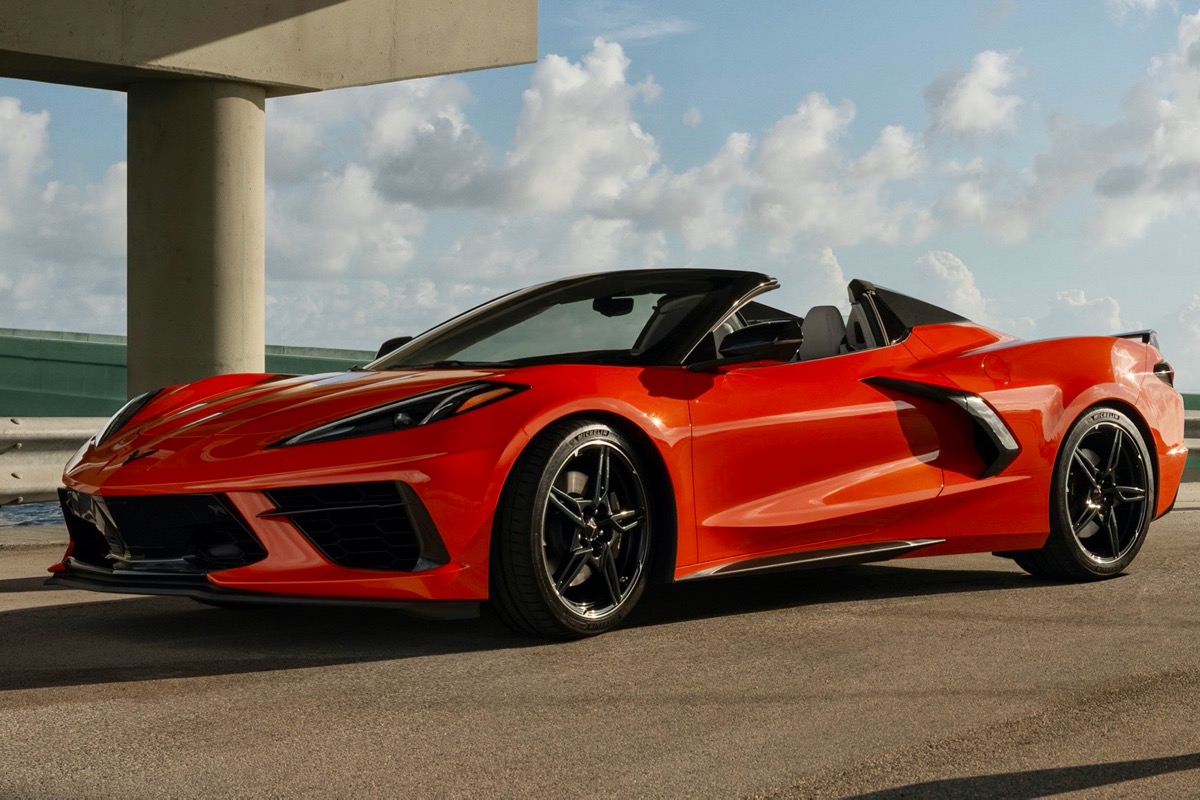
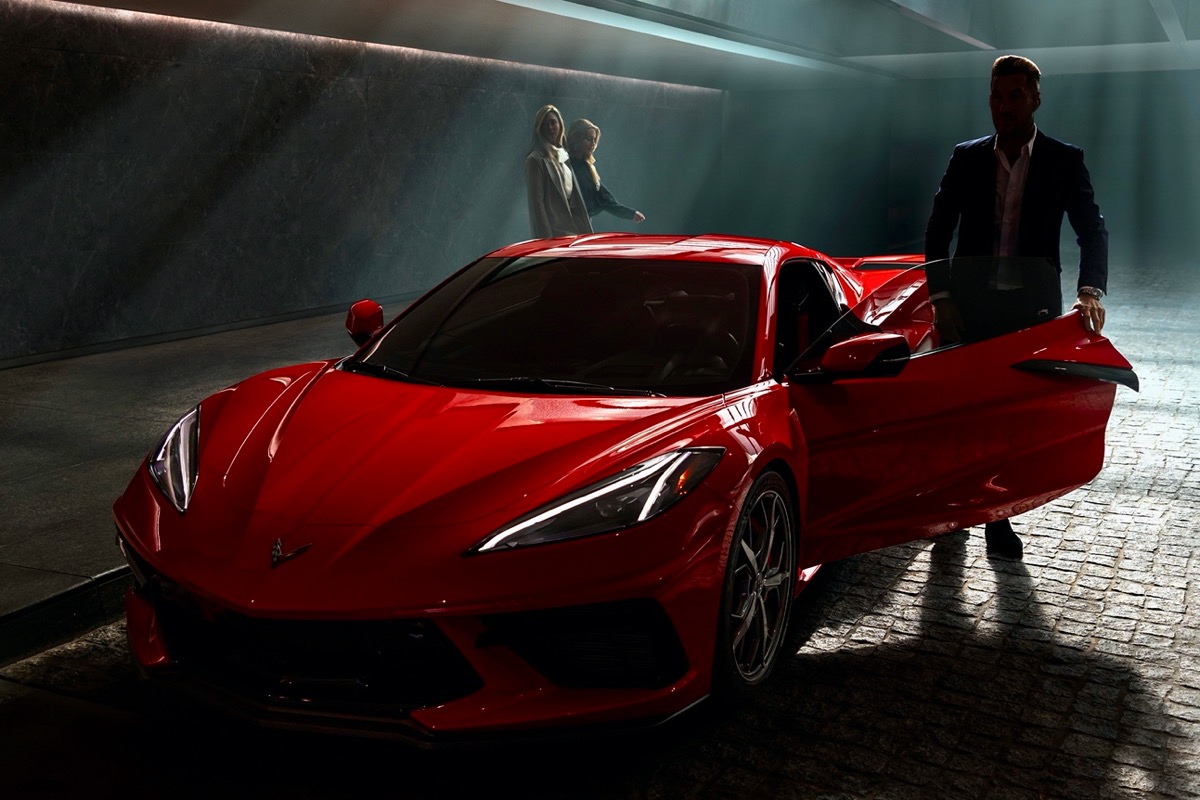
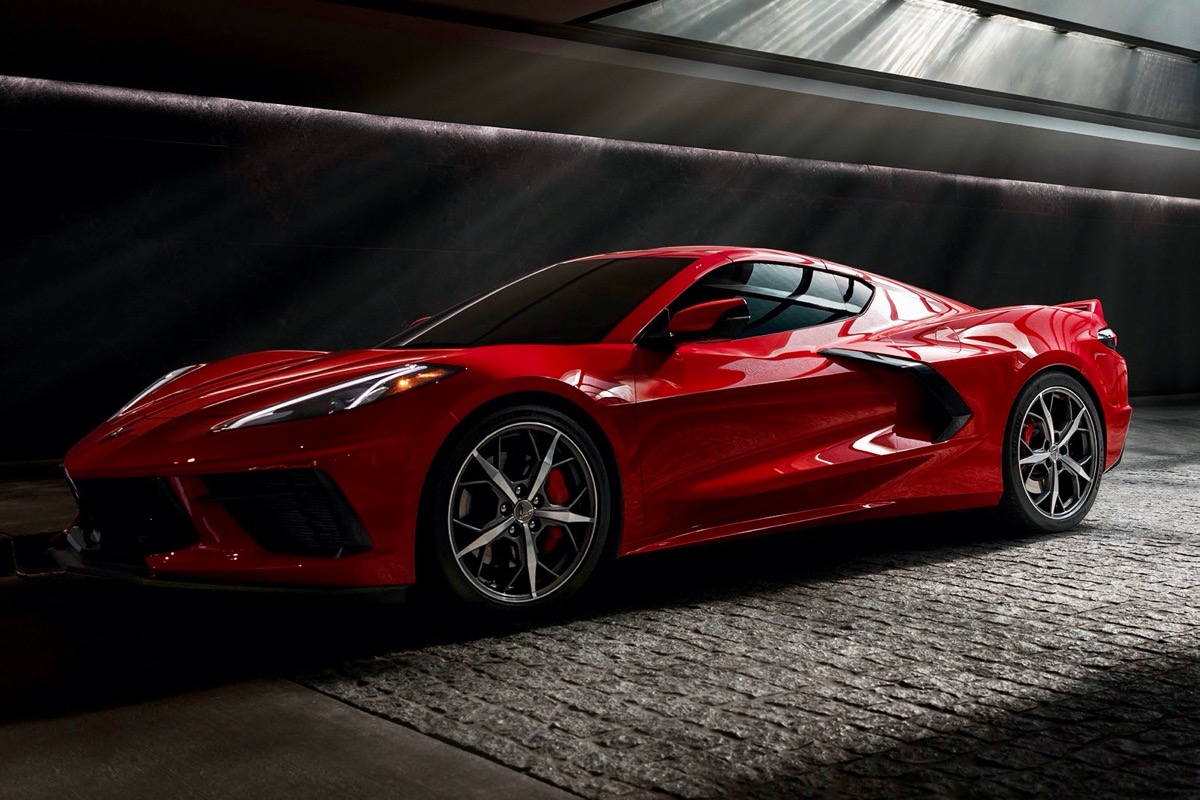
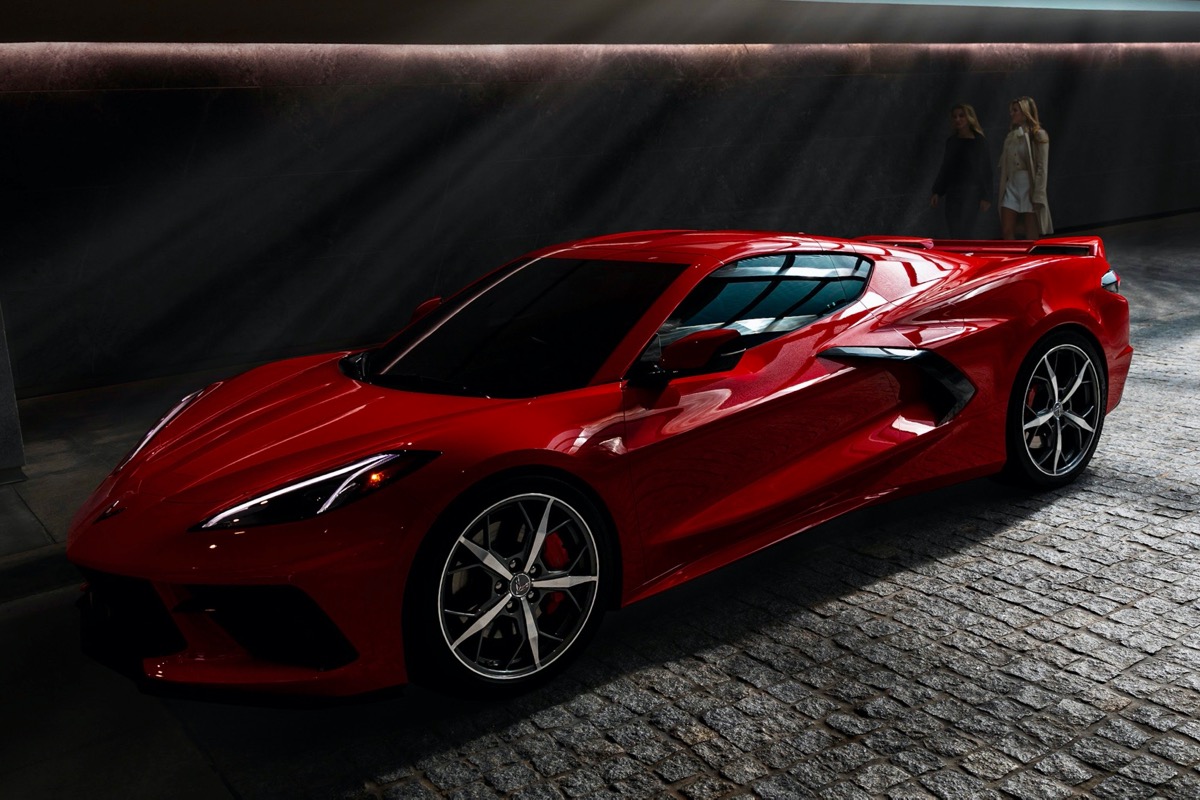
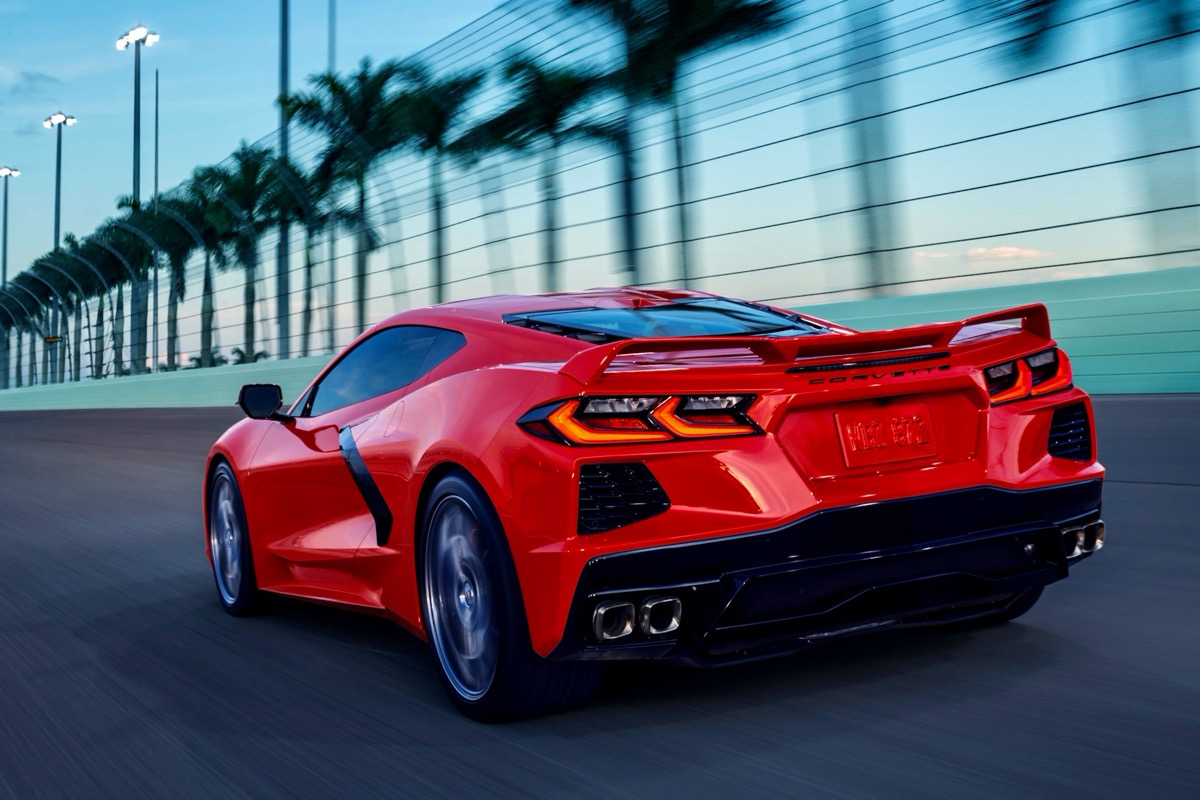
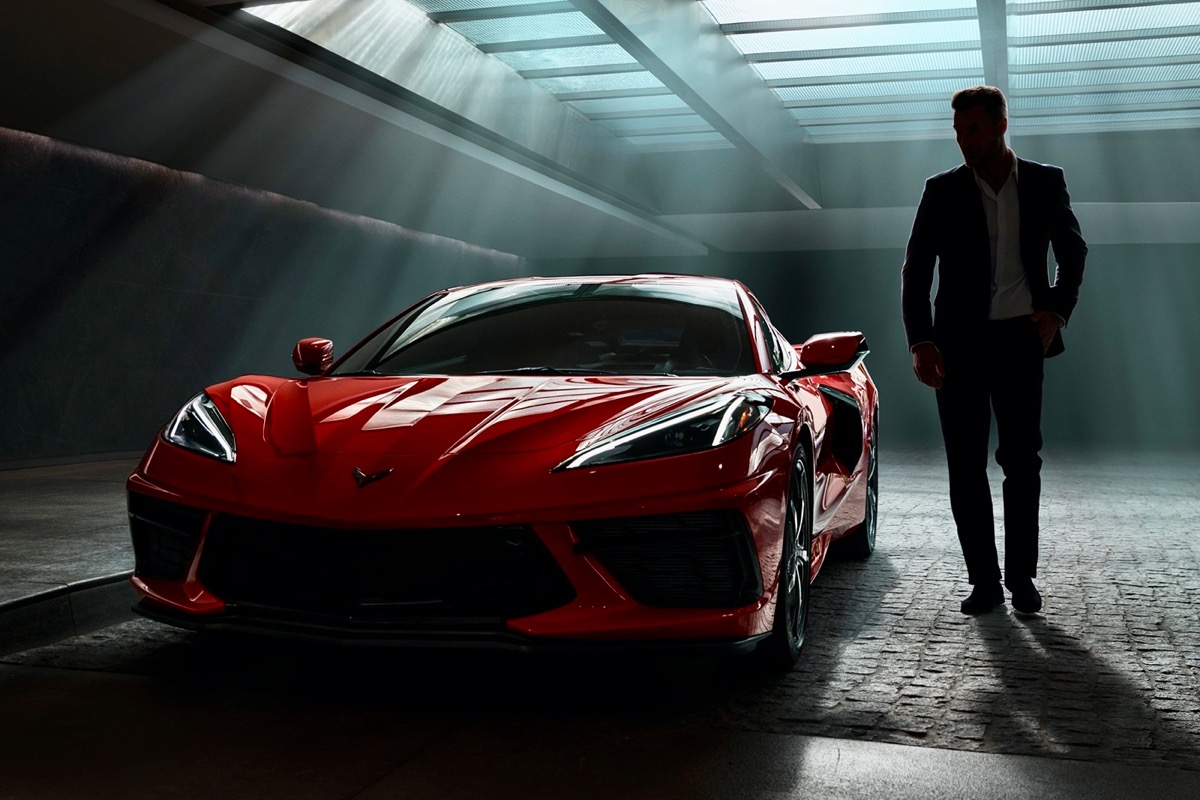
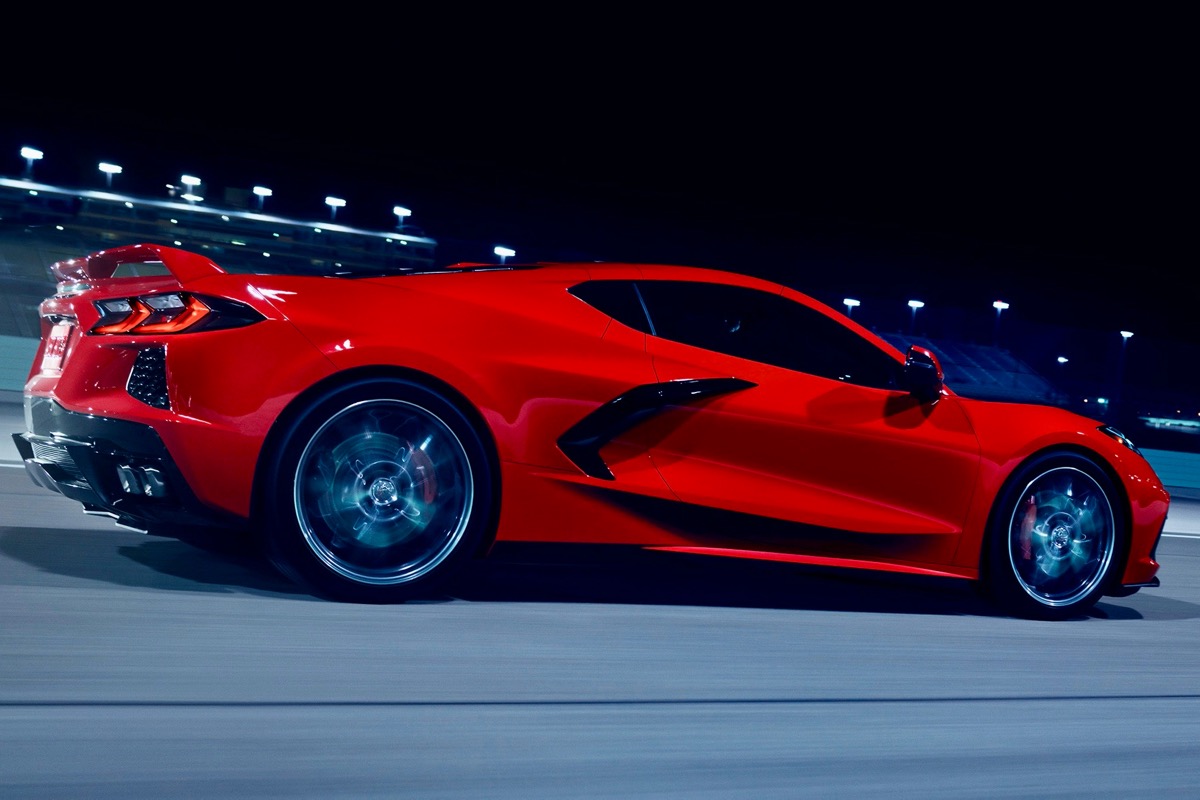
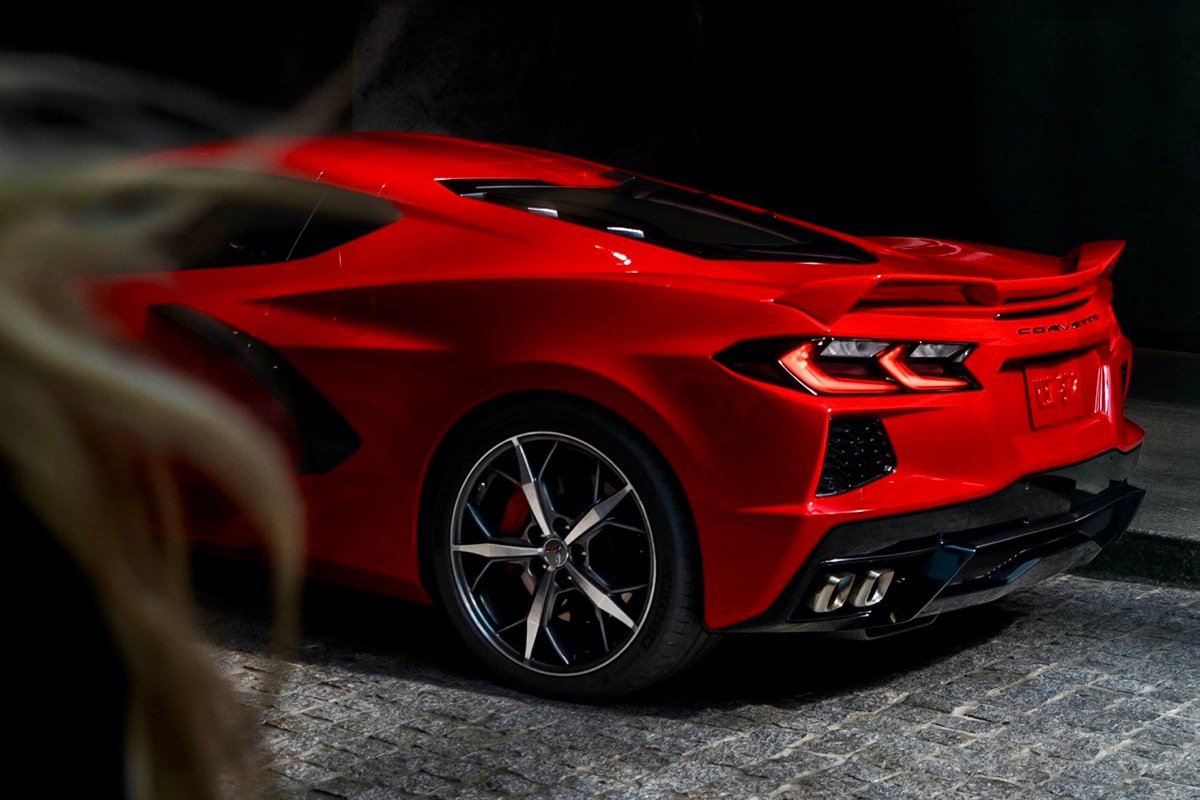
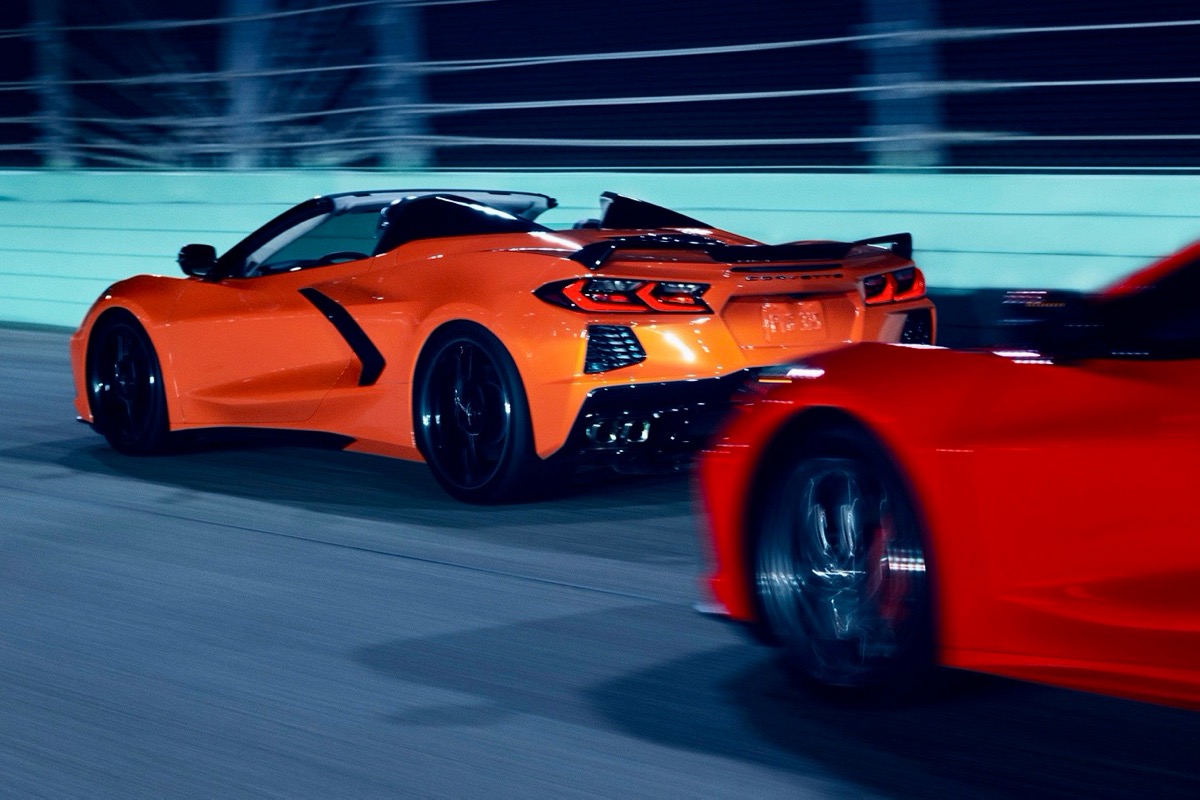
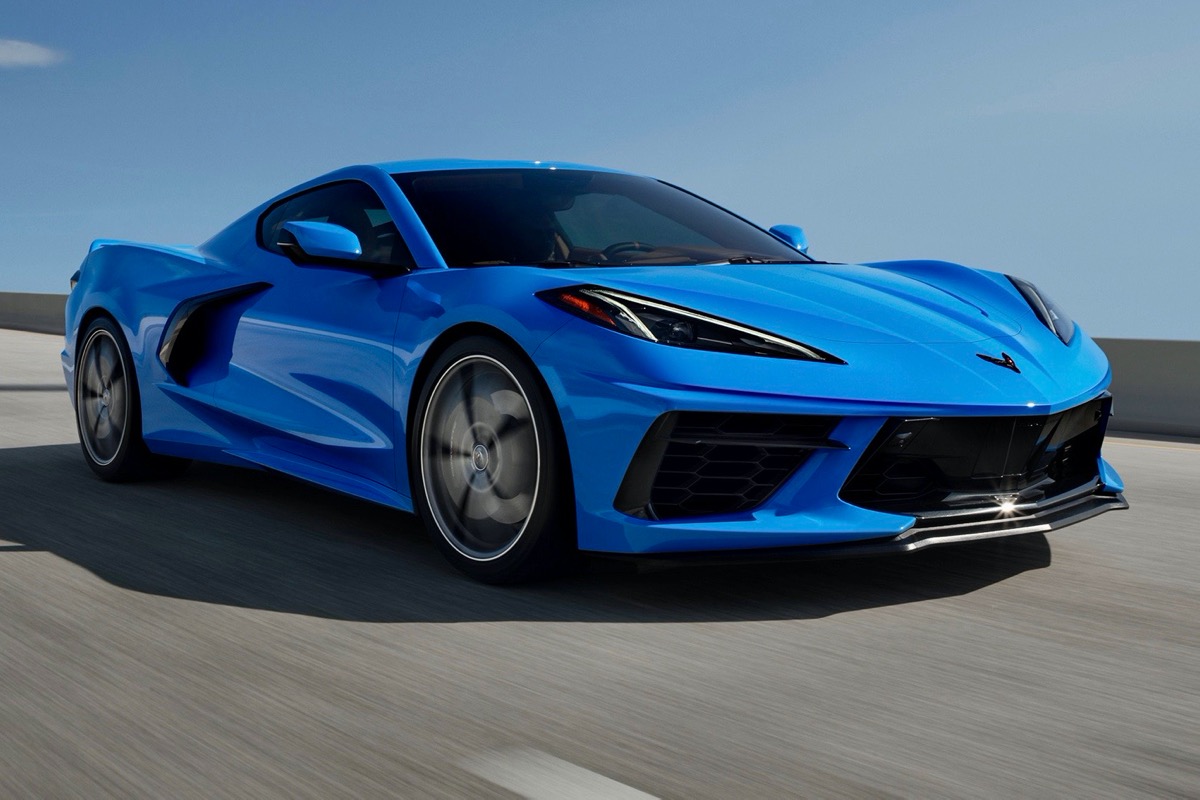
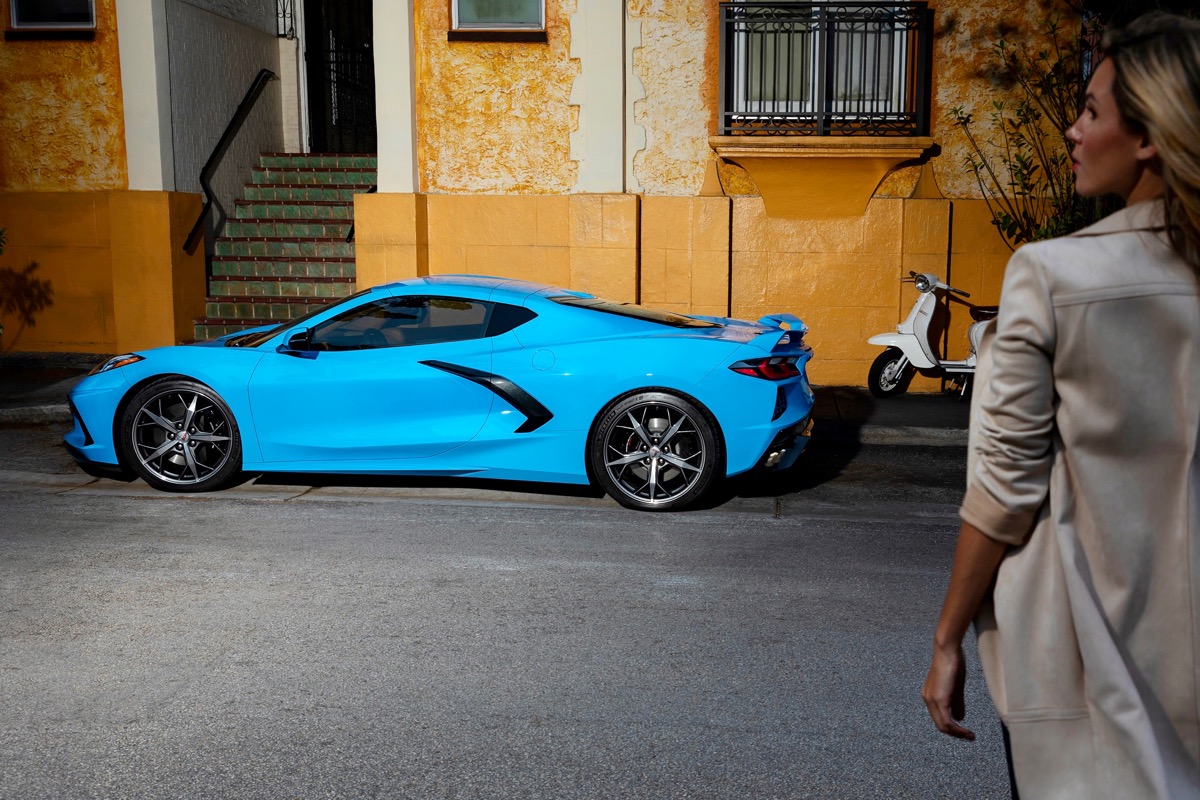
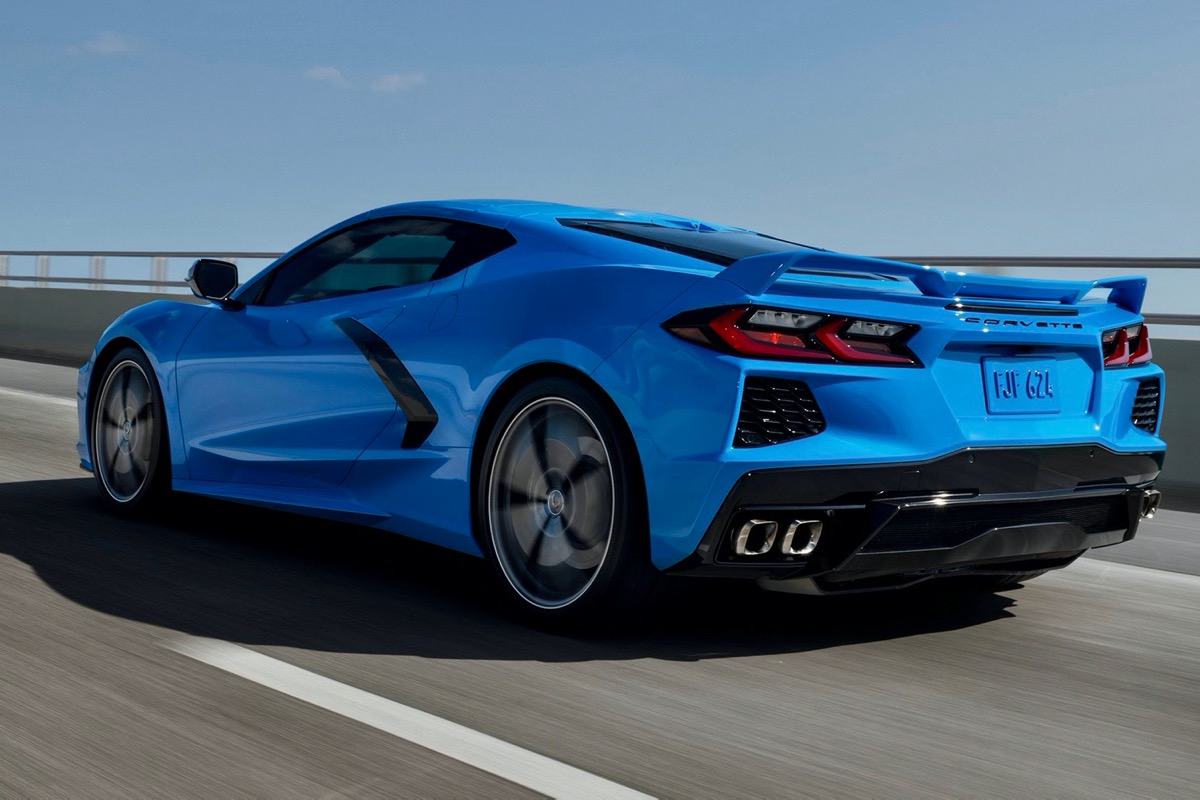
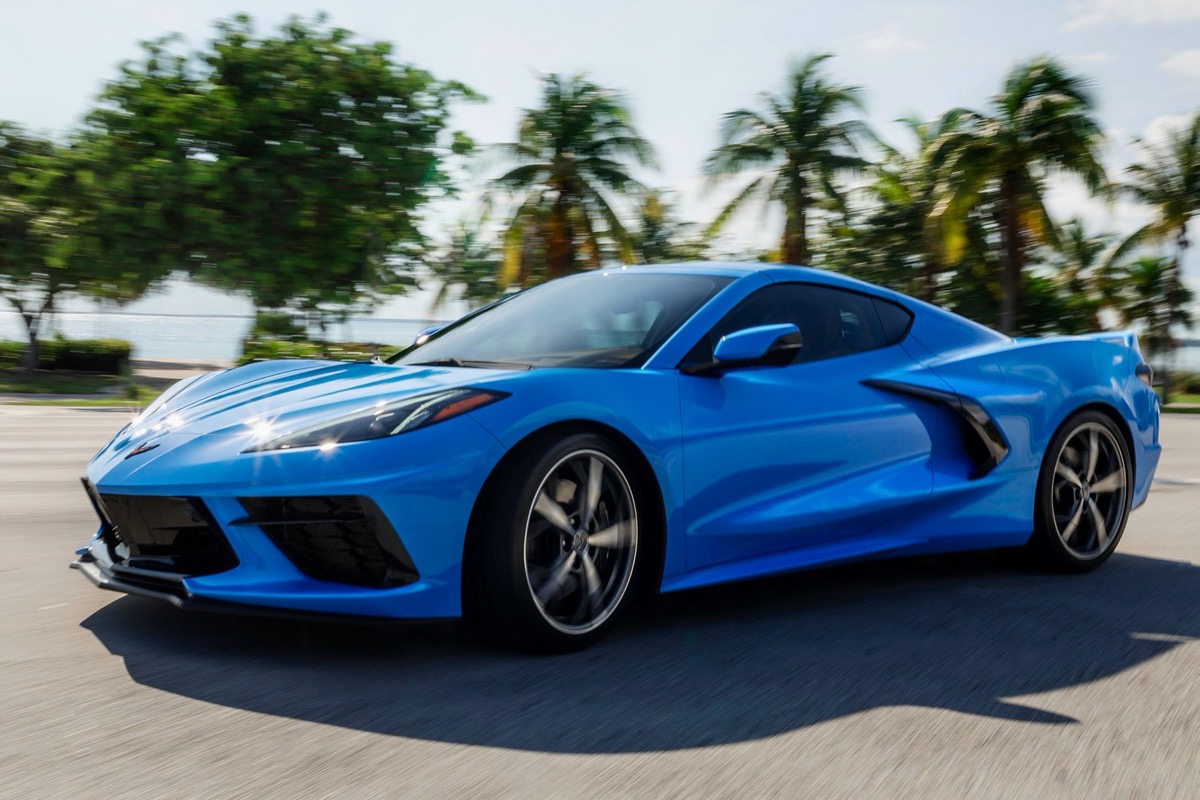
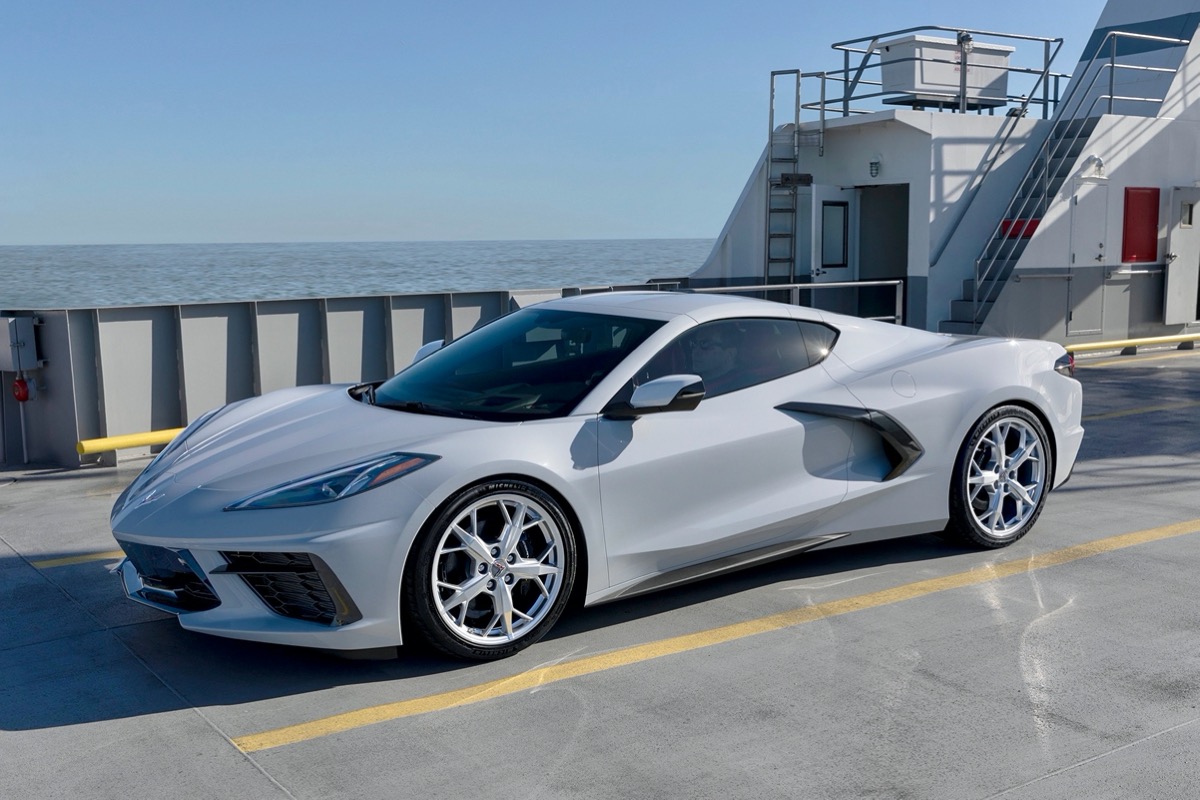
The C8’s appearance became a topic of debate, and understandably so. The Corvette had always been associated with a long hood and the classic silhouette of a front-engine sports car. The new model looks different: a short nose, a cabin pushed forward, large side air intakes, broad rear haunches and a more dramatic stance. There is more Lamborghini logic in it than in any Corvette before.
Some enthusiasts saw this as the long-awaited breakthrough. Others felt the car had lost part of its former identity. But this is what real change usually looks like. The C8 does not have to please everyone. Its task was different: to prove that the Corvette could stop being a “budget alternative” to a supercar and become an independent player in the same architectural league.
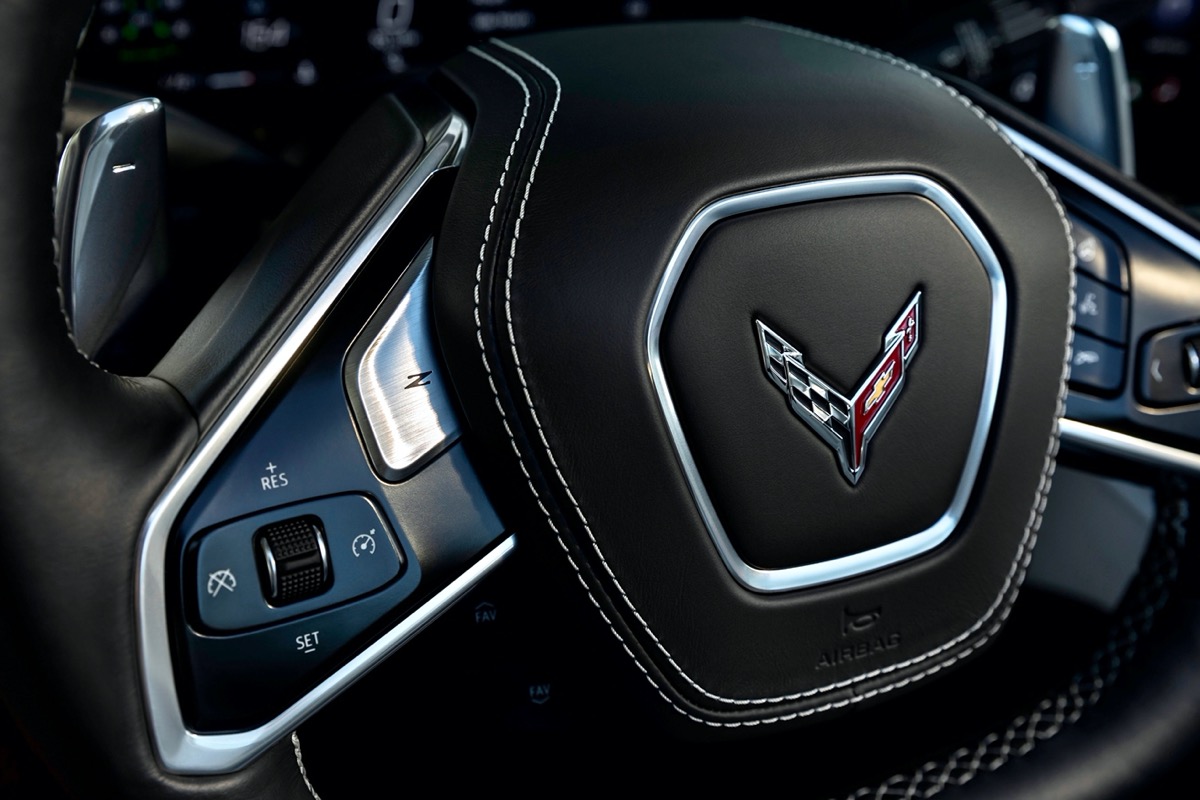
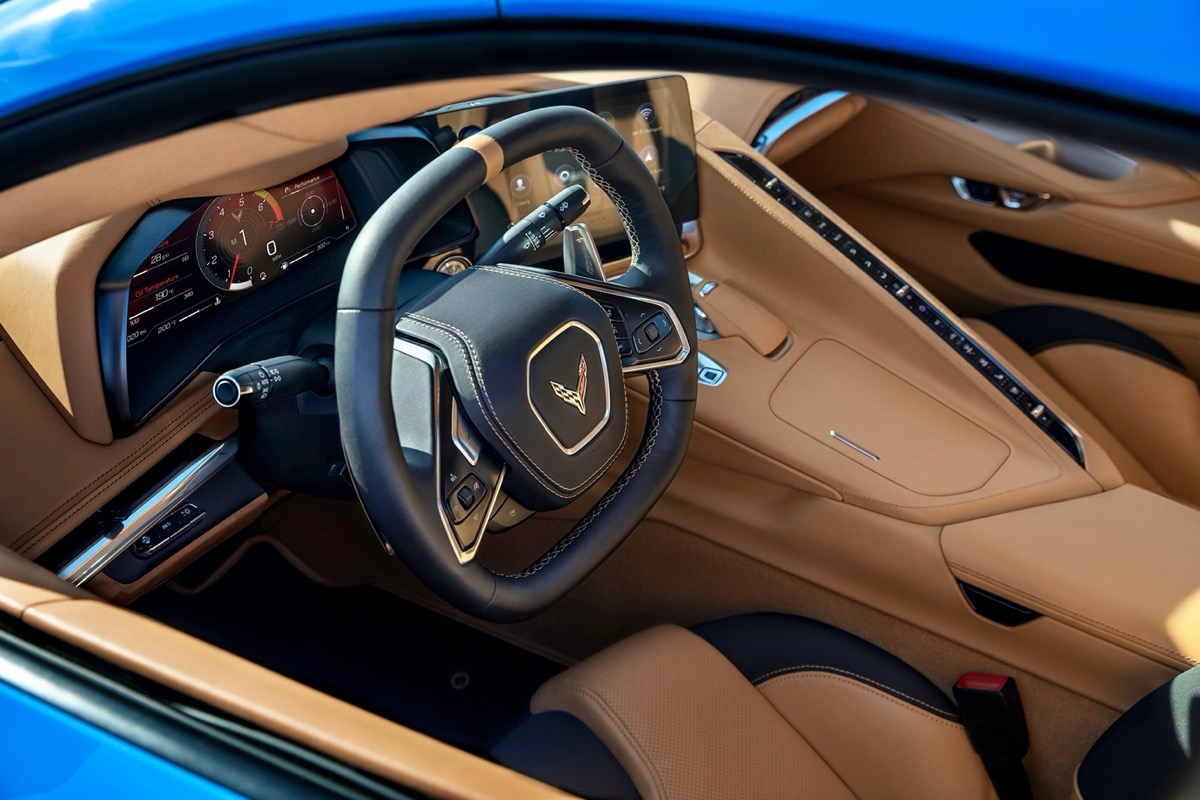
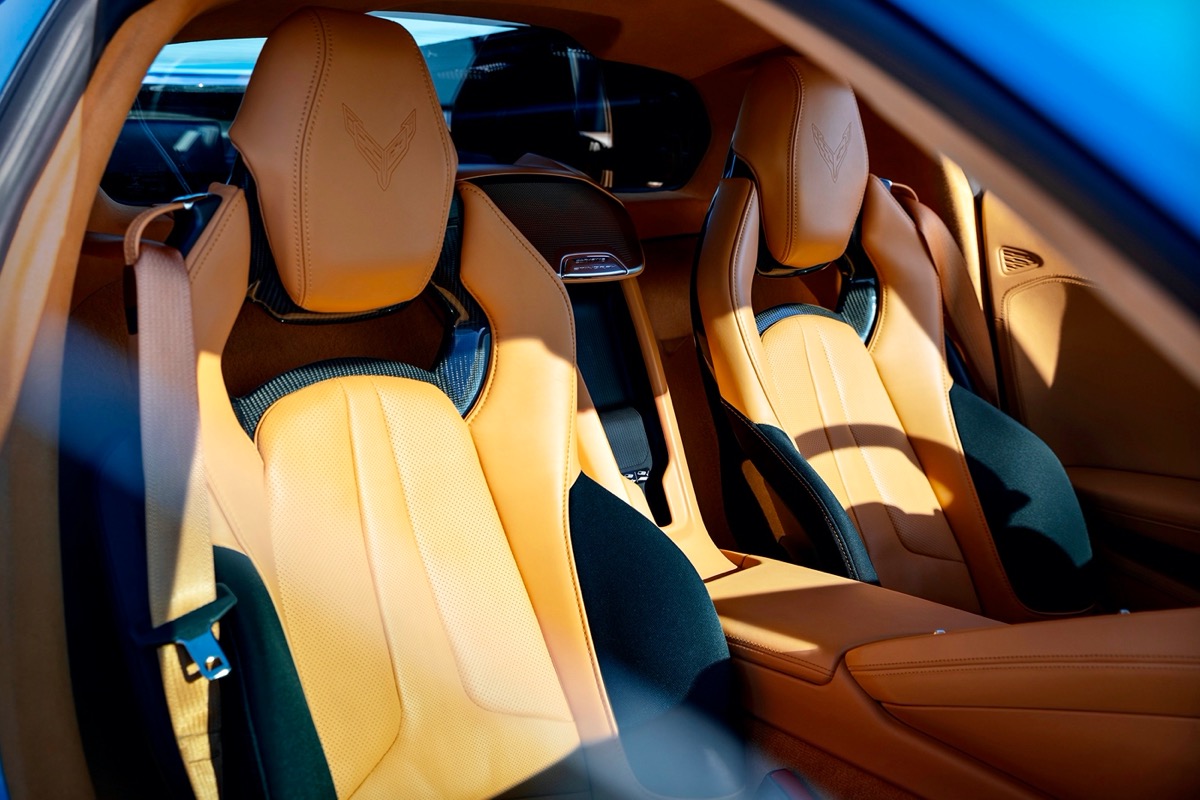
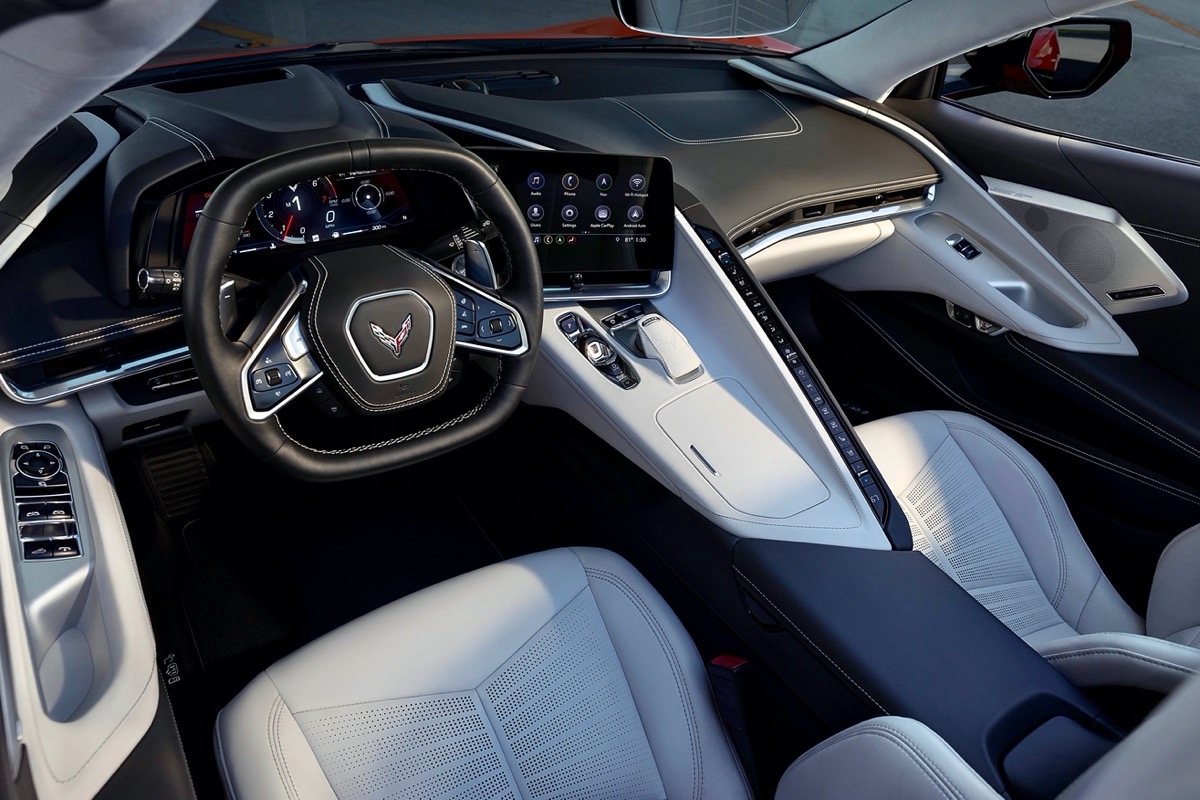
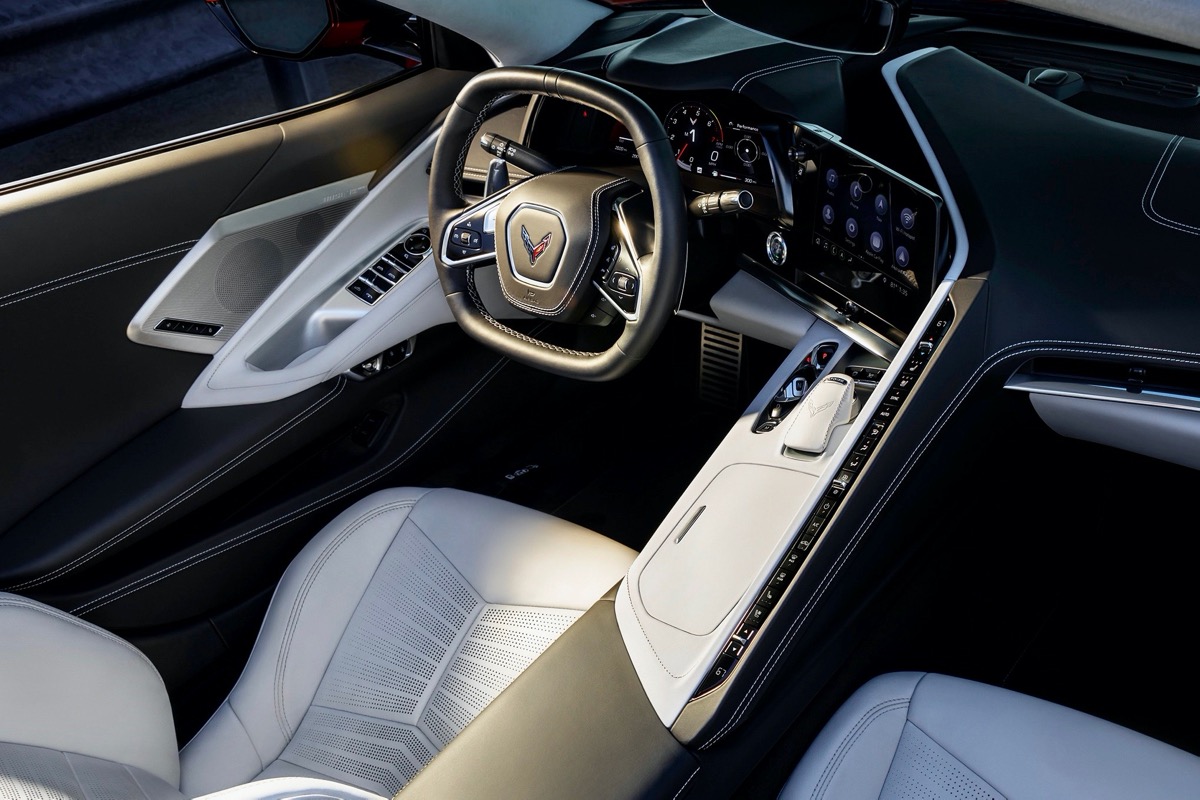
The interior also became much more driver-focused. The centre console divides the cabin almost like a cockpit, the buttons are arranged in a long vertical strip, and the digital instrument cluster and large central screen create the feeling of a modern performance car. It is not European restraint and not Italian theatre. It is an American interpretation of the supercar: bold, slightly aggressive and far more refined than in previous Corvette generations.
A budget answer to Ferrari and Lamborghini?
The phrase “a budget answer to Ferrari and Lamborghini” sounds dramatic, but in the case of the Corvette C8, it is not meaningless. Of course, the Corvette does not become a Ferrari simply because the engine is now in the middle. Italian supercars have a different history, a different level of branding, a different kind of exoticism, different materials and a completely different social status. But if we talk about the pure relationship between price, speed and engineering concept, the 2020 Corvette did something almost indecent to the market.
It offered a mid-engine layout, a naturally aspirated V8, sub-3-second acceleration, a modern dual-clutch gearbox, expressive design and daily usability at a launch price closer to a well-equipped premium sedan than to a European supercar.
That is exactly why the C8 became such an important car. It did not destroy Ferrari or Lamborghini - that would be a naïve comparison. But it did take away part of their monopoly on the emotion of the “only for the chosen few” mid-engine sports car. The Corvette showed that supercar architecture could be not only a symbol of ultra-luxury, but an engineering solution for a wider audience.
Why the Corvette C8 will remain important
The 2020 Chevrolet Corvette was the moment when an old American legend took the biggest risk in its history. One can argue about the design, the absence of a manual transmission, the quality of the interior or how fair it is to compare it with Ferrari. But the main point is impossible to deny: the C8 changed the rules for the Corvette.
It made the model globally understandable to a new generation of buyers. It showed that an American sports car could be not only loud, powerful and dramatic, but also architecturally modern. It proved that high performance does not have to cost as much as a condominium in a major city. And it reminded the entire market that sometimes the most interesting challenge to premium brands does not come from Europe, but from Bowling Green, Kentucky.
The Corvette C8 is not simply a new Corvette. It is a bold statement that the American dream of speed is still alive - only now it has learned how to corner, accelerate and look like a true supercar.