
Cayo Largo: Cuba without the city, the noise or the performance
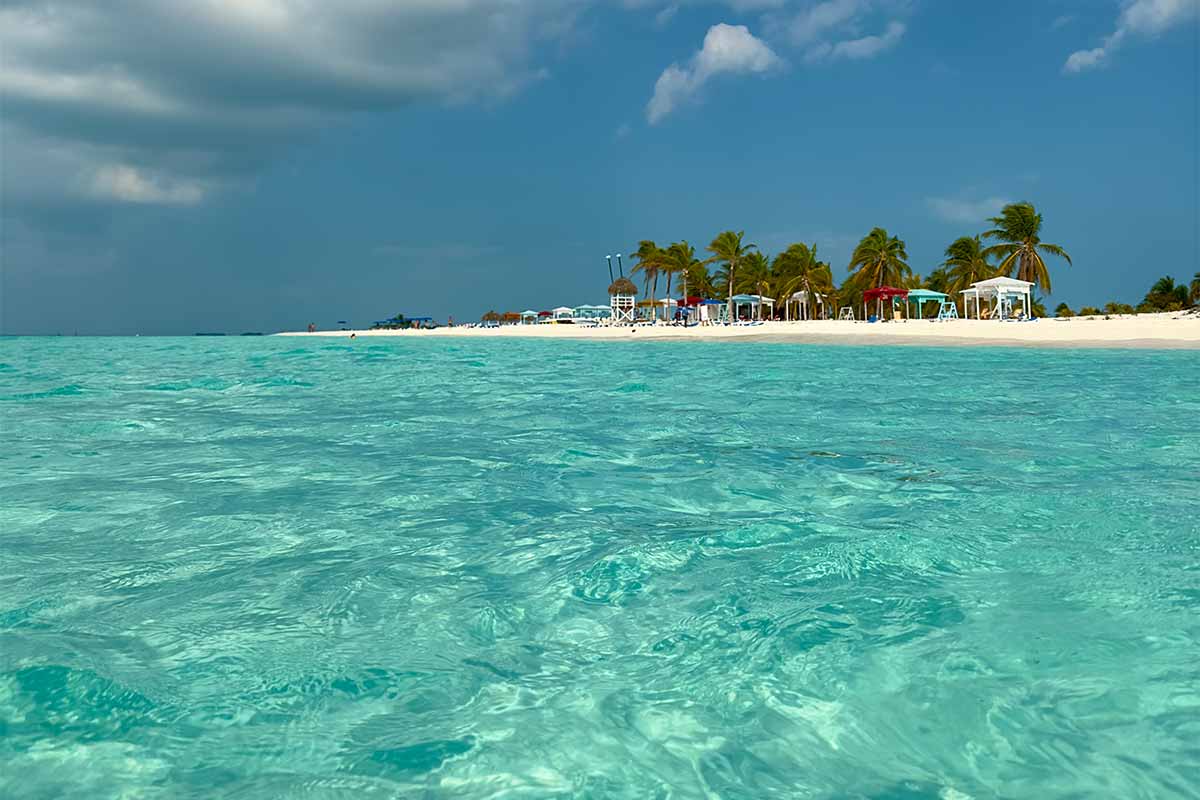
Cayo Largo is Cuba in its quietest, almost unreal form. There is no large city here, no old colonial streets, no noisy waterfront, no endless line of taxis and restaurants. People do not come to this island for infrastructure or nightlife. They come for something else: white sand that feels almost cool even under strong sun, transparent Caribbean water, long wild beaches and the rare sensation that, for a few days, the world has become simpler.
Cayo Largo del Sur is part of the Canarreos Archipelago off Cuba’s southern coast. It is a small resort island with no permanent population in the usual sense. People come here to work in hotels, at the airport, in the marina, in services and in tourism infrastructure, but ordinary urban life is almost absent. That is exactly what gives the island its particular atmosphere: Cayo Largo does not try to be a complete resort town. It remains an island where the main attraction is nature itself.
For North American travellers, especially Canadians, Cayo Largo has long held a special place. It is not a glamorous luxury destination and not a place where everything is perfectly polished. The hotels are mostly mid-range, service can be uneven, infrastructure is limited, and hurricanes and tropical weather occasionally remind visitors that the Caribbean is not a stage set, but a living natural zone. Yet that is exactly why Cayo Largo is memorable. It does not pretend to be louder or more luxurious than it is. Its strength lies in its beaches, water, sky and rare feeling of freedom.
The sand people come back for
The greatest luxury of Cayo Largo is its sand. Fine, white, soft and almost powdery, it differs from many other Caribbean beaches because even on a hot day it does not burn the feet the way darker or denser sand can. This is connected to its pale coral-limestone origin: it reflects sunlight better and therefore feels cooler.
On Cayo Largo, the beach is not merely a place where lounge chairs are arranged. It is the space that sets the entire rhythm of the stay. Here, you want to walk barefoot for a long time with no destination, look at the line of water, listen to the wind and notice how the sea changes colour - from almost transparent at the shore to deep turquoise farther from the surf.
Playa Sirena: the island’s most comfortable beauty
Playa Sirena is one of the best-known beaches on Cayo Largo and probably the most convenient for spending the day. The water is usually calm, the entry into the sea is gentle, the sand is wide, and there is more tourist infrastructure than on the wilder parts of the island. Guests are often brought here from the hotels, and it is easy to spend almost a full day without feeling that anything essential is missing.
Playa Sirena works because it combines natural beauty with relative comfort. It is not a completely wild beach, but neither is it an overloaded resort beach. You can swim, walk, drink something cold in the shade, watch the boats, book excursions, photograph the water and simply allow yourself the kind of slow Caribbean day for which many people choose Cuba in the first place.
Playa Paraíso: a name that does not exaggerate
Playa Paraíso is a beach whose name sounds almost too beautiful to be honest, but in this case it nearly earns it. This is one of those beaches where the landscape appears drawn rather than built: white sand, turquoise water, wide sky and very little visual noise. There is less infrastructure here than at Playa Sirena, but more of a feeling of seclusion.
Playa Paraíso is especially good for those who are not looking for entertainment, but for a state of mind. Lie on the sand, walk along the water, look at a sea with almost no harsh waves and forget about schedules for a while - that is the real program here. On the right day, this beach can look as if it was invented specifically for the words “Caribbean paradise.”
Wild beaches and the feeling of the edge of the map
Beyond Sirena and Paraíso, Cayo Largo has more secluded stretches of coast: Punta Mal Tiempo, Playa Blanca, Playa Los Cocos, Playa Tortuga and other beaches that are not always easy to reach and where conditions can change depending on weather, season and the state of the shoreline. These are the places that create the feeling of an island without too much staging.
It is important to be realistic. A wild beach is not always a perfect image from a travel brochure. After storms, seaweed may wash ashore; in some places the entry into the water may be less comfortable; elsewhere there may be no shade, drinks, toilets or help nearby. But that is also the honesty of Cayo Largo: nature here does not adjust itself to tourists every minute. When everything aligns, however, these beaches give a rare sense of space and silence.
Starfish, turtles and the underwater world
Cayo Largo is known for marine life: clear water, coral areas, fish, starfish and turtles. It is important to remember, however, that starfish are not souvenirs and not accessories for photographs. They should not be taken out of the water, held for long periods or moved for the sake of a beautiful picture. The best way to see them is to observe calmly without disturbing their environment.
The island also has a centre connected with sea turtle conservation. For travellers, this is a good way to see Cayo Largo not only as a beach destination, but as part of a more fragile ecosystem. In this sense, the island demands respect: its beauty depends directly on how carefully visitors treat it.
As for sharks, Cayo Largo is generally perceived as a calm and safe place for swimming, especially on the popular beaches with shallow, clear water. But saying that there are “no sharks at all” would be too absolute for any Caribbean destination. It is more accurate to say this: dangerous encounters with sharks are highly uncharacteristic for ordinary beach holidays here, but the sea is always a natural environment, not a swimming pool.
Naturism and European-style freedom
Cayo Largo has long been known for a more relaxed attitude toward beach culture. On some stretches of coast, especially farther from the main tourist zones, topless and naturist sunbathers can be seen. This is one reason the island has been loved for many years by Europeans and Canadians of European background: it is easier here to find a space where tanning without swimsuit lines is treated more calmly than at many other Caribbean resorts.
At the same time, it is important to understand the difference between freedom and intrusion. Naturism is not appropriate everywhere and at all times. In hotels, public areas, restaurants and near family beach zones, it is better to follow the rules of the specific place and respect those around you. Cayo Largo is valuable precisely for its unforced freedom: everyone can find their own style of rest without imposing it on others.
Infrastructure: lower your expectations in advance
The biggest mistake is expecting Cayo Largo to feel like Cancun, Punta Cana or Varadero. This is a different kind of destination. There are few hotels, almost no city life, limited restaurant and entertainment choices, and service often depends on the season, supplies, the condition of a particular resort and the broader situation in Cuba. Most hotels are best described as comfortable but not luxurious mid-range all-inclusive properties.
That is why Cayo Largo is not for everyone. If you need fashionable restaurants, active nightlife, shopping, perfect logistics and a wide choice of entertainment, the island may feel too simple. But if you are looking for beaches, silence, the colour of the water, a sense of remoteness and rest without constant movement, that simplicity becomes an advantage.
Hurricanes, weather and the reality of the Caribbean
Cayo Largo lies in a region that can be affected by tropical storms and hurricanes. This is not a reason to avoid the island, but it is a reason to plan wisely. The most popular season for travel is usually the winter months, when many Canadians fly to Cuba for sun, drier weather and gentle seas.
Summer and autumn are hotter and more humid, with a higher chance of rain and weather surprises. After strong storms, beaches and hotels may require recovery, and the shoreline can change. Before travelling, it is important to check the current condition of the hotel, beaches, flights and services, rather than relying on old photos or reviews from five years ago.
Who Cayo Largo is for
Cayo Largo is for those who know how to value natural rarity over overbuilt luxury. For those who care more about the colour of the water than a marble lobby. For those willing to forgive a modest buffet if, in the morning, they can walk out to an almost perfect beach. For those who want to disappear from urban logic for a few days and live by the rhythm of sun, sea and wind.
It is a good choice for couples, calm beach vacations, long walks by the water, fans of naturist-friendly destinations, snorkeling, boat excursions and holidays without too much programming. It is a weaker choice for those who need constant activity, flawless service, a large dining scene or modern urban infrastructure.
Why Cayo Largo is still worth attention
In a world where many resorts increasingly resemble one another, Cayo Largo preserves a rare quality: it does not try too hard to impress. It has little grand shine, but it has beaches that can stop a conversation. It has no real city, but it has the feeling of an island. It has no showy luxury, but it has silence, transparent water and sand you want to walk on for a very long time.
Cayo Largo is not a perfect resort. That is exactly why it should be described honestly. It can be simple, vulnerable, dependent on weather and on the condition of its hotels. But on good days, it offers something that is not always found in richer and more organized destinations: an almost pristine feeling of the Caribbean Sea, space without noise and the rare chance to remember that real rest sometimes begins where infrastructure ends.