
From cezve to cup
What Is Actually Inside Your Coffee Cup
Every morning, millions of cups of coffee are consumed in Toronto alone. In some homes, coffee is brewed slowly in a traditional cezve over gentle heat, with ultra-fine grounds and thick aromatic foam rising to the surface. In others, it is a capsule, a button, and thirty seconds to the first sip. Somewhere else, freshly ground specialty beans drip through a paper filter while a barista carefully weighs every gram. And on the morning commute, there is the familiar Starbucks cup with a name written in marker. Technically, all of these drinks are called coffee. In reality, they are fundamentally different beverages with different chemistry, different levels of caffeine, oils, antioxidants, flavour complexity, and even different effects on the body. What unites them is mostly the dark colour in the cup and the word coffee on the label.
Understanding the difference is worth it - not to become a coffee snob, but simply to drink coffee more consciously and enjoy what you truly like.
Turkish Coffee: The Oldest and One of the Most Complex Brewing Methods
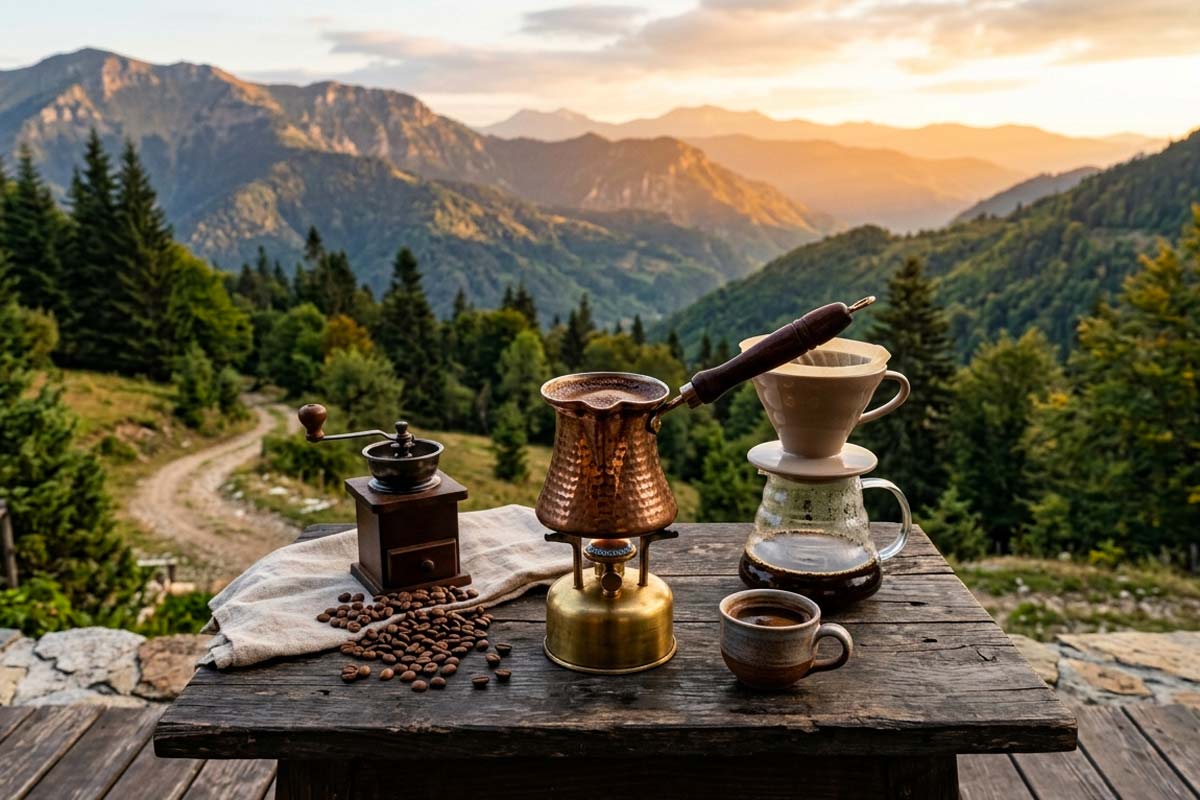
For many Eastern European and Middle Eastern households, Turkish coffee remains the ultimate coffee ritual. The cezve - also known as an ibrik or Turkish pot - is a small metal vessel with a long handle used to slowly heat finely ground coffee on the stove. The grounds are never filtered out and eventually settle at the bottom of the cup.
From a chemistry perspective, this is one of the richest brewing methods in existence. Paper filters remove a significant portion of coffee oils - particularly cafestol and kahweol, two naturally occurring diterpenes actively studied in modern nutrition science. In Turkish coffee, these compounds remain almost entirely intact.
Recent research suggests that unfiltered coffee often contains higher concentrations of antioxidants and aromatic compounds compared to paper-filtered methods. Temperature also matters. Turkish coffee should never fully boil. The ideal moment is when the foam begins to rise. At that point, the pot is removed from heat and allowed to settle briefly. This gentler brewing temperature helps preserve delicate aromatic compounds that can be damaged by aggressive overheating.
The flavour profile is dense, textured, rich, and deeply aromatic, with a bittersweet finish that feels almost velvety. Turkish coffee is not simply “small espresso.” It is an entirely different coffee culture.
A typical serving contains roughly 50-70 mg of caffeine - similar to a single espresso shot, depending on the beans and preparation.
Turkish coffee requires an extremely fine grind, even finer than espresso. Fresh medium or medium-dark specialty roasts tend to work best. Many Canadian specialty roasters, including Pilot Coffee Roasters and Bridgehead, offer beans that perform exceptionally well in a cezve.
Filter Coffee: Clarity Through Simplicity
Drip coffee, V60, Chemex, and other filter methods are built around one principle: clarity. The paper filter traps both sediment and much of the coffee oil, producing a cleaner, lighter, highly aromatic cup.
That is precisely why filter brewing is considered the preferred method in the specialty coffee world for showcasing single-origin beans. The nuances of region, processing, and terroir become easier to taste.
The trade-off is texture. Compared to Turkish coffee or French press, filter coffee has less body and weight on the palate.
A properly brewed filter coffee made from freshly roasted beans at the correct water temperature - approximately 90-93°C - can be one of the most aromatic coffee experiences available. Poor filter coffee made from stale beans in an office drip machine, however, can taste almost like flavoured hot water. The difference is determined less by the method itself and more by the quality of the beans.
What Specialty Coffee Actually Means
Before discussing capsules or instant coffee, it is important to understand specialty coffee - because this is where the modern conversation about coffee truly begins.
“Specialty” is not simply a marketing term. It is an industry standard. Coffee earns specialty status only if it scores 80 points or higher out of 100 under the Specialty Coffee Association grading system. Typically, this means traceable beans with a known country, region, farm, processing method, and roast date.
Canada now has a world-class specialty coffee scene. Toronto’s Pilot Coffee Roasters, Balzac’s Coffee Roasters, Sam James Coffee Bar, De Mello, Hatch, Quietly Coffee, and many smaller roasters work with carefully sourced lots and fresh roasting programs.
The roast date matters more than most consumers realize. Whole beans generally taste best within several weeks after roasting. Once coffee is ground, oxidation accelerates dramatically and volatile aromatic compounds begin disappearing quickly.
Nespresso: An Honest Perspective
Nespresso is a compromise between quality and convenience - and there is nothing wrong with that if understood honestly.
The capsules are hermetically sealed and flushed with inert gas, which protects ground coffee from oxygen extremely effectively. From a storage perspective, this is one of the best consumer formats available.
Nespresso’s greatest strength is consistency. Every cup tastes almost identical to the previous one. There is no need to master grind size, tamping, extraction timing, or water temperature.
Its limitation is freshness. Even perfectly sealed ground coffee cannot fully compete with beans ground seconds before brewing. Many capsules are also designed around darker roast profiles that reduce the subtle distinctions between coffee origins.
Today, many independent specialty roasters produce compatible capsules for the Nespresso Original system, often offering significantly more interesting and nuanced coffee within the same convenient format.
Starbucks and Large Coffee Chains: What the Cup Does Not Tell You
Starbucks was never designed to be classic specialty coffee. It is a global system built around consistency, familiarity, and mass appeal.
The company historically relies on darker roasting styles that are easier to standardize, pair well with milk, and are more forgiving of bean variability. The downside is that darker roasting often masks many origin-specific flavour nuances.
The bigger issue in many chain coffee drinks is not the coffee itself, but the sugar content. Popular frappuccinos, flavoured lattes, and mocha drinks frequently contain enormous amounts of added sugar. In many cases, the beverage functions more as a dessert than as coffee.
This is not unique to Starbucks. Tim Hortons, Second Cup, and many other chains operate on a similar model: mass-market coffee enhanced with syrups, creamers, flavourings, and stimulants.
That said, a simple black coffee or unsweetened cappuccino from a chain café can still be a perfectly reasonable everyday option.
Instant Coffee: What Is Actually Inside the Jar
It is important to separate two entirely different categories often grouped together as “instant coffee.”
Pure instant coffee is real coffee. Beans are roasted, brewed industrially, and then dehydrated. There are two primary methods: spray-drying and freeze-drying. Freeze-dried instant coffee is generally considered superior because lower temperatures preserve more aromatic compounds.
Most instant coffee is produced using robusta beans or robusta-arabica blends. Robusta contains more caffeine and costs less, but usually delivers harsher bitterness and a simpler flavour profile.
Instant coffee does contain somewhat higher levels of acrylamide - a compound formed during the roasting of many foods, including coffee. However, modern research indicates that the concentrations found in coffee remain far below levels associated with meaningful health risks.
Entirely different are 3-in-1 coffee beverages and similar products. In these, sugar is often the primary ingredient, while coffee represents only a small fraction of the formula. In practical terms, these are sweetened beverages with coffee flavouring.
An Honest Hierarchy Without Snobbery
If we build a hierarchy based not on status but on what is actually inside the cup, it might look something like this:
- Turkish coffee made with freshly roasted specialty beans - maximum complexity, texture, aroma, and coffee oils;
- Filter coffee from fresh beans - the clearest expression of origin and terroir;
- Proper espresso - dense, layered, and highly dependent on equipment and skill;
- Nespresso with quality capsules - an honest and convenient compromise;
- Good freeze-dried instant coffee - practical for travel or office use;
- Chain coffee shops - highly dependent on how much syrup ends up in the cup;
- 3-in-1 products - essentially sweetened drinks rather than true coffee.
Practically Speaking
Finding excellent coffee in Toronto today is remarkably easy. Specialty beans are available online, from independent roasters, and increasingly even in premium grocery stores. The key is not the packaging design, but the roast date.
One recommendation matters more than almost anything else: buy even a simple grinder and grind your coffee immediately before brewing. That single step transforms the experience completely, regardless of whether you use a cezve, pour-over, or espresso machine.
The most important thing is not to turn coffee into ideology. There is no war between Turkish coffee and capsule machines. They are simply different tools for different moments.
Turkish coffee for a slow Saturday morning. Filter coffee for Sunday with a book. Nespresso at six in the morning before a meeting. The important thing is understanding what is actually inside your cup.
One final detail: in 2013, the tradition of Turkish coffee was added to UNESCO Intangible Cultural Heritage list. It remains the only coffee brewing method in the world to receive that recognition.